A west facing office in Mississauga spends the afternoon fighting its own windows. The perimeter zone hits 26 degrees, the thermostat is set to 22, and the HVAC runs flat out while the interior of the floor stays cold.
Commercial window tinting fixes that at the glass instead of at the equipment. Here is what it changes, what it costs, and how the install works around your business hours.
Why the perimeter zone is the expensive zone
Sun through untreated glass lands as heat on the carpet, the desks and the people sitting nearest the window. That is why one side of an office is freezing and the other is unbearable on the same thermostat setting.
The usual response is to close the blinds, which kills the daylight the architect designed for and turns half the floor into a cave lit by fluorescent tubes.
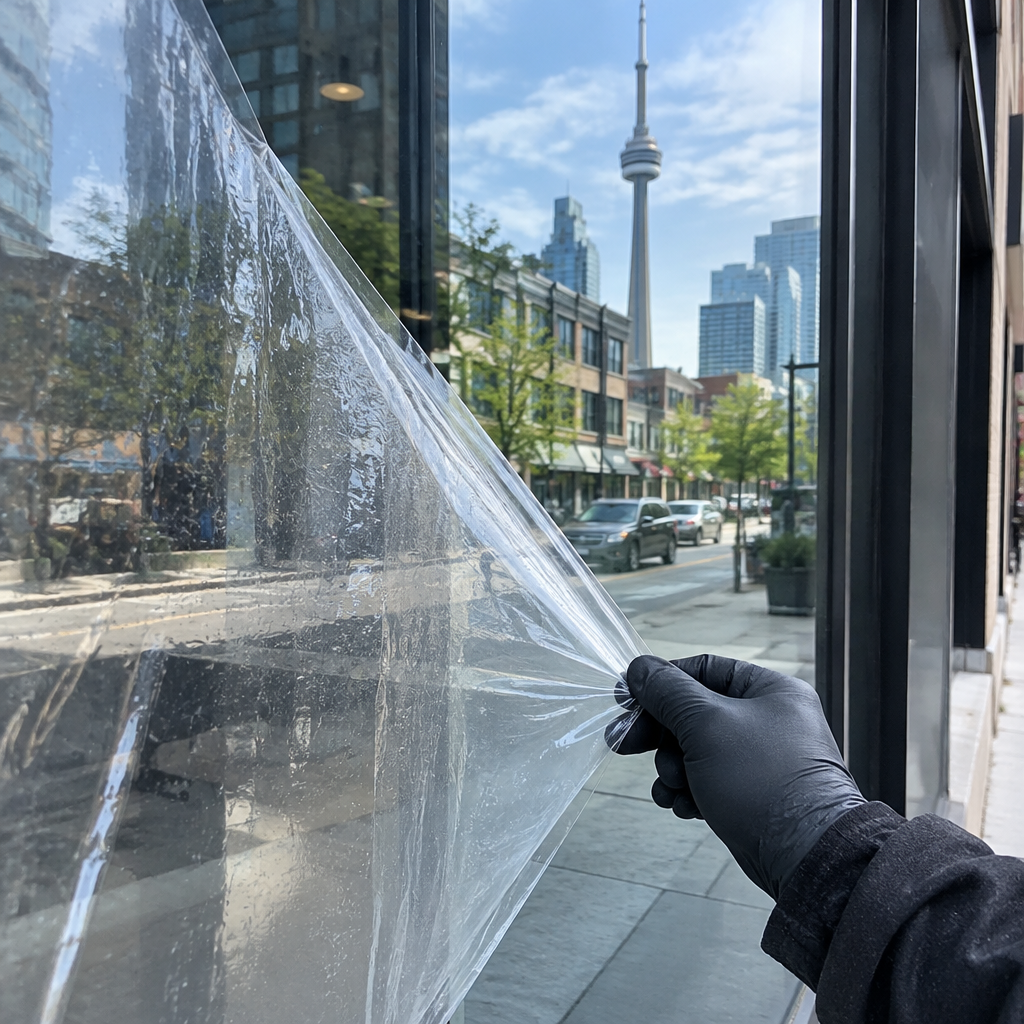
Film rejects the energy before it becomes heat inside the room. The glass still looks like glass, the blinds stay open, and the HVAC stops chasing a load it cannot win.
What the film actually does
Solar film is rated on two numbers that matter. Total solar energy rejected is how much of the sun's energy never makes it through. Visible light transmission is how dark the glass reads from inside.
A good ceramic solar film rejects a large share of total solar energy while keeping visible light high enough that the office still feels daylit. That combination is the whole trick, and it is why cheap dark film is the wrong answer for a workplace.
Ceramic also blocks over 99% of UV, which is the part that fades fabric partitions, bleaches carpet edges and cracks leather chairs on the window side of the floor.
Glare costs more than cooling
Ask anyone who works beside glass what the real problem is and they will say the screen, not the temperature. At 3pm the monitor becomes a mirror and productivity drops until someone closes the blinds.
Cutting glare at the glass keeps the monitors readable and the blinds open. For a design studio, a trading floor or any office where people read for a living, that is the upgrade that pays back fastest.
Three films, three jobs
- Ceramic solar film for exterior glass on the sunny side. Heat and glare down, daylight kept.
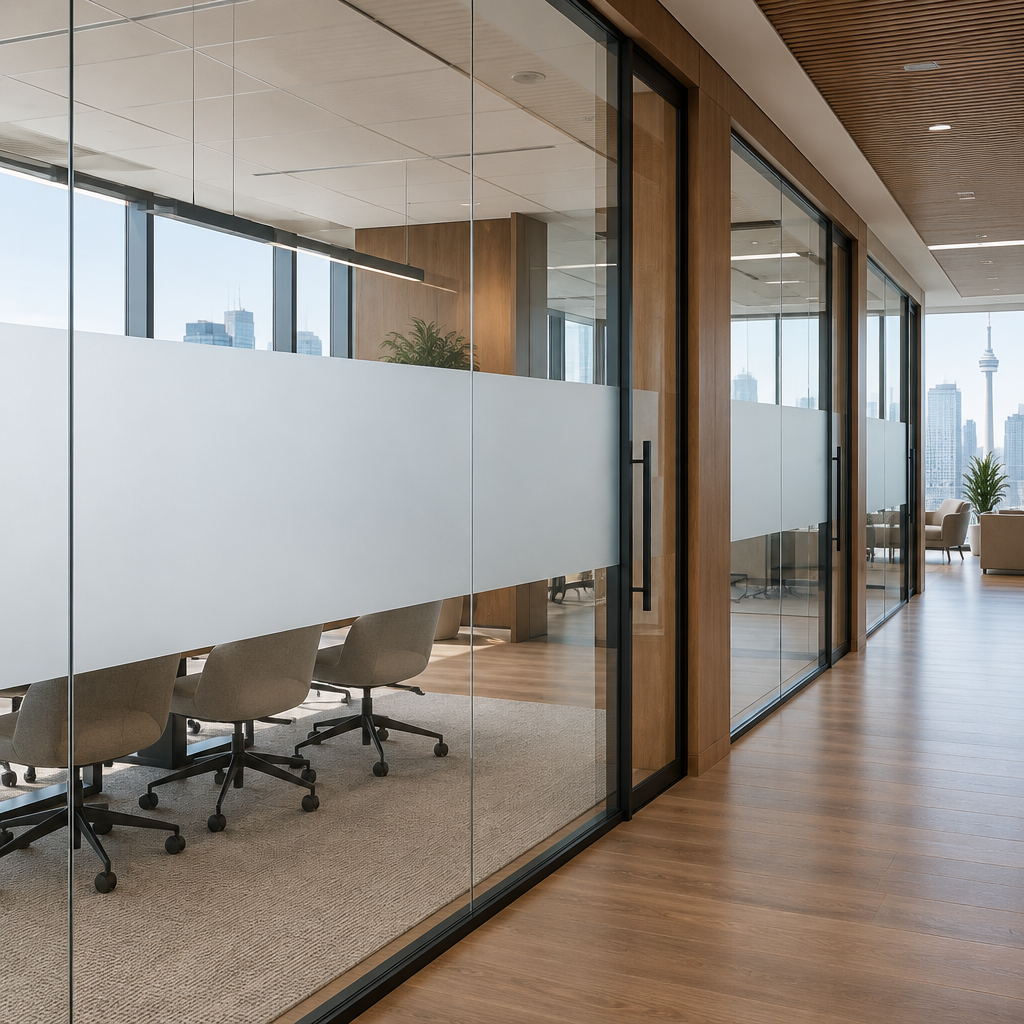
- Frosted film for interior glass: boardrooms, HR offices, treatment rooms. Privacy without walls.
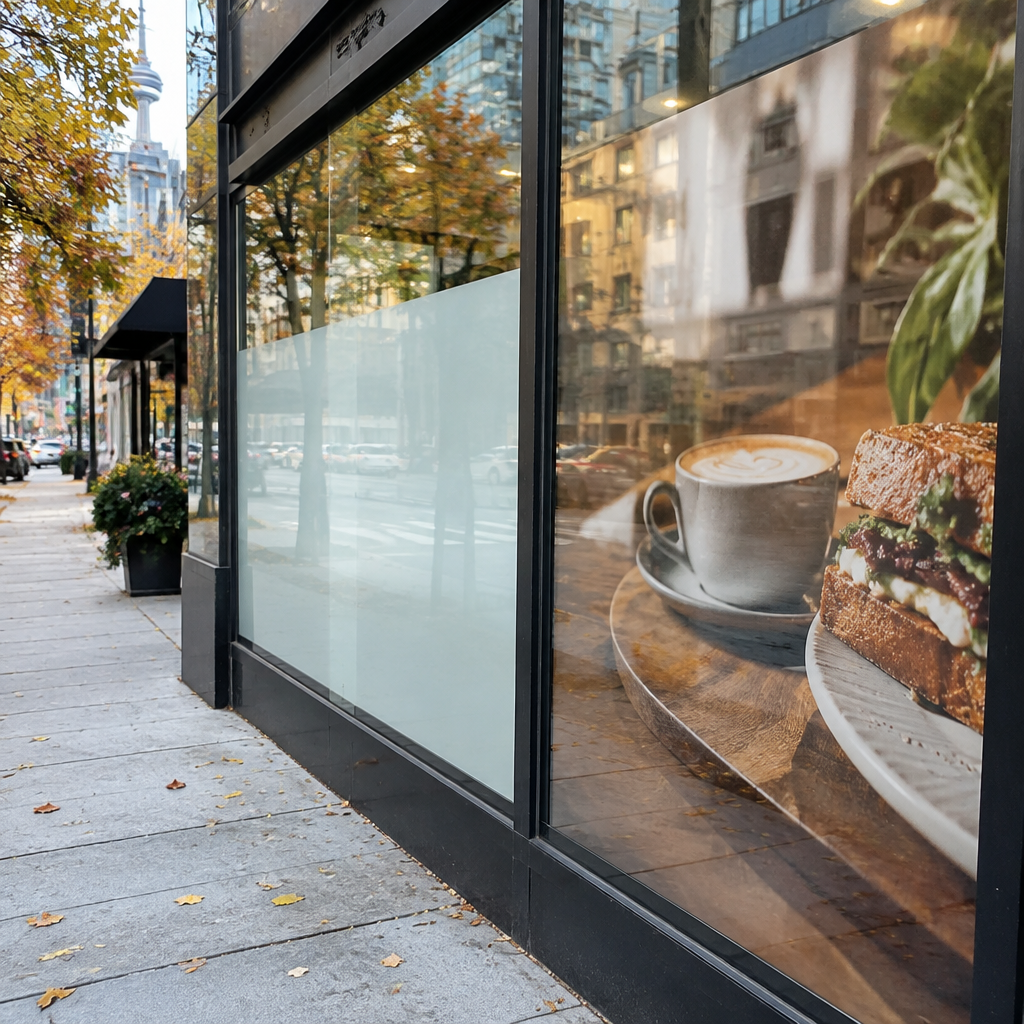
- Security film for street level glass, where the goal is keeping broken glass in the frame.
Many offices end up with two of the three. The reception glass gets frost, the west wall gets ceramic solar, and the storefront gets security.
What it costs
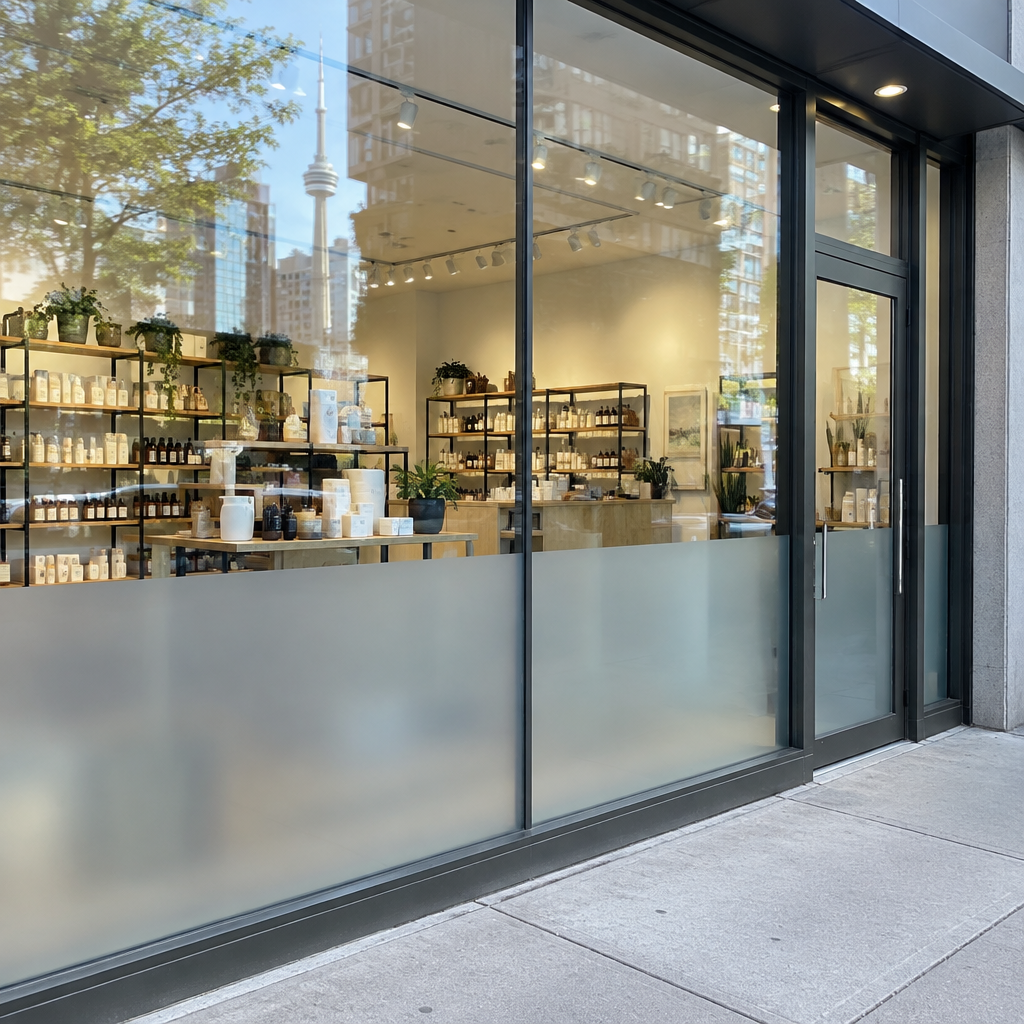
Frosted and privacy film runs $7 to $10 per square foot. Solar and security film are quoted per project, because glass type, frame and access change the labour more than the area does.
A single conference room is a small job with a minimum. A full floor of perimeter glass is priced on measured square footage after we walk it.
How the install works around you
Commercial work happens before opening, after close, or on a weekend. We mask the frames, work panel by panel, and leave each area usable as we go.
Expect a light haze for three to five days while the film cures. After that it is invisible from the inside and consistent from the street.
For multi-tenant buildings we coordinate with property management on loading access and elevator booking. We are set up as a trade partner for exactly that reason.
What the rules require
Ontario does not license or restrict film on commercial glass, but two things are non-negotiable. Exit signs and egress paths stay visible, so film never covers a fire exit sign or a required vision panel. And if the space is leased, the landlord or the condo corporation may have a say in how the glass reads from outside.
Car glass is a separate set of rules: the rear doors and rear glass can go to 5%, the front doors have to keep the driver clearly visible with 35% installed up front, and the windshield stays clear.
Frequently asked questions
Will film make the office too dark?
Not if it is specified properly. Ceramic solar film can reject a large share of the heat while keeping visible light high. That is the difference between film and tint.
Can you work around our business hours?
Yes. Evenings and weekends are normal for us on commercial jobs, and we stage the work so you are never without a full floor.
Does it help in winter?
Solar film is mostly a cooling season product. If winter heat loss is the problem, a low-e film is the right call and we will say so.
Is there a minimum job size?
There is a minimum call-out, which is why a single small pane is usually batched with other glass on the same visit.
If the afternoon sun is running your building, call 437-331-5379 or send photos through our contact page. We handle commercial window tinting and office window frosting across the GTA, and property managers can start with our trade partner program. For budget planning, read commercial window tinting costs in Toronto.
Perimeter heat
Reject the heat at the glass and the HVAC stops fighting the sun all afternoon.