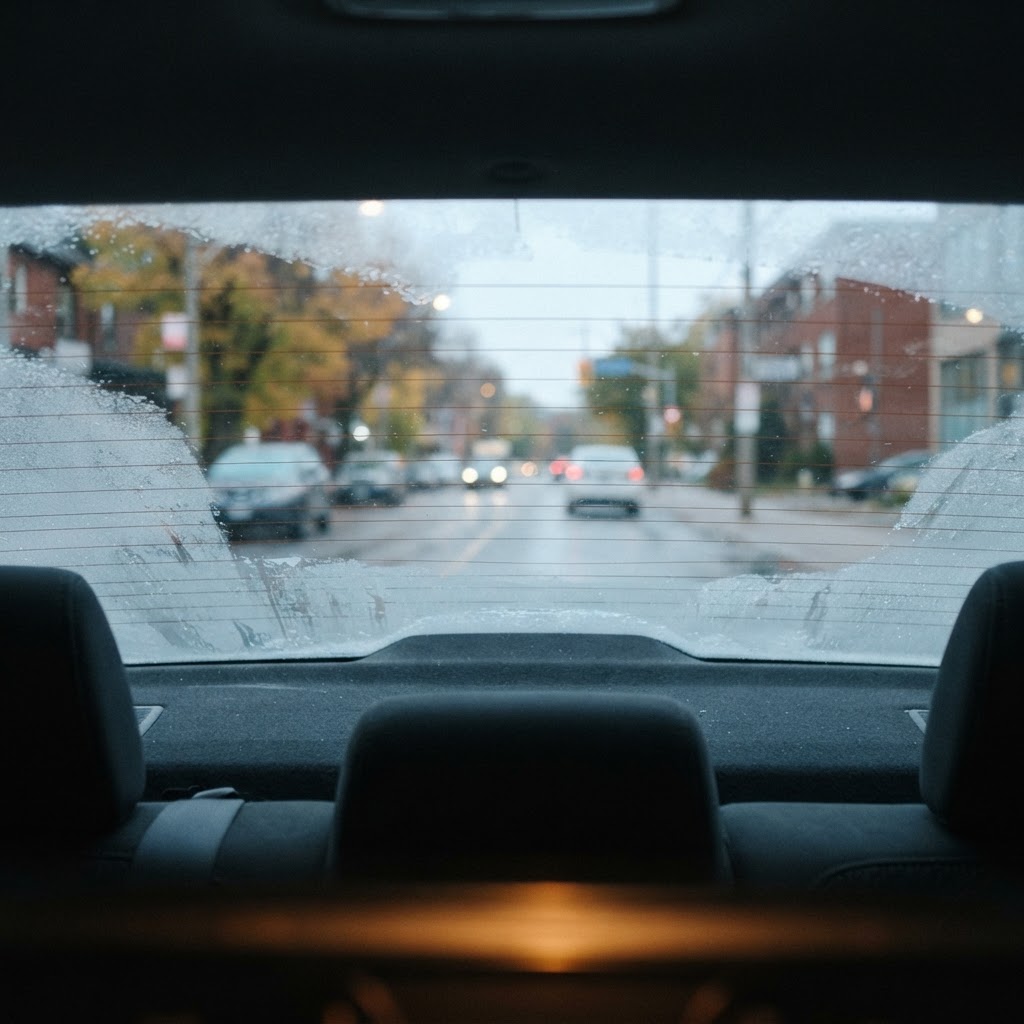
Toronto is about to spend five months relying on one thin grid of wires more than any other part of the car: the rear defroster. So it makes sense that one of the most common questions we get before a full tint package is exactly this: does window tint affect the rear defroster?
Short answer: no, not when it is done right. Your defroster will clear a tinted rear window the same as it always did. But there is real detail behind that answer, and knowing it will tell you a lot about the difference between a proper install and a cheap one.
How the rear defroster and the film actually interact
The electric defroster is a grid of fine lines printed on the inside surface of the rear glass. When you install tint, the film goes right over those lines. There is no electrical conflict at all: the lines still receive current and still heat the glass, and the heat still moves through the film. From the defroster's point of view, quality film is essentially invisible.
People worry that the film traps heat or makes the defroster work harder. The film is a fraction of a millimeter thick; the thermal difference is negligible. In fact, ceramic tint can help winter glass in a small way: it reduces the cold radiating off the rear window, so ice and fog are fighting against slightly warmer glass to begin with.
Where cheap installs actually go wrong
Every defroster related problem we have ever been called to fix traces back to one of three things, and none of them is the defroster itself.
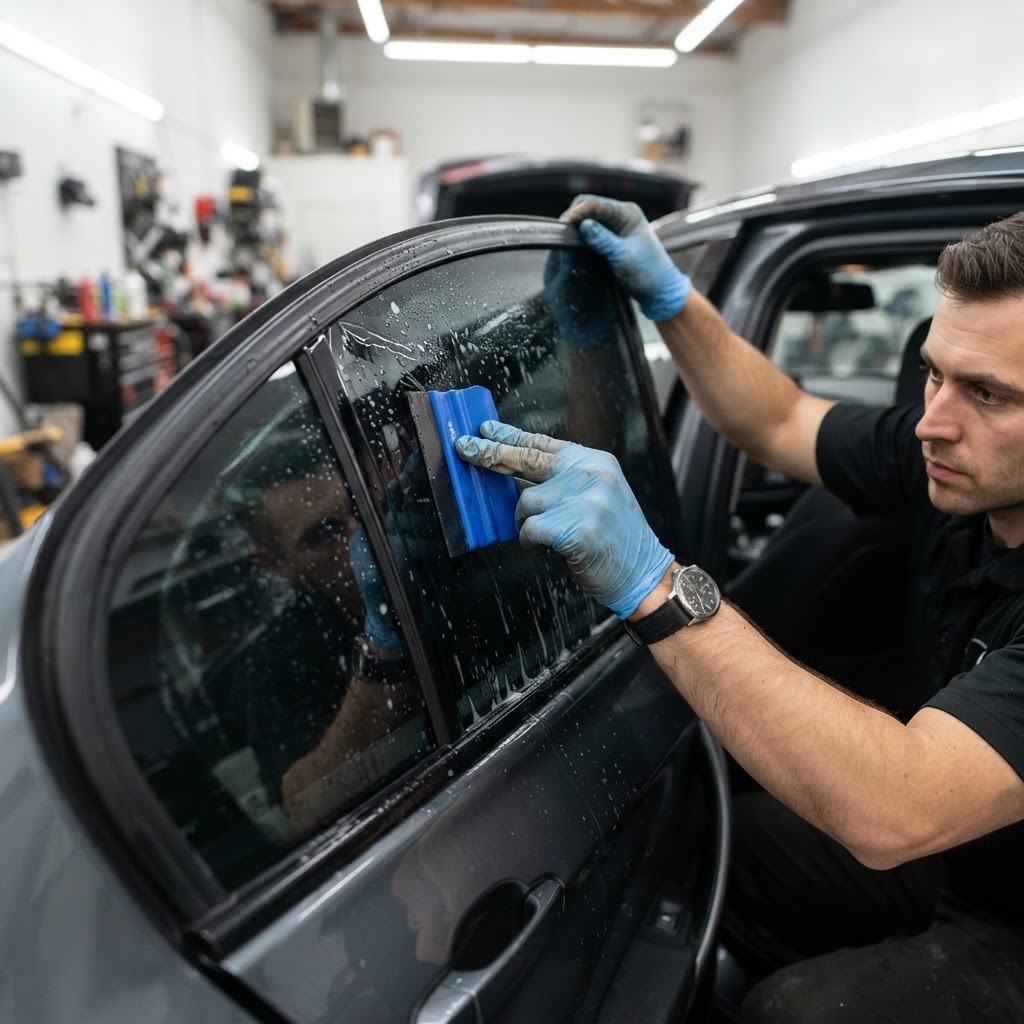
- Moisture trapped along the lines. The defroster grid creates tiny ridges on the glass. A rushed install leaves thin channels of slip solution along each line that take longer to dry. It looks like the film is not adhering in stripes. It usually clears during curing, but a bad install can hold visible lines permanently.
- Poorly trimmed edges. The rear window has a border where the grid and the dot matrix meet the seal. Sloppy knife work there nicks the defroster lines and kills a row of the grid. That is an electrical repair, and it comes from cutting on the glass instead of cutting on a table first. Our rear windows are always cut on a plotter to the pattern, never trimmed against your defroster.
- The dot matrix band. That rough band of dots along the top and edges of the rear window does not take film as cleanly as smooth glass. There are techniques to make it look right, and a shop that films daily knows them. A shop that tints on weekends does not.
So the honest framing is: tint does not hurt your defroster. Bad tinting can. The grid itself is safe as long as the installer respects the glass.
Can you use the defroster on fresh tint?
Yes, with one sensible habit. During the curing period, the film is still releasing moisture, and the defroster does speed drying locally. Using it is fine and it will not damage the film. What you want to avoid is wiping or picking at the window while it is curing, because the edges are still bonding. We explain the whole timeline in our guide to how long window tint takes to cure, and the timeline is longer in cold weather, which matters in an October or November install.
One cold weather note that surprises people: you can absolutely tint in late fall and winter. The install happens indoors in a heated bay, so the season mainly affects cure time, not quality. More on that in our piece on why winter is the smartest time to tint your car.
Does ceramic tint change any of this?
We install ceramic film only, and for rear windows with defrosters and antennas there is a specific advantage: ceramic film is non metallic. Older metallic films could interact with the defroster grid's electrical behavior and, more commonly, with the FM antenna and rear window electronics that share that glass. With ceramic, none of that is a factor. The defroster, the antenna and any sensors in the glass all behave exactly as designed.
Ceramic also keeps its colour where cheap film turns purple, and a rear window that stays clean and dark is the one you stare through most in January traffic. If you are deciding how dark to go on the rear, Ontario law allows any darkness on rear windows and the rear windshield as long as the car has both side mirrors; the front doors have their own limits, which we break down in our Ontario tint legality guide.
What a rear window tint costs in Toronto
The rear window is part of the full package, not a separate line item: $99 for the two front windows, $179 for a sedan or coupe, $199 for an SUV, $239 for a van. Full pricing context including home and office film is in our Toronto pricing guide. If someone quotes you a full car package far below that range, the rear window is exactly where the corner cutting shows up first: no plotter cut, no matrix technique, and stripes of trapped moisture above every defroster line by December.
Ask before you book
If you already have tinted windows and the defroster seems to be acting up, it is worth checking two things: whether a grid row is dead, which is an electrical issue, and whether the film along the lines simply has not finished curing, which resolves itself. Send us a photo and we will tell you which one you are looking at, honestly, even if the tint is not ours.
For new installs, window film is all we do: cars, homes and businesses, nothing else, installed daily in our North York bay. Call or text 437-331-5379 or use our contact page with your vehicle and we will tell you exactly what film, what it costs, and how the rear window will look over your defroster lines.