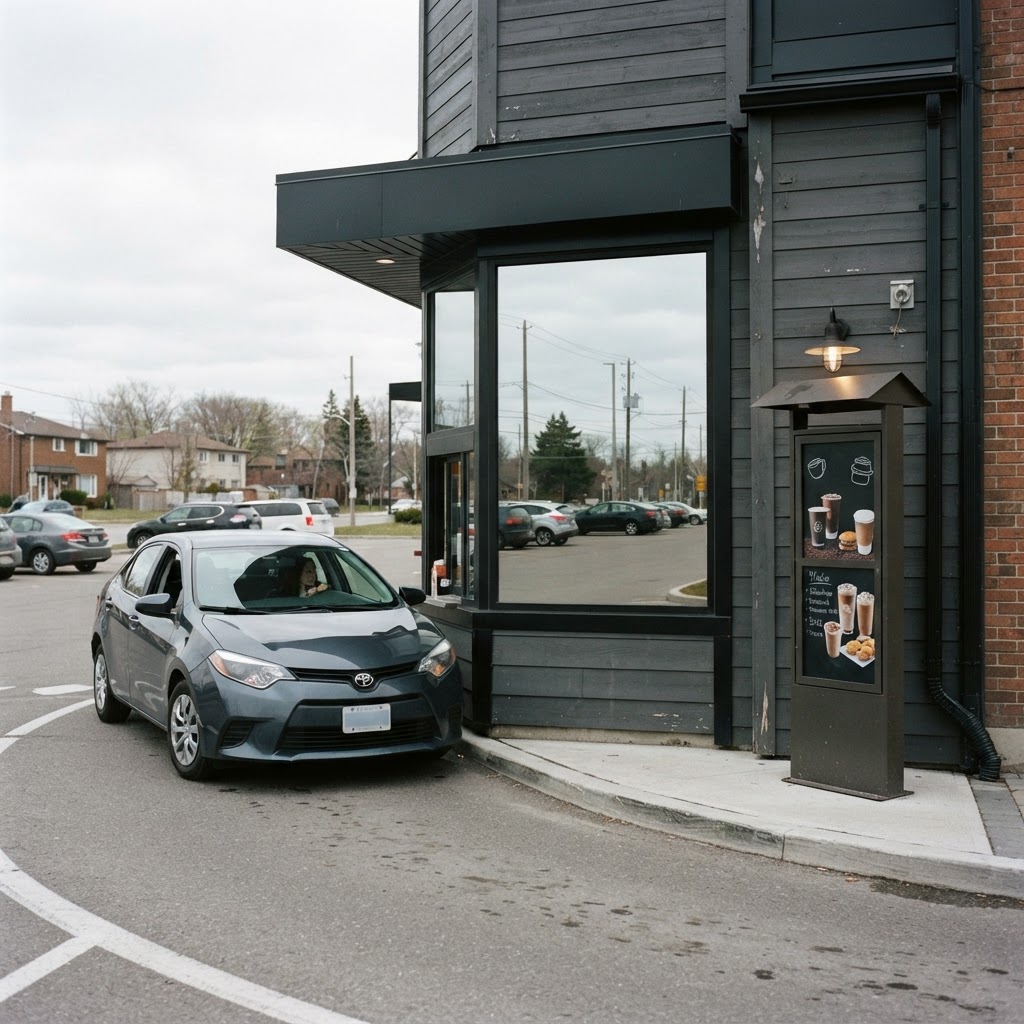
Anyone who has worked a drive-through window knows the feeling. You are on your feet for an eight hour shift, bagging orders and working the register, and every single car in the lane is looking straight at you. There is no pretending otherwise. From the outside, that big service window is basically a stage.
That is exactly why one-way window film is quietly becoming the favorite upgrade of quick service restaurants in Toronto. If your business runs a drive-through lane, a pickup counter or any window that faces the public all day, here is what this film does and what it will not do, explained plainly.
What one-way window film actually is
One-way film is a reflective film, usually silver or neutral in tone, that turns the glass into a mirror on the bright side. The effect comes from lighting, not magic. During the day, the outside of the glass is brighter than the inside, so people outside see their own reflection. Your staff, standing in the darker interior, can see out perfectly. They can watch the lane, count the cars, and keep an eye on the parking lot while customers see none of what is happening behind the counter.
The effect runs on light balance, so it matters how you treat it at night, which we will get to honestly in a moment.
Why restaurants put it on drive-through windows
Drive-through service windows are unique glass. They are big, they face the lane all day, and staff stand directly behind them for entire shifts. That makes them the highest impact spot in any quick service restaurant, and the complaints we hear from managers are always the same few:
- Staff comfort. Nobody loves being watched while they work. The film removes the fishbowl effect, and managers tell us staff genuinely prefer the shift.
- Security. The window hides the POS screen, the cash drawer and the safe drop from every car idling three feet away. Thieves case drive-through lanes because they can see exactly where the money is. Mirror glass ends the free surveillance. We cover this in more depth in our piece on security window film for storefronts.
- Sun and heat. Afternoon sun blasts through a west facing service window straight into the face of whoever is handing out orders. Reflective film knocks down glare and heat, which matters on a July shift.
- UV fading. Menus, signage and packaging stacked near the window stop bleaching out.
The honest part: one-way film at night
Here is what a good installer tells you before you spend a dollar. The one-way effect depends on the bright side staying outside. At night, with your interior lit up and the parking lot dark, the effect reverses. From the lane, the window becomes clear again, and from inside, the staff see a mirror.
For a lot of drive-through spots that is fine, since the lane closes or thins out after dark. If your lane runs late, we handle it with lighting: keeping the exterior wall and window area lit so the balance stays in your favor. We walk the site with you and give you a straight answer on which side wins at night before anything is ordered. You will not get that conversation from a box store.
It is not only for drive-throughs
The same film solves the same problem anywhere the public faces staff through glass: pharmacy counters, gas station kiosks, bank teller lines, clinic reception, dispensary counters, liquor stores, and offices that face a busy street at grade. Anywhere your team works in view of walk-up or drive-up traffic, reflective film buys back the privacy. Some spots do better with frosted film instead, since frosted gives permanent privacy in any lighting. One-way keeps the view out, frosted kills the view entirely. We help you pick based on how you actually use the space. Full context on the commercial side is on our commercial window tinting page.
What it costs and how the install works
Commercial reflective film is quoted per project, based on pane sizes, glass type and site conditions, so the first step is photos and measurements of the windows. Standard privacy and frosted films run $7 to $10 per square foot installed as a useful reference point, and you can see the full pricing picture in our Toronto pricing guide. Installs on operating businesses are scheduled around your hours. On a drive-through, we film the service window before opening or after closing, and most single window jobs are done in one visit. The film goes on the interior surface, so there is no weather delay and no lane closure.
One thing we check for you: glass type. Some sealed units and tempered panes limit which films can go on them safely, and we confirm that before quoting so your window warranty stays intact.
Why a film specialist should do this install
Drive-through windows are demanding glass. The film has to handle all day sun, constant cleaning, and years of commercial abuse while looking flawless from a meter away, because customers stand right next to it. A shop that films commercial windows every week cuts cleaner edges and picks the right product for the exposure. That is our whole business. Window film for cars, homes and businesses, nothing else. We are in North York and cover Toronto, Vaughan, Thornhill, Richmond Hill, Markham, Mississauga, Brampton, Scarborough and Etobicoke.
Get a quote on your service window
Send photos of the window and rough measurements, or just call and tell us what the lane looks like. We will tell you which film, what it costs, and whether the night lighting in your lot will keep the mirror on your side after dark. Call or text 437-331-5379 or use our contact page.