Restaurants in Toronto spend winter fighting their own windows. The dining room is beautiful in July and a liability in January. The two tables closest to the glass sit empty because of the cold. The afternoon sun blows out half the room. And by six o'clock, with the interior lit and the street dark, every guest becomes a display window for the sidewalk.
Window film solves all three problems in a single visit, usually before your next service.
The three problems every glass-front restaurant has
1. Cold tables nobody wants
Glass is the weakest part of the envelope. In a restaurant with a full street-facing frontage, that means the perimeter seats feel the outside temperature all evening. Guests ask to move, servers lose a section, and your best real estate turns into storage for coat racks.
A low-e style solar film adds a reflective layer that keeps interior heat from pouring out through the pane. It is not a curtain and it does not change the look of the room. It simply takes the edge off the glass so the front row is a table again.
2. Glare and heat that wreck the room
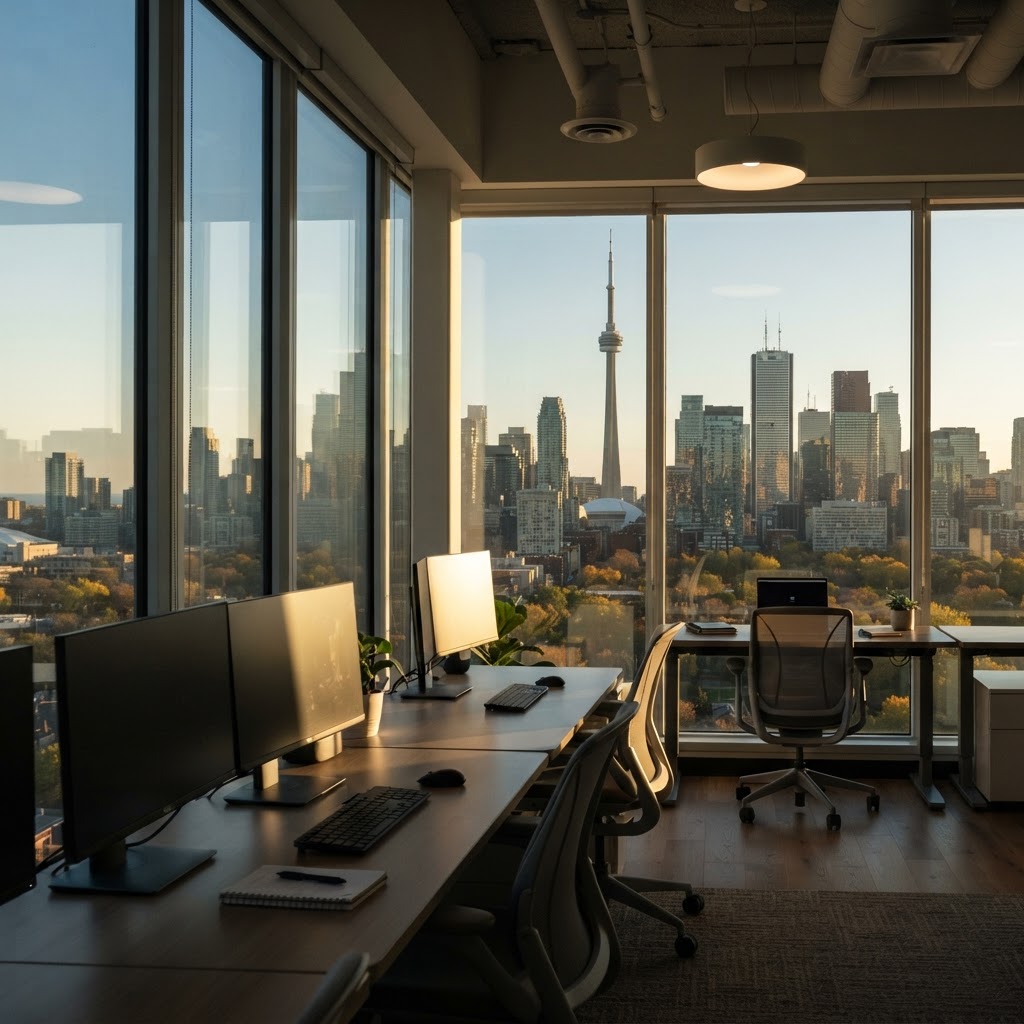
West-facing dining rooms along King West, Queen West, Ossington and the Danforth know this one. Between 4 PM and sunset, low sun goes straight through the front glass, hits the bar and the tables, and makes half the room squint.
Solar control film cuts the intensity and the heat gain without blacking out the windows, which matters if you rely on the street view as part of the room's atmosphere. Lighter shades keep the visibility while killing the hot seat problem.
3. No privacy after dark
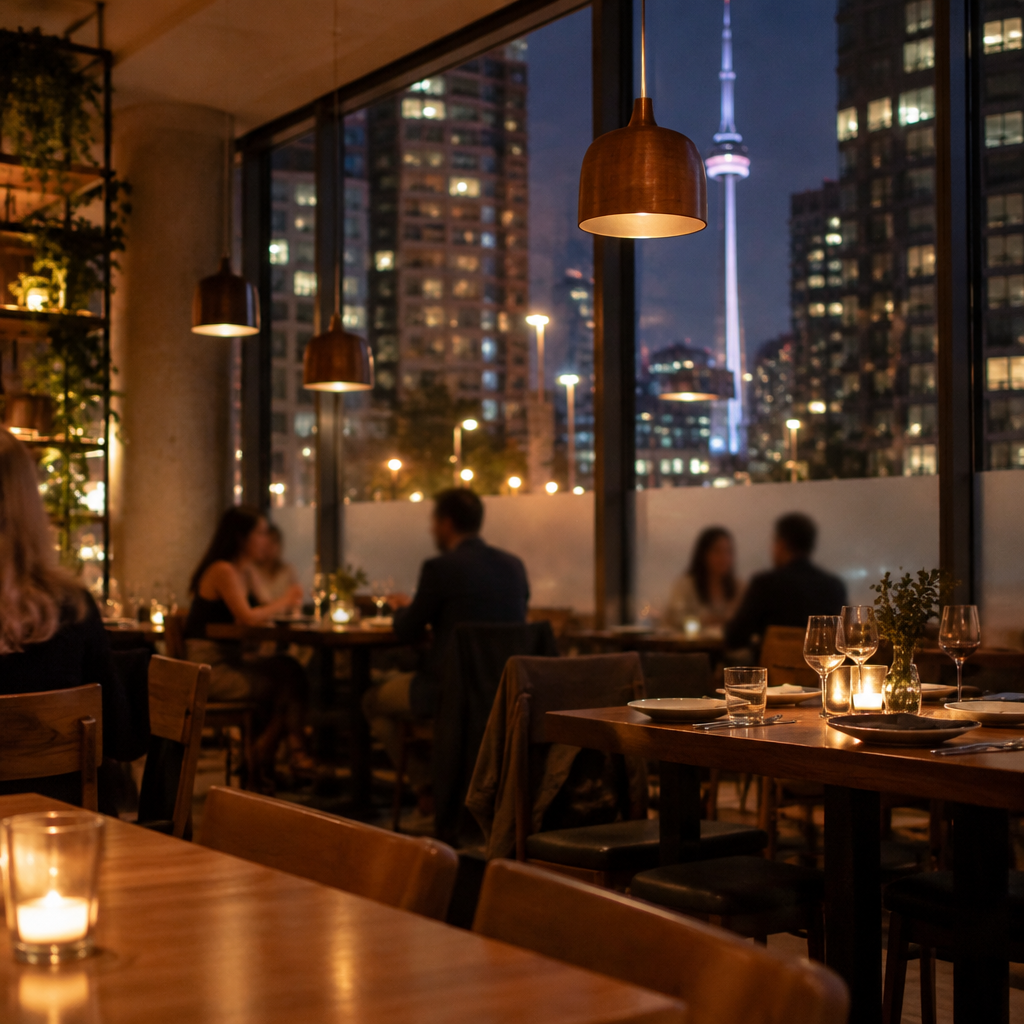
At night the effect reverses. Inside is bright, outside is dark, and anyone walking by can see everything. Mirror style one-way film works during the day and is genuinely useful for daytime glare, but understand the limitation before you buy: once interior lighting outpaces the street, the mirror effect fades.
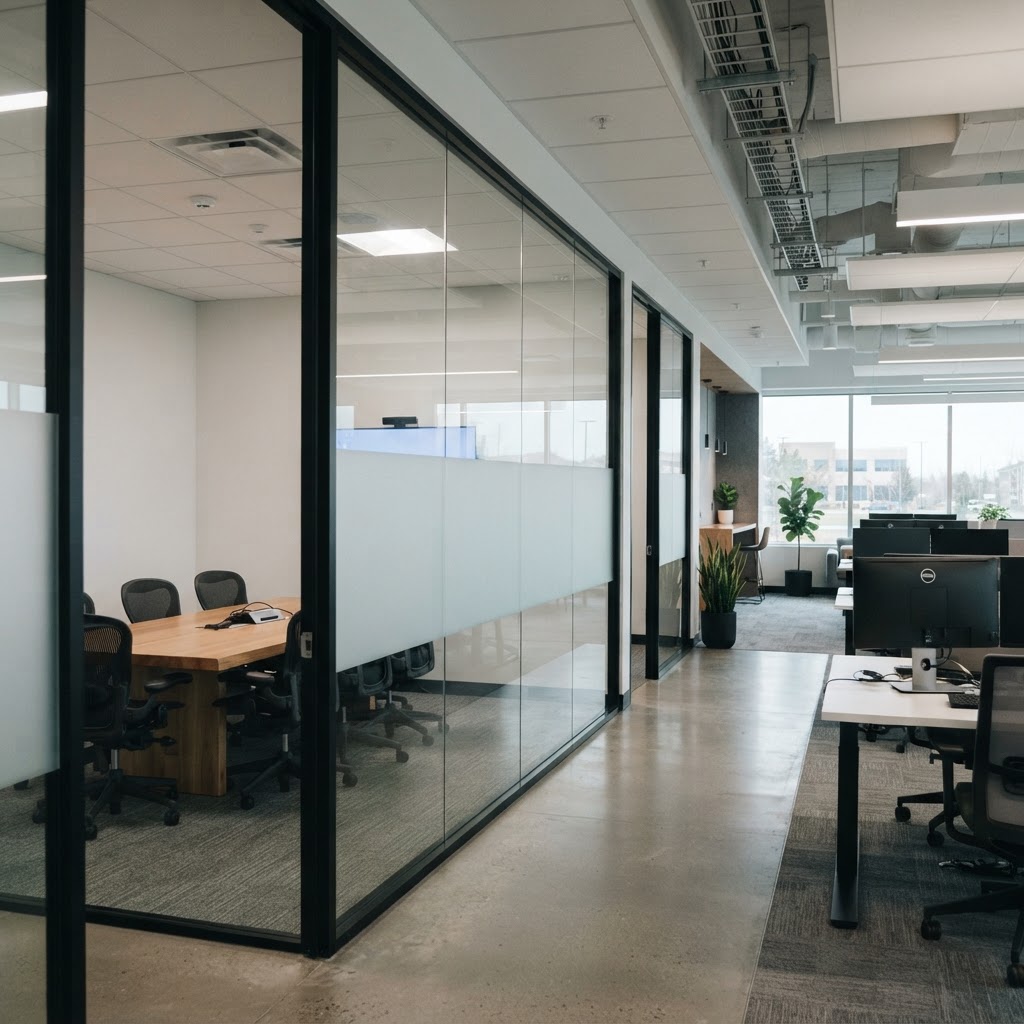
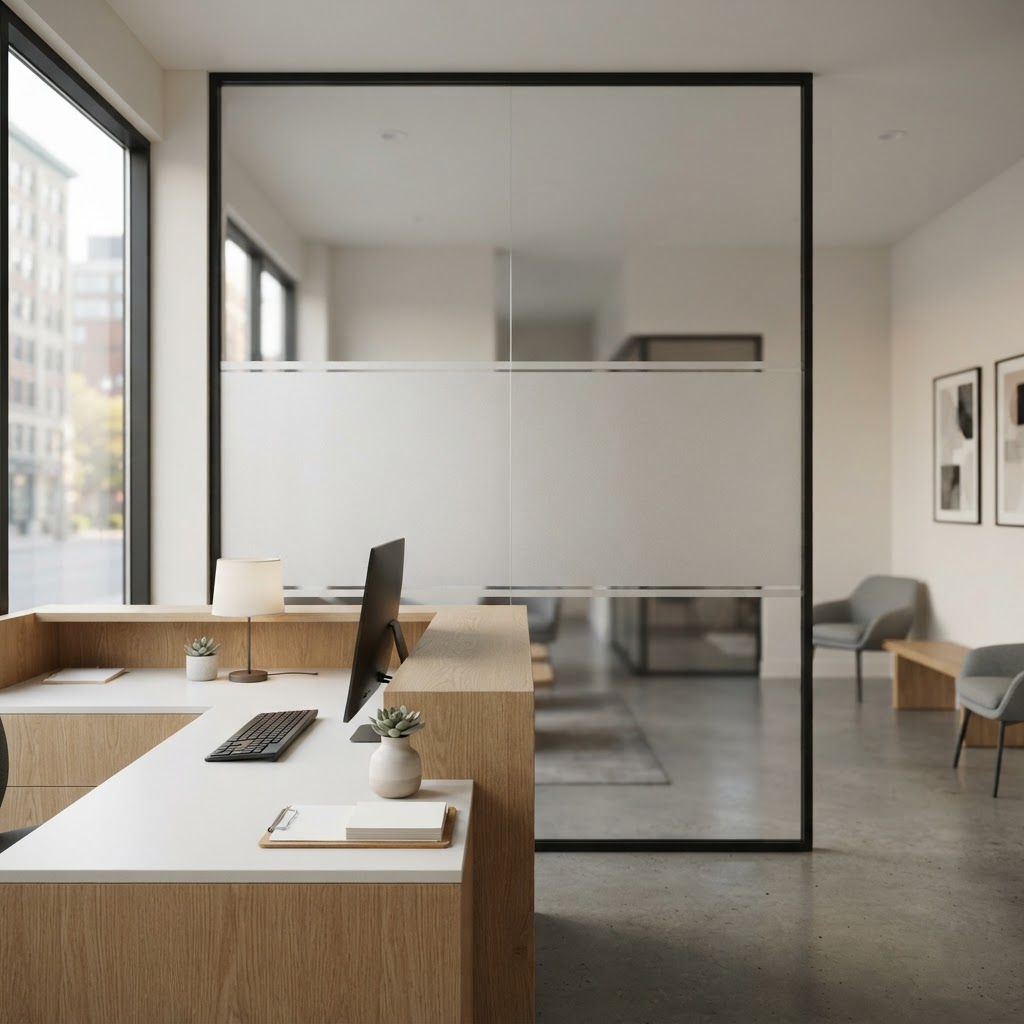
If evening privacy is the priority, a frosted or gradient band along the lower third of the glass is the reliable answer. Guests seated near the window keep their view and lose the sidewalk audience. It reads as intentional design, not as a problem being covered up.
What it costs
Frosted and privacy film runs about $7 to $10 per square foot, depending on the film and the pattern. Solar and low-e films are quoted per project based on pane count, orientation and glass type. A typical restaurant frontage is a single day of work, and we can schedule it before opening or on your dark day so you never close for it.
Glass type matters more than the film brand
Restaurants are often in older buildings with single pane glass, or in newer mixed-use buildings with sealed units and tempered panels. Different glass takes different film, and putting the wrong film on a sealed unit or a tempered pane invites trouble. We check the glass first and tell you what it can take. If a pane cannot take film safely, you will hear that before a deposit changes hands.
Three things we look at on a restaurant site visit
- Orientation. Which side gets the afternoon sun and where the problem tables actually sit.
- Lighting after dark. Interior brightness decides whether one-way film will do its job.
- Patio doors and vestibules. Traffic doors and patio glass take more abuse and need the right film and edge seal.
Why we only do film
We do not do signage, upholstery, glass replacement or renovations. Window film is the entire business, for cars, homes and commercial spaces across the GTA. That focus is why restaurant managers call back after the first job, and why the install holds up through a Toronto winter of freeze, thaw and salt.
Book before the holiday rush
Late November and December are the busiest weeks of the restaurant year, and the worst weeks to notice a cold front row. Get the film in before the bookings fill. Call or text 437-331-5379 with your address and a few photos of the glass, and we will confirm what film suits your windows and what it will cost.