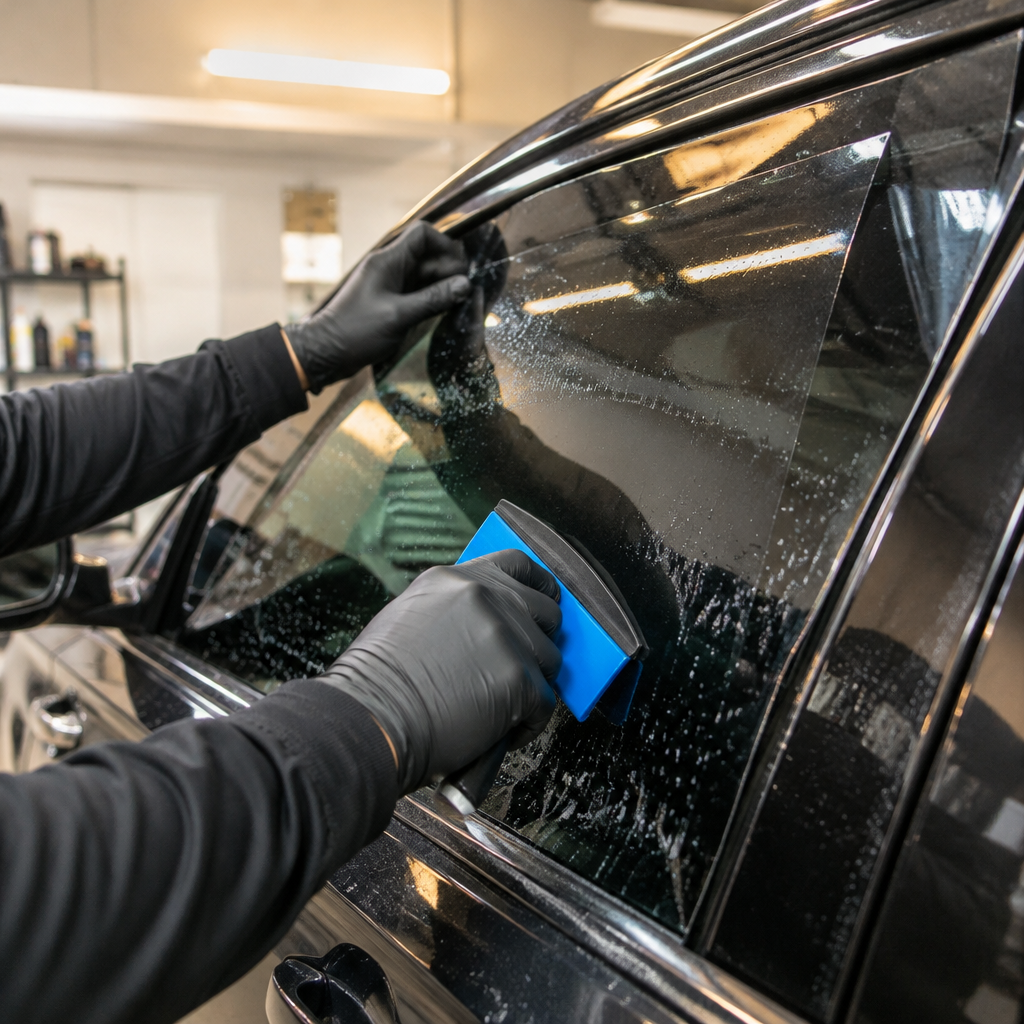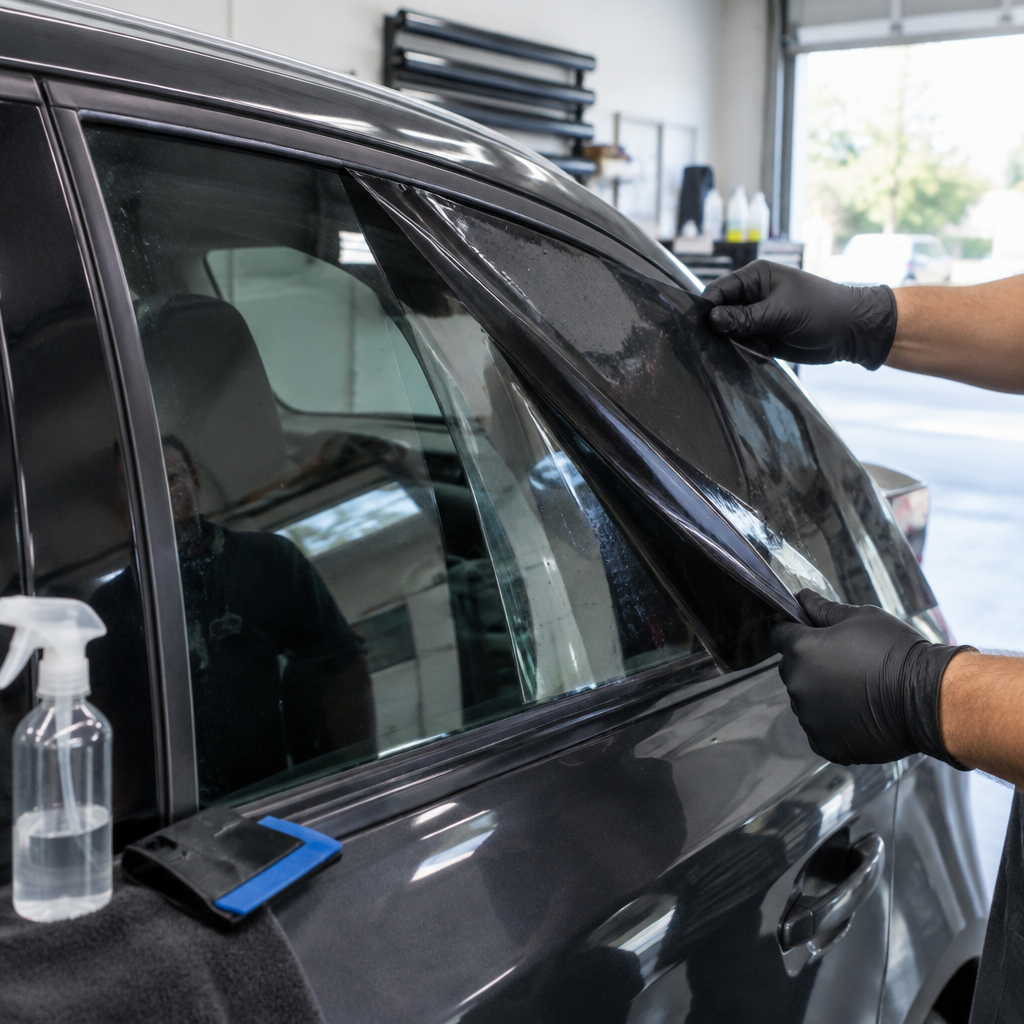
Somebody sold you a tint that turned purple, or it bubbled along the rear glass after two winters, and now you want it gone. Removing old film is a real job with its own price, and it is almost never included in the quote for the new tint.
Why removal costs more than the install
Film is held on by an adhesive that cures harder every year. On a fresh install we lay film onto clean glass in one pass. On a removal we are reversing a chemical bond, and the older it is, the more of the work is scraping rather than installing. A car that took three hours to tint can take four to pull apart.
What actually drives the price
We quote removal per vehicle because five things change the job completely:
- Glass area. Two front windows is a small job. A full car including the rear quarter glass is not.
- Age and film type. Ceramic film usually peels in large sheets. Cheap dyed film from a decade ago comes off in postage stamps and leaves glue behind.
- The rear window. Defroster lines sit under the film, and every scrape passes over them.
- Layers. Film over film means two adhesives, and the bottom one has been cooking for years.
- Residue. Glue left on the glass has to be softened and lifted, or the new film lifts within months.
The rear window is the expensive one
On a sedan the rear glass is roughly a third of the film and most of the labour. The defroster grid is thin conductive lines printed on the inside of the glass. Heat and a blade lift film off cleanly around them, but a grid already damaged, or film that has bonded hard, is where removal goes from routine to careful. We test a corner before quoting and tell you straight if a line is at risk. A new rear window costs far more than any removal.
What it takes
We do not publish one flat removal price, because a 2009 Civic with peeling dyed film and a two year old SUV with ceramic are not the same afternoon. Send the make, model and year and we quote removal and new tint together, in one number, so you are not surprised at the counter. As a guide: two front windows is about an hour of removal, a full car is three to five hours, and a rear window alone is 60 to 90 minutes.
When removal is worth it, and when it is not
Remove it if the film has gone purple or hazy, if it is bubbling, or if it is blocking your view at night. Purple film is dye that has broken down and is no longer rejecting the heat you paid for. Remove it before a lease return, because a dealer charges for the glass, not the film. Leave it alone if the film is clear, intact and you simply want a different shade on one window, since that is a re-tint rather than a rescue.
What goes back on, and what it costs
We install ceramic only, because it rejects infrared heat without metal and holds its colour. Two front windows are $99, a full sedan or coupe is $179, an SUV is $199 and a van is $239. For homes and offices, privacy and frosted film runs $7 to $10 per square foot, and security film is quoted per project. Ontario sets no tint percentage: the rear doors and rear glass can go to 5%, the front doors need the driver visible, and 35% with a clear windshield is what we install most.
Questions we get about removal
Can you tint straight over old film?
No. The new film sticks to the old adhesive, not the glass, and it fails within a season. Any shop that offers this is selling you the same job twice.
Will removal damage my defroster?
It can, if the grid is already compromised. We test a small corner first and stop if a line looks fragile.
How long does the car stay with you?
A removal plus a full ceramic tint is usually one working day. Two front windows only is a couple of hours.
Is removal cheaper if I only want one window done?
Yes, because it is glass area and time, not a flat fee. One door glass is a small job, and we quote it that way.
Send a photo of the film and your make, model and year, and you will get one price covering removal and new ceramic. Call or text 437-331-5379, or use our contact page.
Removal plus new ceramic
Send a photo of the film and we will quote both jobs as one number, so nothing changes at the counter.