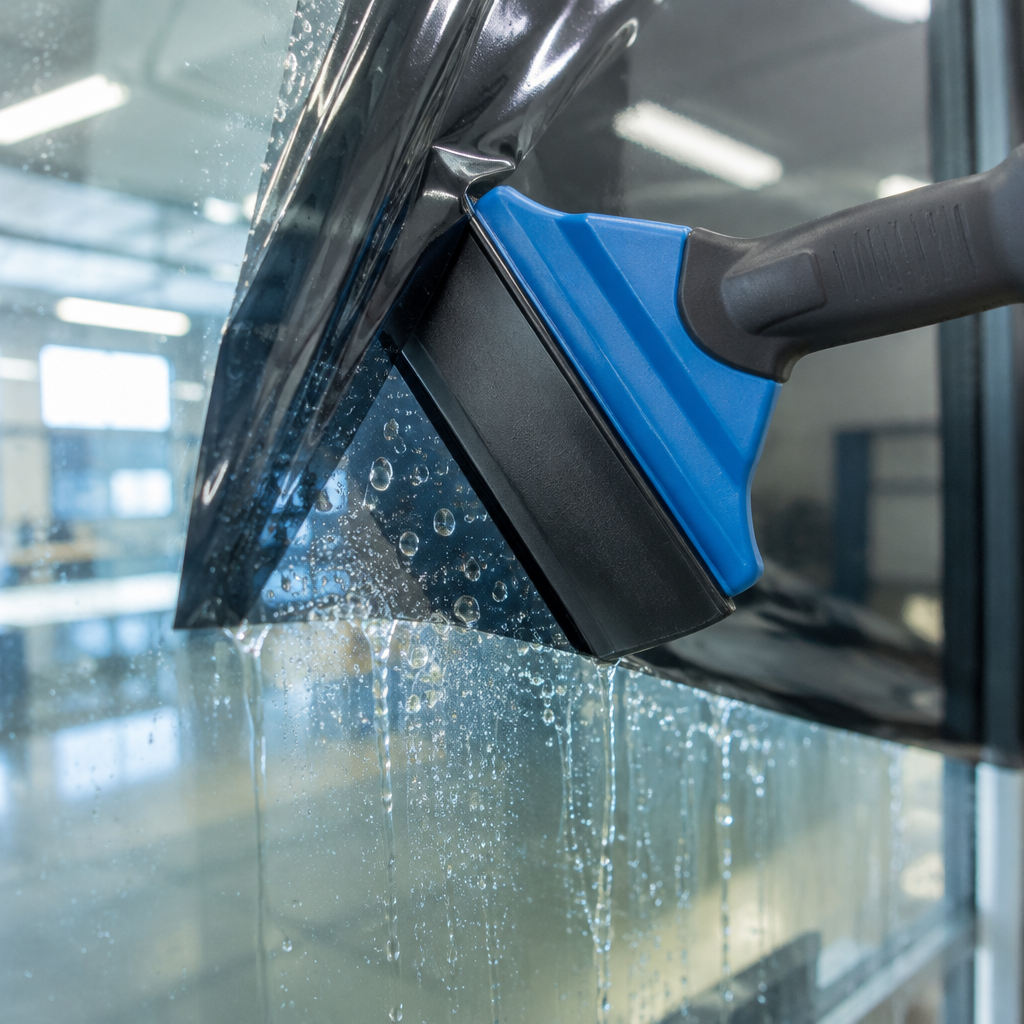
Two shops can charge $179 for the same SUV and deliver very different work. Film quality is half of it. The other half is the person holding the squeegee.
What separates a good install
- The glass is cleaned, scraped and checked for defects before anything is cut.
- Film is cut on a plotter or by hand to the pattern, not trimmed on your glass with a blade.
- Rear glass is heat shrunk to the curve so it sits flat instead of bridging.
- Edges are set with consistent gaps, and defroster lines are never cut.
- The car stays in a controlled bay while it cures.
None of that is visible when you pick the car up. All of it is visible two summers later.
Why film failures are usually install failures
Bubbles along the defroster, lifting corners, a haziness that never clears, silvering at the edge. Most of these come from contamination, too much or too little slip solution, or heat shrinking skipped on a curved rear window. The film is rarely the guilty party.
The warranty test
Ask who honours it. A manufacturer lifetime warranty against bubbling, peeling and colour change is worth something because the film maker, not just the shop, stands behind it. A handwritten promise from a shop with no address is not a warranty.
Ask about the shade decision
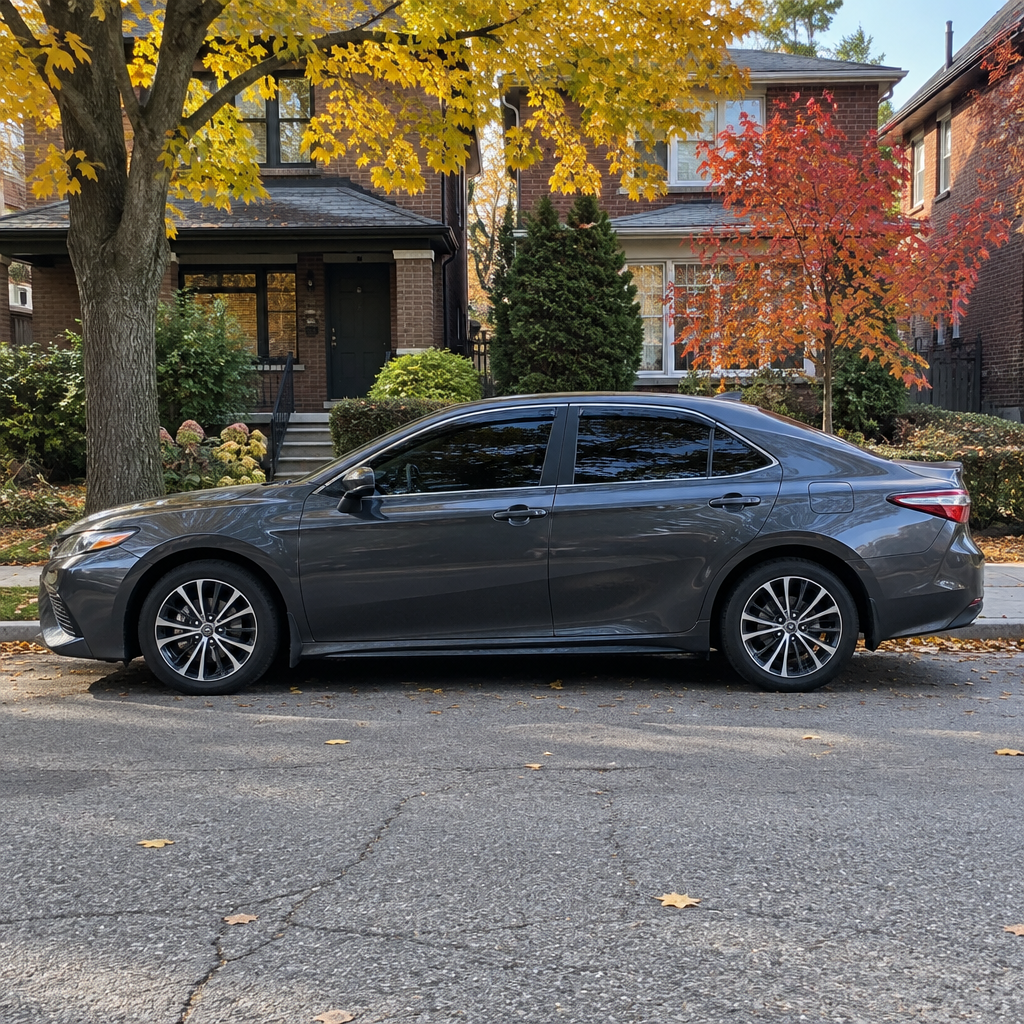
A shop that says yes to 5% on your front doors without a word is not doing you a favour. Fronts need you visible to an officer; 35% with a clear windshield is the practical answer, and the two rear doors plus rear glass can go as dark as you want.
Ceramic versus what is on the roll
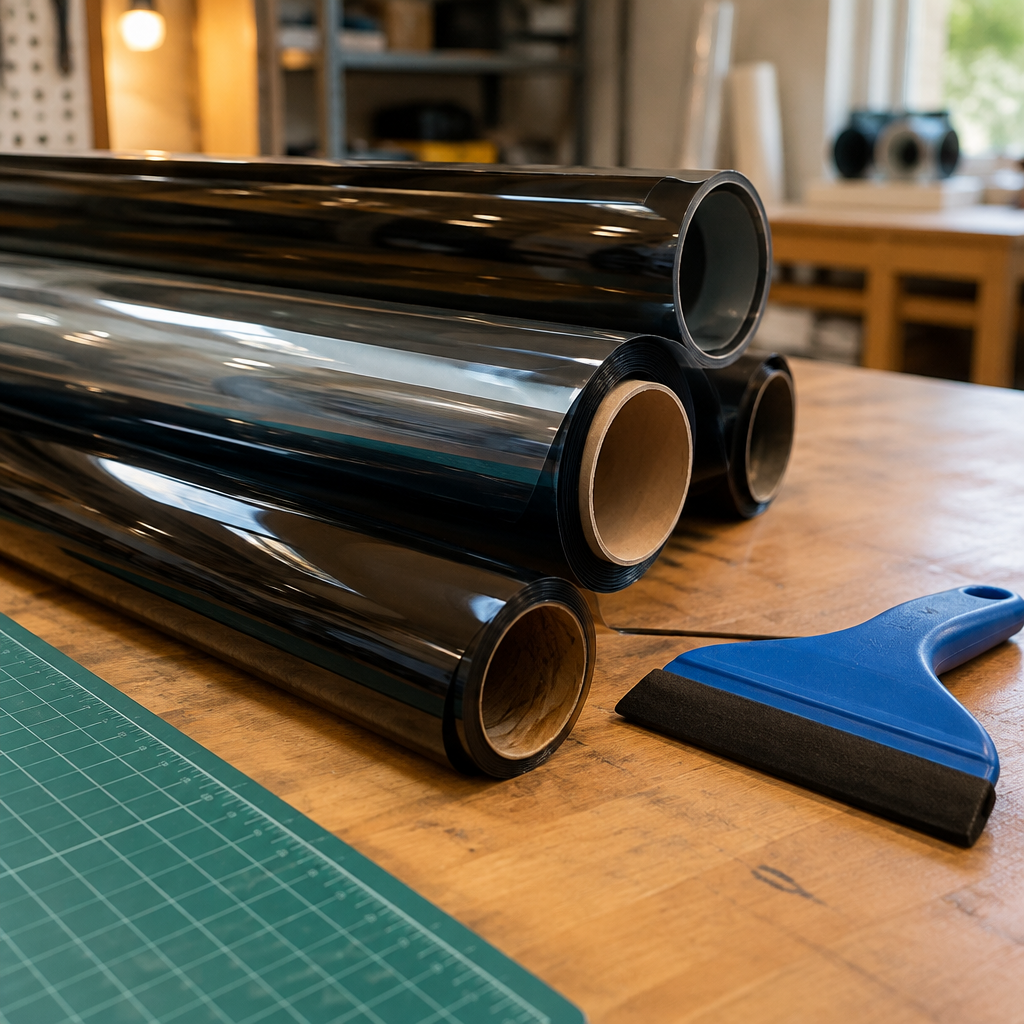
If the shop cannot tell you the product line, that is your answer. Ceramic film costs more and performs better: more heat rejection at the same shade, no purple shift, no signal interference.
Our prices
Two front windows $99, sedan or coupe $179, SUV $199, van $239. Lifetime warranty, work done in our North York bay by appointment.
Workmanship
Film is only as good as the install. Come see the bay before you commit.