Privacy and UV protection are two different jobs, and the film that does one well is not automatically the film that does the other. Most bad tint decisions come from that single confusion.
Here is how shade and film type actually work on a Toronto car, what the numbers mean, and what we install at our North York shop.
Shade and privacy are the same thing
Visible light transmission, or VLT, is the percentage of light that passes through the glass. Lower number, darker glass, more privacy.
5% reads as limousine. You cannot see into the car in daylight. 20% is the common factory privacy look. 35% is light tint, still easy to see through, which is exactly why it belongs on the front doors.
If privacy from the sidewalk is the goal, shade is the answer and the film type barely matters. If heat is the goal, shade is almost irrelevant and the film type is everything.
UV protection has nothing to do with darkness
Quality ceramic film blocks over 99% of UV at every shade, including the light ones. A 50% ceramic and a 5% ceramic protect your skin and your dashboard equally well.
That is the part most people get wrong. They pick 5% for protection, then discover the car is a cave at night and impossible to reverse in a parking garage. A 35% ceramic would have given them the same UV protection and the same heat rejection with none of the downside.
Why ceramic and not dyed
Dyed film blocks light, not heat. It has no layer that rejects infrared, so the cabin still cooks. It also fades from the second summer and turns purple by the fourth.
Ceramic uses nano-ceramic particles instead of metal, which means it rejects infrared heat without interfering with your phone, GPS or keyless entry. It holds its shade for a decade or more.
It is the only film we install on cars. There is no cheaper option on our price list, because we would be selling you something we would have to replace.
What we put on each window
- Two front doors: 35% ceramic, almost always. Glare down, driver still clearly visible.
- Two rear doors and rear glass: your call. 20% is the popular choice, 5% if you want maximum privacy in the back.
- Windshield: clear. We do not cover the viewing area.
- Panoramic roof: ceramic, usually a light shade, mostly for heat.
We can also meter your existing factory privacy glass and match the fronts to it, so the car reads even from front to back instead of two-tone.
What it costs
Two front windows: $99. Sedan or coupe, all around: $179. SUV: $199. Van: $239. Installed, out the door, in ceramic at any shade you choose.
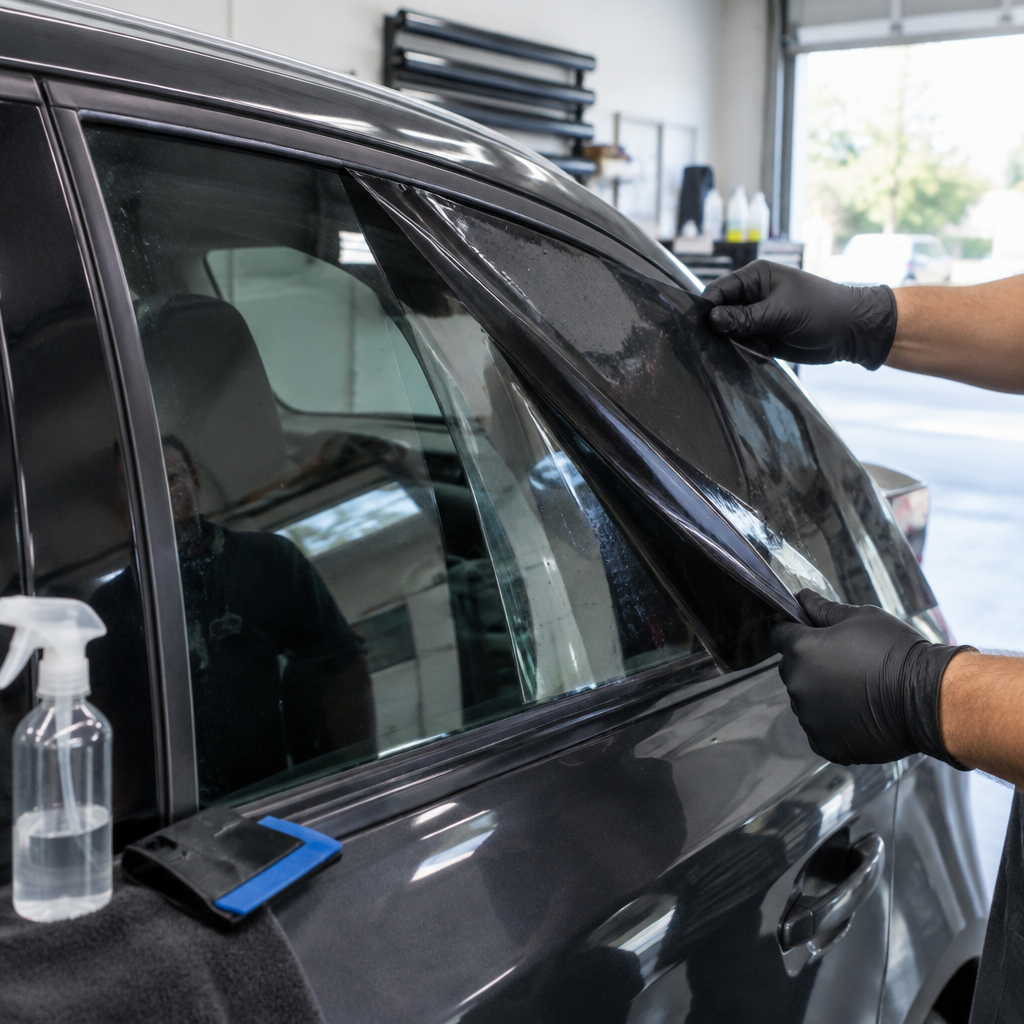
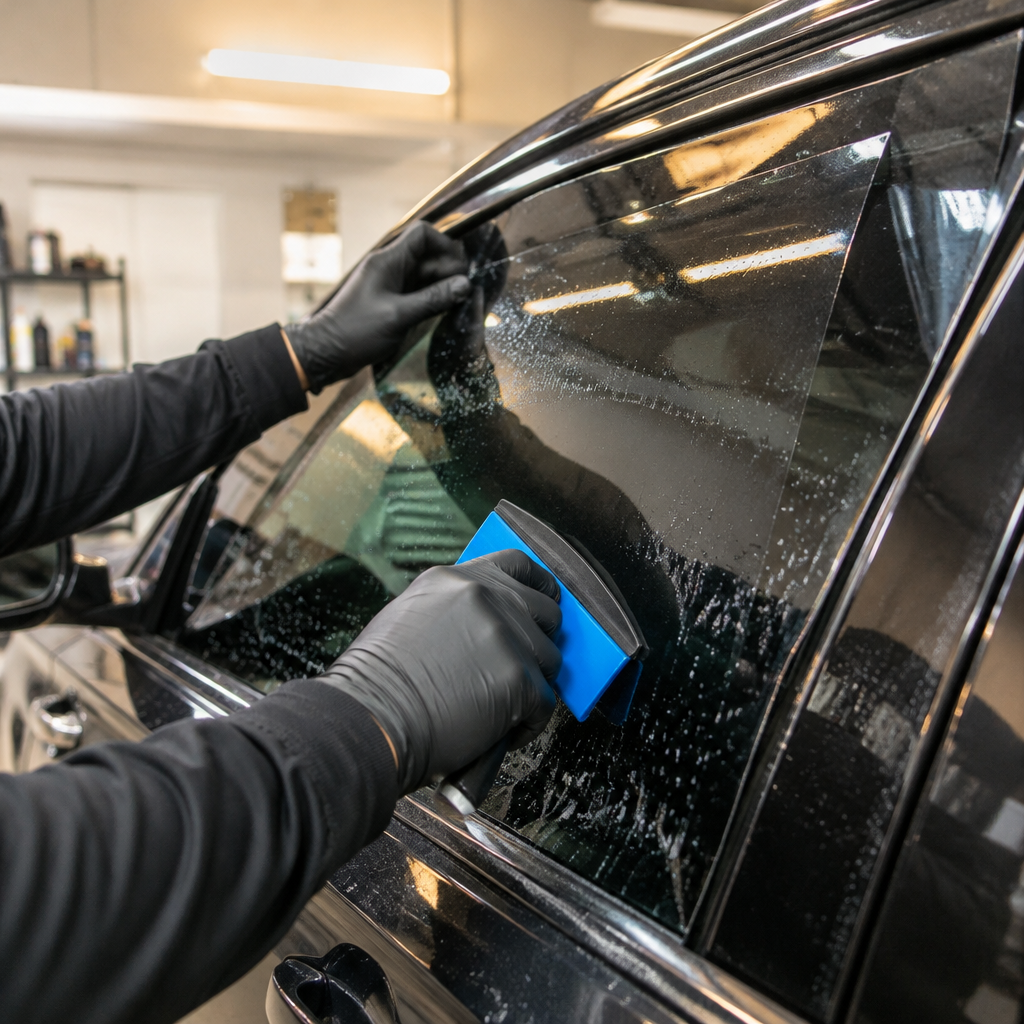
A full car takes two to three hours. Keep the windows up for three to five days while the film cures, and do not clean them with anything abrasive.
The Ontario tint rules, without the myths
Ontario sets no tint percentage. What the Highway Traffic Act requires is that the driver and the front side windows stay visible to a police officer standing outside the car.
In practice: the two rear doors and the rear glass can go as dark as 5%. The front doors have to keep the driver clearly visible, and we install 35% up front for that reason. The windshield stays clear.
35% is our recommendation for the front doors, not a number the province wrote into law. Any shop that calls it a legal requirement is repeating something they heard.
Privacy beyond the glass
Parking and night driving are where dark tint earns its complaints. At 5% on the front doors, mirrors and curbs disappear, and a police officer who cannot see you has a reason to pull you over.
The practical setup for most drivers is 35% front and as dark as you like behind it. You get genuine privacy in the back seats and a car you can still reverse at night.
Frequently asked questions
Will ceramic tint block my phone signal?
No. Ceramic contains no metal. Cheap metallic film is what causes that problem, and it is another reason to ask what is going on your glass.
Which shade gives the most UV protection?
All of them, in quality film. UV rejection is over 99% regardless of shade, so pick shade for privacy and film type for heat.
Can you match the factory rear glass?
Usually. We meter the existing glass and pick a shade that reads even front to back instead of guessing from a sample card.
Do you install dyed film if I ask?
No. It fades, it bubbles at the defroster lines and it does nothing for heat. We would rather lose the job than install it.
If you want the back of the car private and the front of the car legal, call 437-331-5379 or send a note through our contact page. We tint cars at our North York shop and handle homes and offices across the GTA. Start with automotive window tinting for packages by vehicle, check our pricing page, or read ceramic vs dyed tint if you are still comparing film types.
Privacy and UV
Over 99% of UV at every shade. Pick the shade for privacy, not for protection.