Car window tinting in Toronto gets sold three ways: as a look, as heat control, and as interior protection. The truth is that all three come from the same product, and the decisions that change the result are the shade you choose and the film you put on the glass.
This guide covers what the numbers mean, what we install and why, what it costs, and where the Ontario rules actually land. It is everything we would tell you at the counter, minus the coffee.
Start with the number: VLT
Tint is measured in visible light transmission. A 35 percent film lets 35 percent of visible light through, so a lower number is darker glass. For reference, bare car glass usually reads around 70 to 75 percent, and once you add film the result is the film multiplied by the glass. A 35 percent film on 70 percent glass measures closer to 25 percent on a meter, which surprises a lot of drivers.
What each shade looks like on a real car
- 50 percent: barely tinted. Mostly heat and UV rejection with almost no visual change. Popular with lease customers.
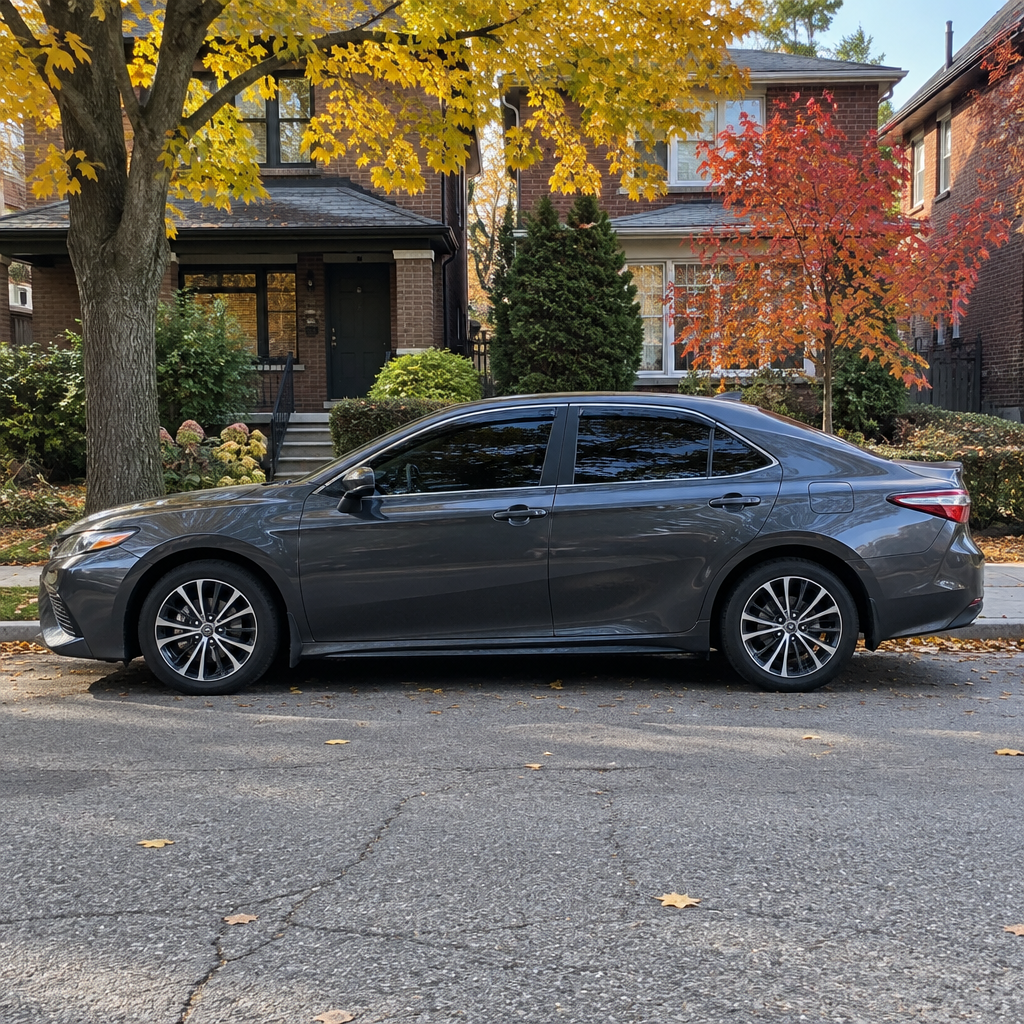
- 35 percent: the shade most people picture as tint. You can still see shapes at night, parking is easy, and it looks factory on a sedan. This is also the darkest we would put on the front doors if you want to stay clearly visible to police.
- 20 percent: clearly dark in daylight. At night in an unlit garage you will be leaning on mirrors and the reverse camera.
- 5 percent: limousine dark. Great on rear doors and rear glass, a bad idea on a front side window.
If you are weighing two of those, 35 versus 20 percent tint settles the difference in about a minute.
Why we install ceramic, and only ceramic
There are cheaper films on the market. Dyed film is a layer of colour in the adhesive: it looks fine for a year, then turns purple and stops rejecting meaningful heat. Metalized film rejects heat well but can interfere with cell and GPS signals and reads shiny from outside.
Ceramic film is a nano ceramic layer that rejects infrared heat without metal, stays optically clear, does not fade, and does not touch your reception. It costs more per square foot and it is the only thing we put on a car, because it is the only thing we can stand behind for the life of the vehicle. Performance numbers and film options are on our ceramic car tinting page.
What a full tint includes
A full package covers all side windows and the rear glass. The windshield stays clear, legally and practically, though a strip along the top edge is allowed and is a common add-on for sun visor coverage. A sunroof or panoramic roof can be filmed too, and on a car with a large glass roof it makes a bigger difference to cabin temperature than the doors do.
Two front windows only is a normal starting point. It handles the glare and the driver's arm exposure, and the rest can be added later.
What it costs in Toronto
Our ceramic packages are $99 for the two front windows, $179 for a sedan, $179 for a coupe, $199 for an SUV and $239 for a van. That includes prep, installation and the warranty. Old film removal is quoted separately once we see the glass, since a five year old layer of purple film takes real time to strip. The full breakdown is in our Toronto tint pricing guide, and if your car is leased, read tinting a leased car in Ontario before you book.
Ontario tint rules, without the mythology
Ontario does not set a tint percentage for side windows. It enforces a clear view, and police can meter your glass if they think it obstructs you. The practical version:
- Rears can go to 5 percent.
- Front doors need to keep you clearly visible. We install 35 percent up front.
- Windshield stays clear, top strip excepted.
Anyone promising legal limo tint all around is selling you a ticket. The long version, including how enforcement works, is in our Ontario tint rules guide.
What happens in the bay
- Prep. Glass gets cleaned, scraped and decontaminated. Most film failure starts here, not in the film.
- Plotter cut. Panels are computer cut to your vehicle, so edges are consistent and there is no blade near your glass.
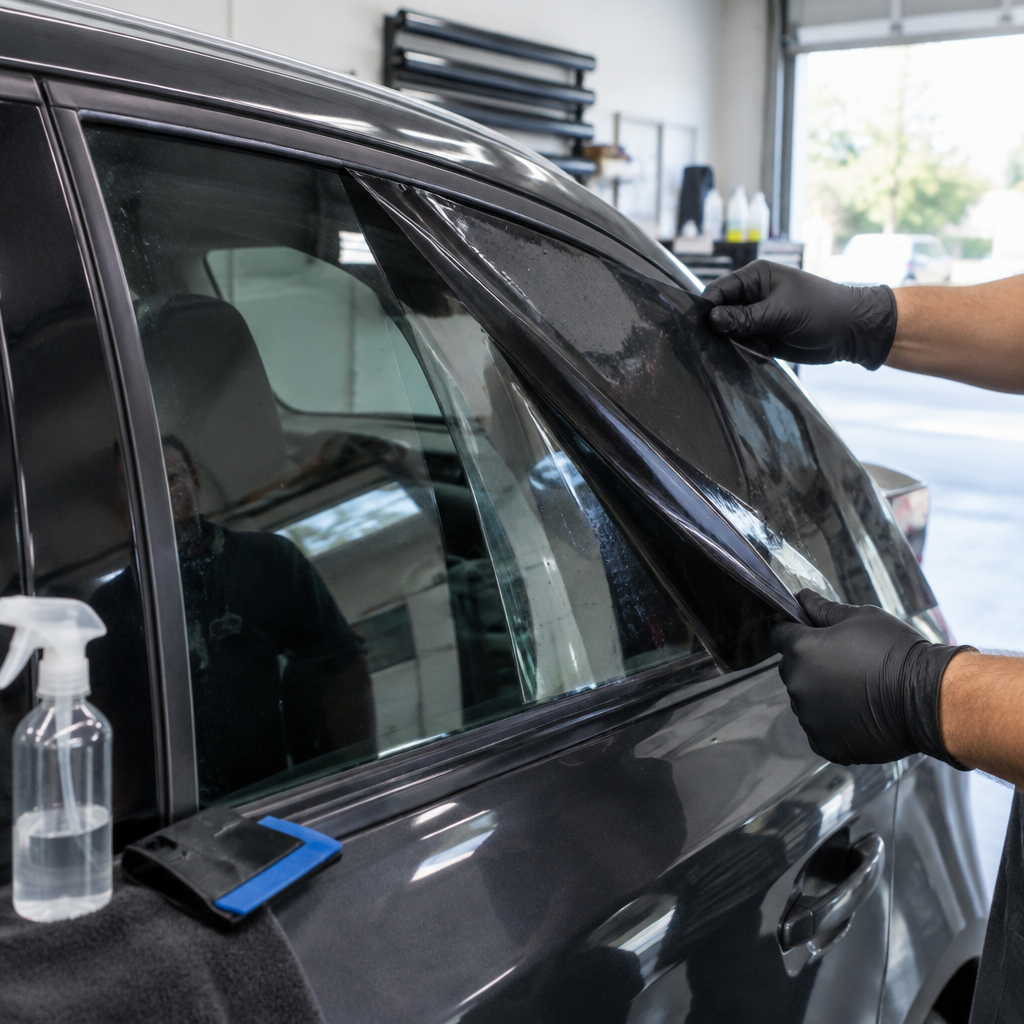
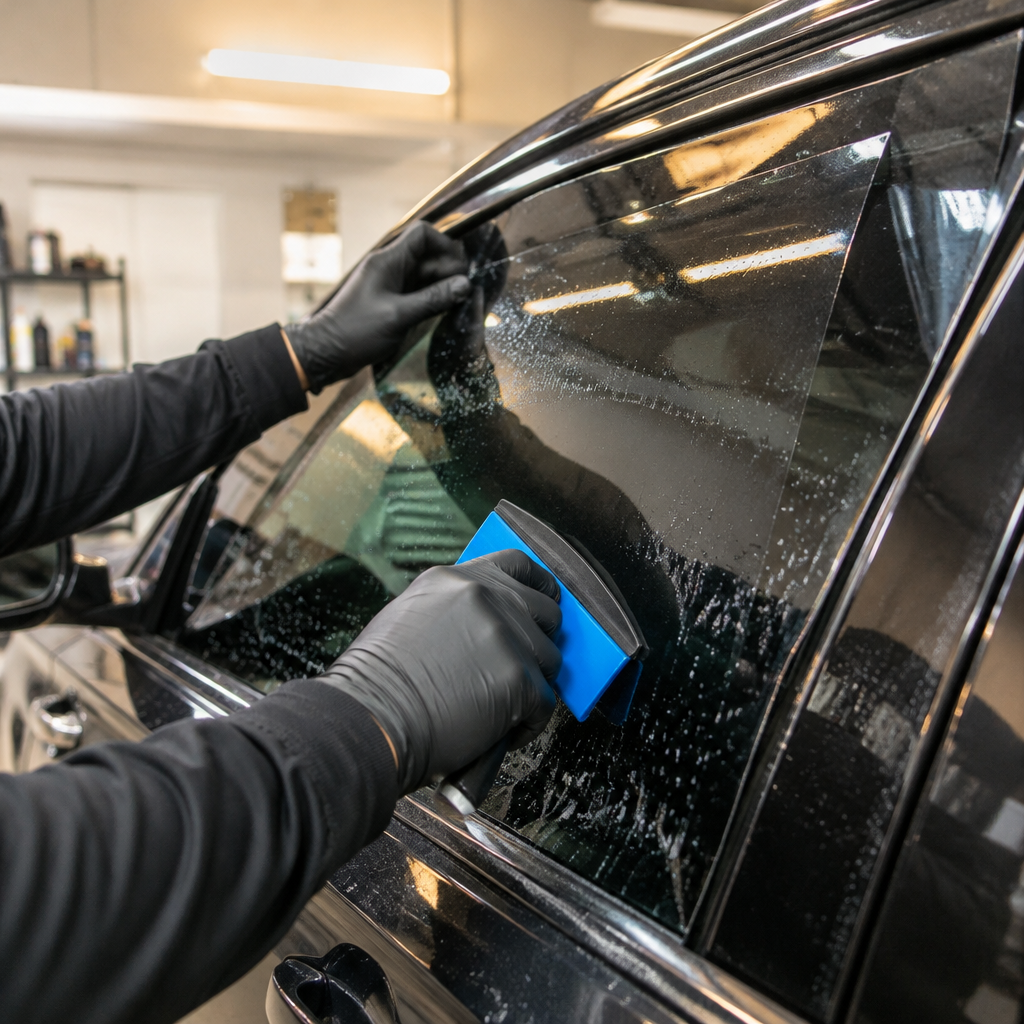
- Install. Film is applied wet, squeegeed out and trimmed. A full car takes two to three hours.
- Cure. Small moisture pockets and a light haze are normal for the first days and clear on their own. Our tint curing guide explains what is normal and what is not.
You get a warranty on the film and the work: no peeling, no bubbling, no colour shift. Keep the windows up for two or three days, skip washing for a week, and do not press hard on the edges.
Comfort, not just appearance
Ceramic film rejects a large share of the infrared heat that builds up in a parked car, so the AC reaches a comfortable cabin faster and works less to hold it. It rejects over 99 percent of UV, which is what actually stops a dashboard from cracking and leather from fading. And it cuts the harsh brightness of low winter sun and summer glare, which is the benefit drivers mention first after a week of ownership.
For an EV owner there is a bonus: less heat load means less battery spent on cooling, which we cover in does window tint improve EV range.
Why a film only shop
We do not sell detailing, paint protection or accessories. Window film is the whole business, cars, homes and businesses, and every day our hands are on it. That is why we can tell you when 35 percent is the right call, when a windshield strip is a waste of money for your commute, and when your factory glass is already dark enough that the fronts will match regardless.
Frequently asked questions
What does a full car tint include?
All side windows and the rear glass. The windshield is not tinted, though a legal top strip can be added, and a sunroof can be filmed on request.
Which shade looks best on a black car?
20 percent on the rear and 35 percent on the fronts is the most common pairing. It reads factory and stays usable at night.
Does film protect the interior?
Yes. Over 99 percent UV rejection is what stops dashboards, leather and trim from fading and cracking.
How long until I can wash the car?
Wait about a week, and avoid pressing hard on the film edges for the first while.
Will tint interfere with my phone or GPS?
No. Ceramic film contains no metal, so reception is unaffected.
Book the shade you actually want
Tell us the make, model and year and we will tell you what your factory glass already measures, so the shade you choose looks right the first time. Installs happen at our North York shop by appointment, and drivers come to us from Toronto, Vaughan, Thornhill, Richmond Hill, Markham, Mississauga, Brampton, Scarborough and Etobicoke.
Call or text 437-331-5379 or use our contact page.
Book your tint
Send your make, model and year. We tell you what your factory glass measures before you pick a shade.