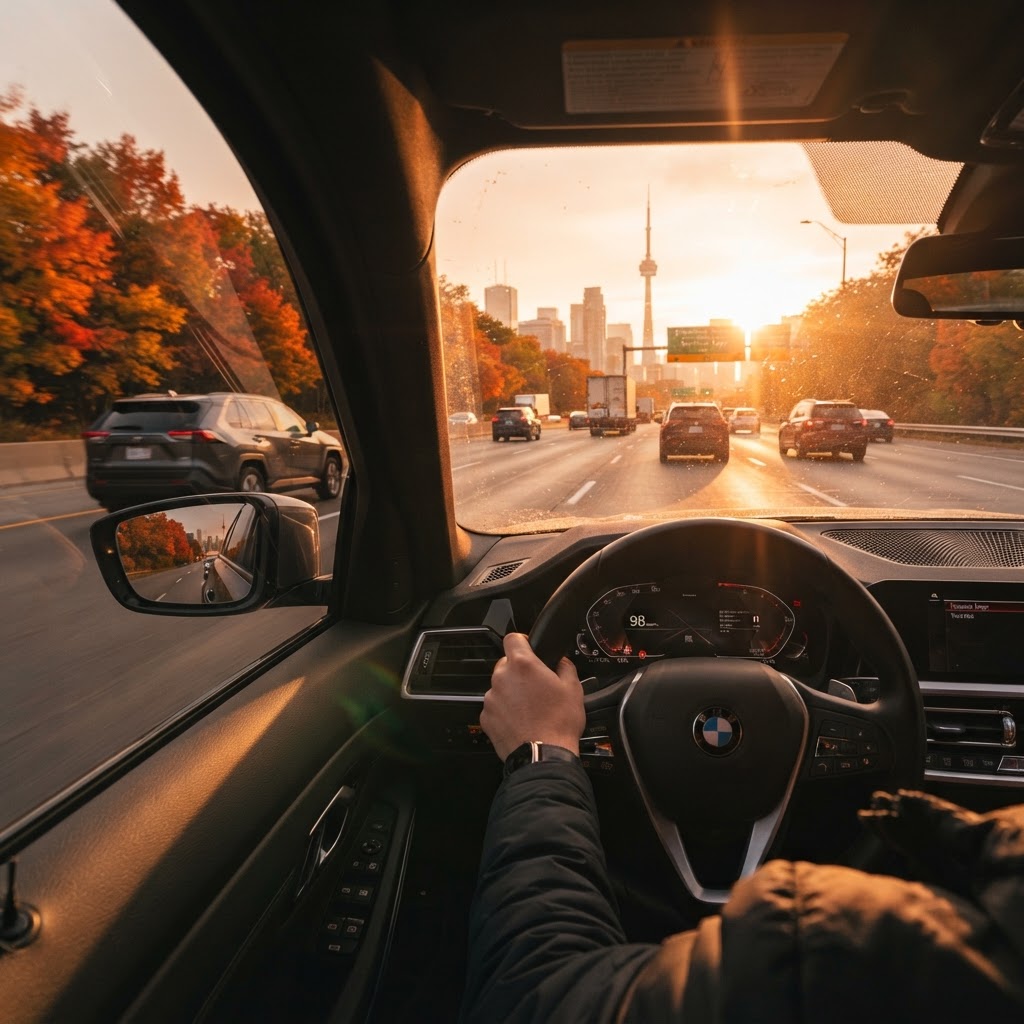
Autumn in Toronto puts the sun exactly where your visor cannot reach. Low, west, and straight through the driver's window on the way home from work. Ceramic film is the fix that does not involve squinting for six weeks.
Here is why fall glare is worse than summer glare, what it does to your reaction time, and how we set up a car for October driving.
Why fall glare is worse than summer
In June the sun is high. By mid October it sits low from about 4pm onward, which means it arrives horizontally, under the visor and across the side glass.
The result is that hard wash of light that erases lane markings and turns the car in front into a silhouette. Add a wet road and you get the reflection twice, once from the sky and once from the asphalt.
Rush hour and sunset line up in the fall. That is the entire problem in one sentence.
What it costs you, beyond comfort
Glare is a visibility problem before it is a comfort problem. When the windshield and side glass wash out, your eyes have to work at the exact moment the road is busiest.
Reaction time drops. Following distance gets harder to judge. The pedestrian in dark clothing at a crossing becomes visible later than they should.
Anyone who drives the same westbound commute every October knows this, and most of them just squint through it.
What ceramic film does about it
Ceramic film cuts glare at the glass itself, and it does it without turning the car into a cave. A 35% ceramic on the front doors reduces the intensity noticeably while still letting an officer see you through the window, which matters because Ontario expects a clear view of the driver.
It also rejects infrared heat, so the car stops baking on the same drive, and it blocks over 99% of UV, which is the part that cracks the dashboard.
The other advantage in fall: ceramic stays optically clean at night. Cheap film hazes, and haze plus headlights is worse than the glare you started with.
The shades we set up for fall driving
- Two front doors: 35%. Comfortable in low sun, still easy to see through, and it keeps the driver visible as Ontario requires.
- Two rear doors and rear glass: as dark as you like. 20% is common, 5% if you want limousine privacy in the back.
- Windshield: clear. We do not cover the viewing area. A brow strip is a grey area and we advise against relying on it.
If your car already has dark factory privacy glass in the back, we meter it and match the fronts so the car reads even instead of two tone.
Three things that matter as much as the film
A clean windshield. Dust and residue on the inside of the glass scatter low sun into a haze. Most of the "my tint made it worse" complaints are actually a dirty windscreen.
Good wiper blades. A streaking blade turns a low sun into a strobe. Replace them in October, not in the spring.
Polarized sunglasses. They cut the road reflection. They also interact with some films at an angle and can show a slight pattern on tempered glass, which is normal and not a defect.
What it costs
Ceramic film: two front windows $99, sedan or coupe $179, SUV $199, van $239. Installed, any shade, out the door.
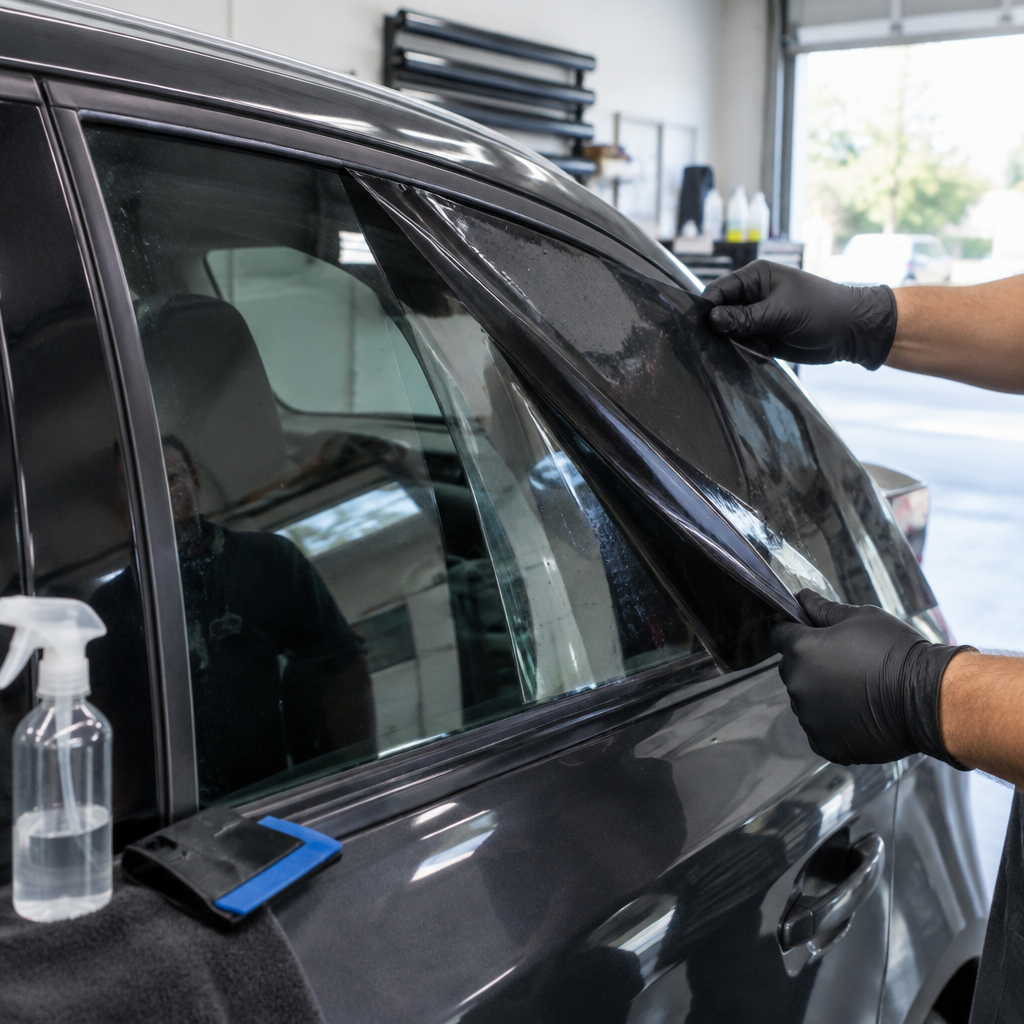
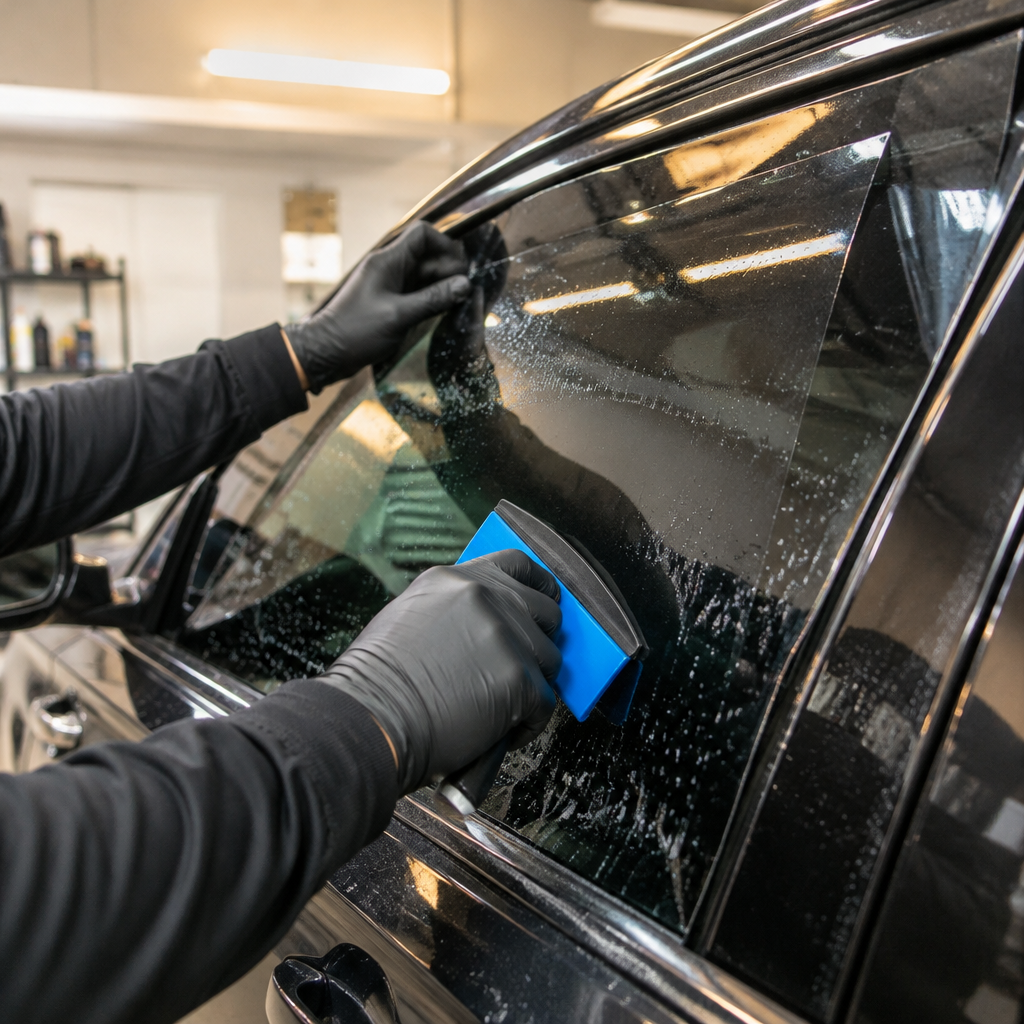
A full car takes two to three hours and the windows stay up for three to five days while the film cures. Book early in the day and you can drive home the same afternoon.
Why not the cheap package
Dyed film handles visible light and little else. It fades and turns purple within a couple of years, and it does nothing for the heat that comes with that low sun.
Ceramic rejects the infrared heat as well as the glare, and it is the only film we install on cars. There is no cheaper line on our price list, for the simple reason that we would be replacing it.
The Ontario rules, plainly
Ontario sets no tint percentage. What the Highway Traffic Act requires is that the driver and front side windows stay visible to a police officer from outside the car.
In practice, the two rear doors and the rear glass can go as dark as 5%. The front doors have to keep the driver clearly visible, and 35% is what we recommend and install there. The windshield stays clear.
35% is our recommendation, not a number the province wrote into law. If a shop tells you otherwise, ask them to show you the section.
Frequently asked questions
Will 35% be enough for fall glare?
For most drivers, yes. It cuts the intensity without making the car hard to see out of at night, which 20% on the front doors would.
Do I need the rear windows done too?
Not for glare. Do them for heat and privacy. The fronts are what fix the drive home.
Can I tint just the windshield?
No. The viewing area stays clear. We will not install film over it.
How long does ceramic last?
Ten years or more. It holds its shade, it does not turn purple, and it does not bubble at the defroster lines.
If the drive home in October is the worst part of your day, call 437-331-5379 or send a note through our contact page. We tint cars at our North York shop and handle homes and offices across the GTA. Start with automotive window tinting, check our pricing page, or read ceramic vs dyed tint before you book.
Autumn glare
Book before the clocks change and drive the dark afternoons with less squinting.