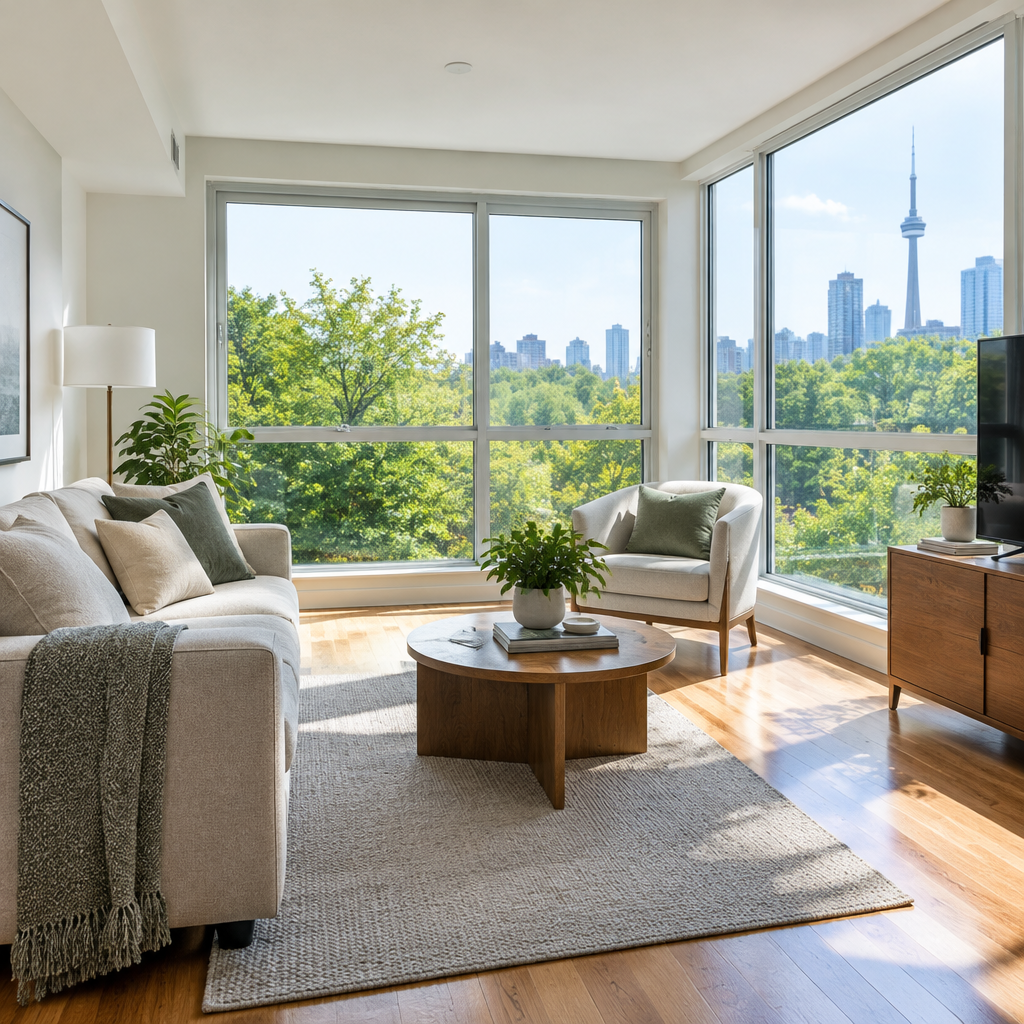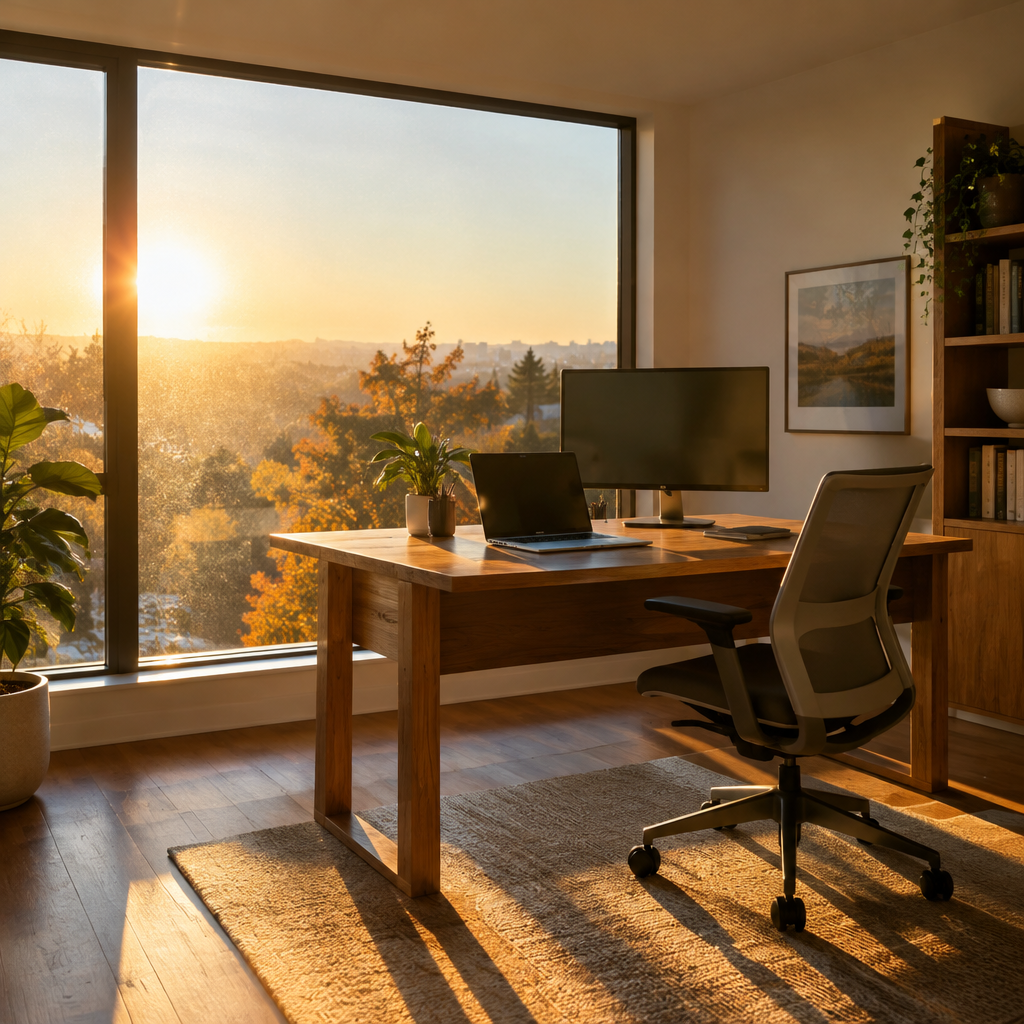
Summer heat in a Toronto house rarely comes through the walls. It comes through two or three panes of glass that face west, and it arrives between two and six in the afternoon, exactly when the house is already warm. Window film is the cheapest way to change what that glass does before next July.
What west-facing glass actually does
Ordinary double-pane glass is built to keep heat in, not out. In January that is a feature. In July it means a west window works like a small radiator: sunlight passes through, hits the floor and furniture, and the heat it produces cannot get back out through the same glass.
The result is predictable. The room closest to that window runs four to eight degrees warmer than the rest of the house, the thermostat sits in a hallway that never sees the sun, and the air conditioner runs flat out from mid afternoon until sunset.
How solar film changes it
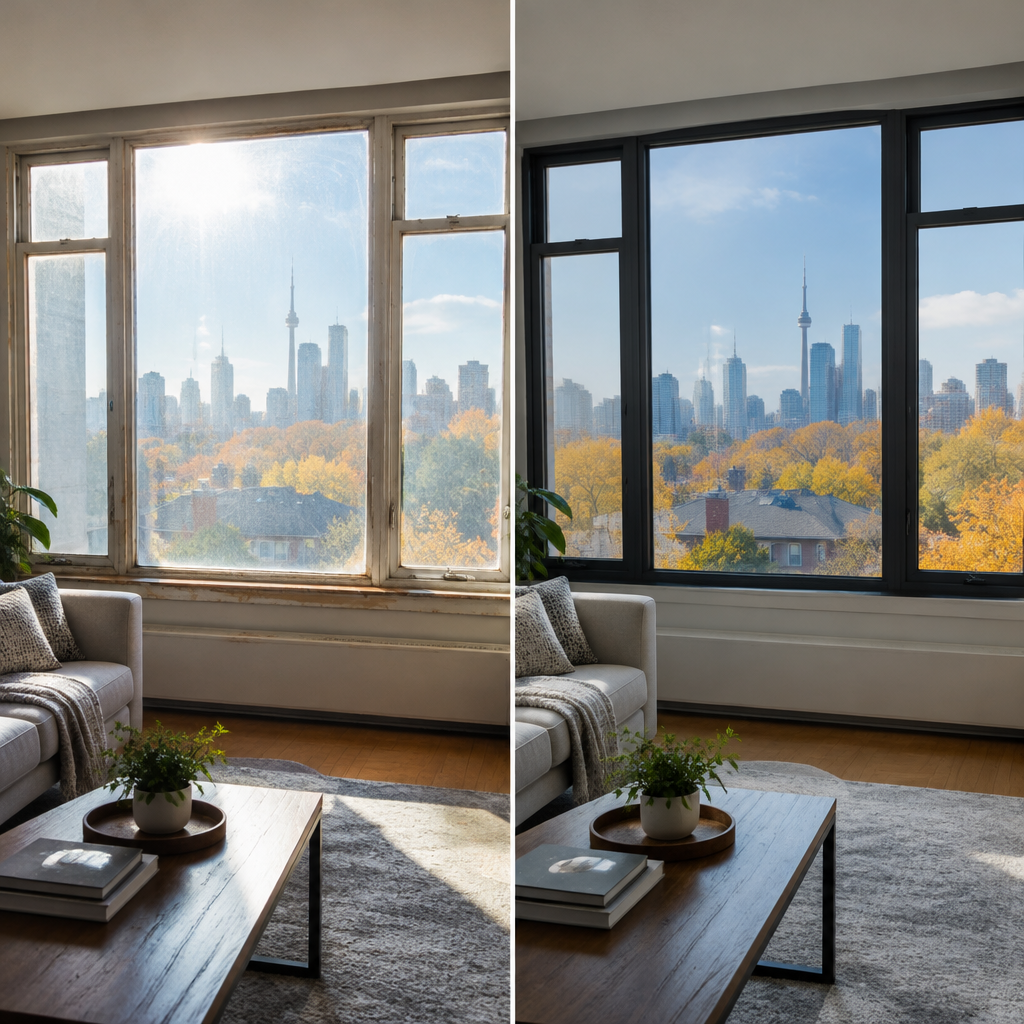
Solar film is a thin polyester layer applied to the inside face of the glass. Its job is to reject the infrared part of sunlight, which is the part you feel as heat, before it gets into the room. It blocks over 99% of UV at the same time, which is the part that fades hardwood, bleaches rugs and cracks leather.
- Visible light stays mostly intact with a clear film, so the room does not go grey.
- Infrared heat is rejected at the glass instead of being absorbed by your floors.
- UV is blocked at over 99%, which is the fading problem solved.
- Glare drops on the television and the monitor, which is usually the second complaint after heat.
Which windows are worth doing
Not every pane. We measure sun exposure before quoting, because filming a north window is money spent on nothing. In most GTA homes the list is short: the two or three west-facing windows in the kitchen, living room or main bedroom, any south glass under a skylight or over a staircase where heat stacks, a condo wall of glass that faces the lake, and a ground-floor slider that turns the next room into an oven by four o'clock.
A typical semi in Etobicoke has three west windows in the living room, each about fifteen square feet, plus a patio slider. Filming those four openings is a half day on site and a fraction of what one replacement unit costs, and it also cuts the glare that makes the television unwatchable before sunset.
What it costs
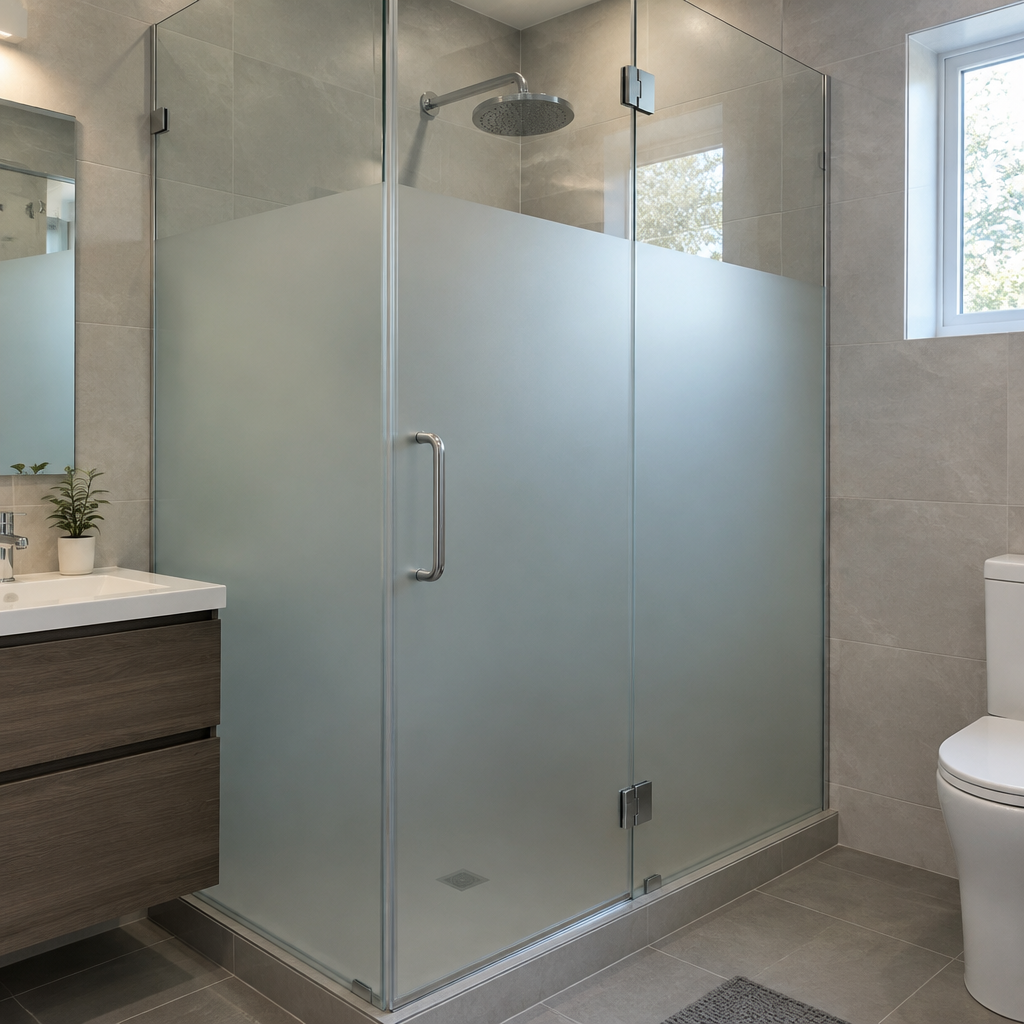
Frosted and privacy film for homes runs $7 to $10 per square foot. Solar film and security film are quoted per project, because the price depends on the glass type, the number of panes and access, not just area.
For comparison, replacing a west-facing window is a four-figure job per opening and needs a permit in some cases. Film goes on the glass you already have in an afternoon, and on a rental it comes back off.
November is the right time to book
Solar film is installed indoors, so it does not care about the weather, and the film needs a few days of normal indoor temperature to cure properly. That makes the cold months the easy season: the bay is quiet, scheduling is flexible, and the glass is settled long before the first hot week of June.
Homes and offices across Toronto and the GTA are done on site. Cars are handled separately at our North York shop, by appointment, ceramic only.
Questions we get before every home job
Will film make the room dark?
Not with a clear solar film. You lose a small amount of visible light and a large amount of heat. Only privacy and frosted film change how much you can see through the glass.
Is film safe on double-pane windows?
Usually yes, but the film has to match the glass. Sealed units with certain coatings can stress if the wrong film goes on, so we check the pane before quoting. This is the one question worth asking any installer.
How long does it last?
A quality residential film holds for ten to fifteen years indoors. Cheap film fails at the edges first, then turns purple or bubbles, which is why the brand and product line matter more than the price per square foot.
Does it help in winter too?
Yes, modestly. The same layer slows heat loss through the glass, though the main winter gain is comfort at the window rather than a lower gas bill.
If a room in your house is unbearable every July, send a photo of the glass. Call or text 437-331-5379 or use /contact-us, and we will tell you which panes are worth filming and which are not. More on residential window tinting, or compare security film if breakage is the concern.