Here is a number most Toronto homeowners never see: a plain window can lose roughly a quarter to a third of a home's heating energy. Glass is the worst insulator in your wall, and from November to March your furnace spends a noticeable part of its budget warming the great outdoors through those panes.
That is the problem low-e window film was built for. If your windows are older, if certain rooms feel cold in January no matter what the thermostat says, or if replacing windows is a five figure project you are not ready for, here is what this film does and what it realistically saves.
What low-e window film is
Low-e stands for low emissivity. Regular glass happily absorbs heat and passes it to the cold side. Low-e film adds a micro thin metallic or ceramic coating that reflects heat instead of absorbing it, and the direction it reflects is what makes it useful in Canada: it bounces heat back toward its source.
In winter, that means the heat your furnace pumps into the room reflects off the glass and stays inside. In summer, the same film reflects solar heat before it enters, so it works both directions across the year. A good low-e film also blocks close to 99 percent of UV, which protects floors and furniture year round.
How much winter heat loss it actually cuts
Being straight with you: film is not a new window. What it does measurably is raise the insulating performance of the glass you already have. On single pane glass, quality low-e film typically improves the pane's winter performance in the same territory as adding a storm panel, and on some double pane units it brings older glass closer to modern performance. The exact number depends on the window, the film and the exposure.
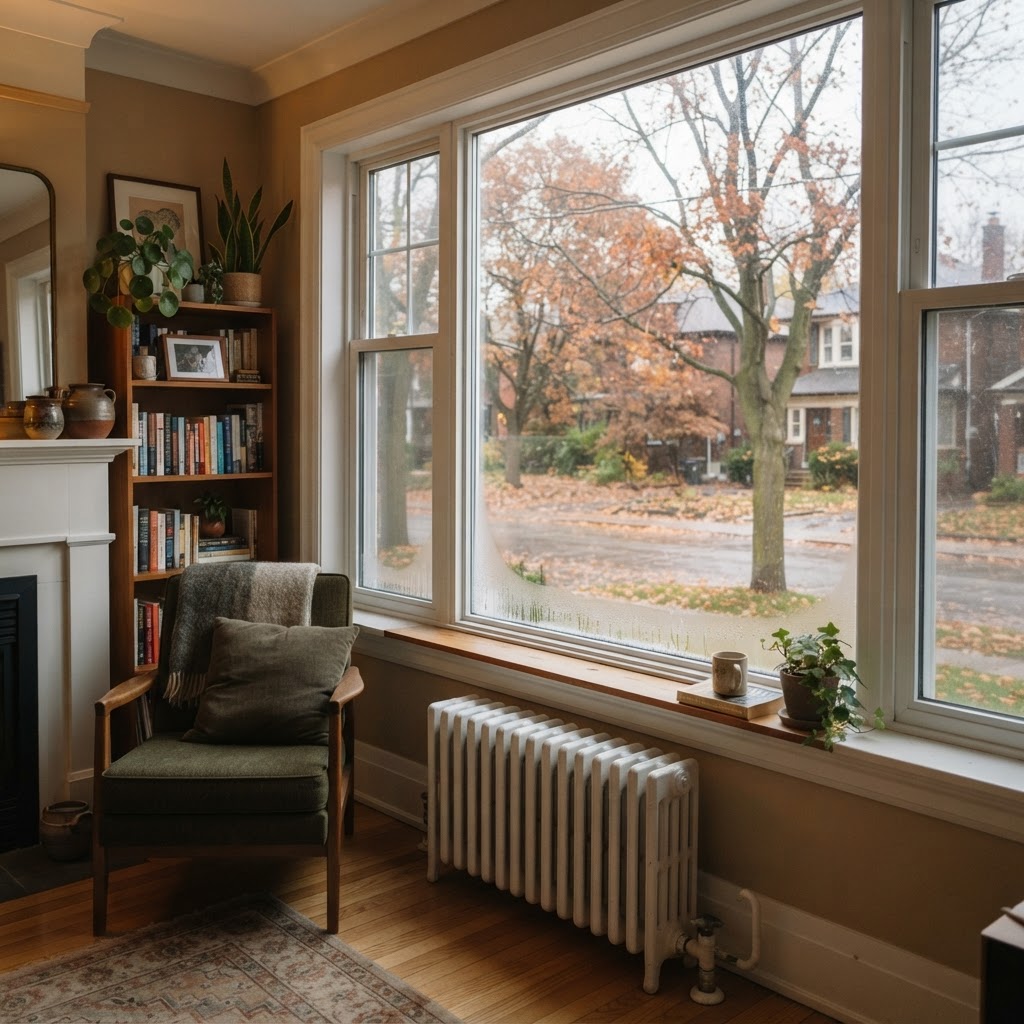
The effect you will actually feel is comfort. Cold glass radiates cold into a room, which is why the reading chair by the window stays empty in January. Once the glass stops bleeding heat the same way, the room feels warmer at the same thermostat setting, and the furnace runs a little less. Homeowners tell us the drafty feeling near the windows is the first thing they notice. We talk about this comfort effect in more detail in our guide to window film and winter warmth.
Who low-e film makes sense for
- Older homes with single pane or tired double pane windows. The older the glass, the bigger the gain.
- Cold rooms. North facing bedrooms, sunrooms used in winter, home offices over a garage.
- Windows you are not replacing soon. If replacement is 5 or 10 years out, film is the bridge upgrade that pays for itself in comfort now.
- Homes with radiator or baseboard heat. Every kilowatt reflected back matters more when you cannot just crank a furnace.
If your windows are already brand new triple pane, low-e film is not worth it. New glass already has coatings and the gain is small. We will tell you that on the phone before you spend anything.
The glass check that protects your warranty
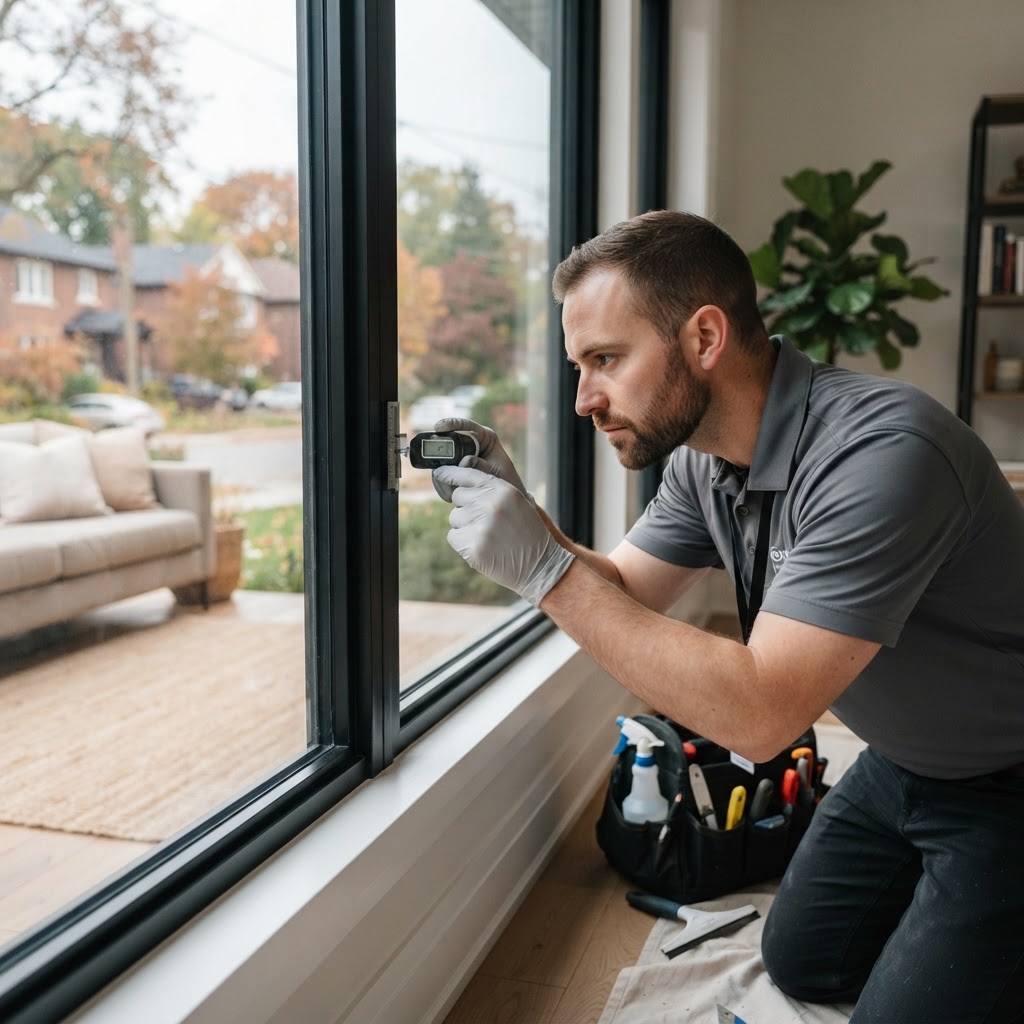
Not every film belongs on every pane. Sealed double and triple pane units have manufacturer limits on how much heat absorption the glass can take, and the wrong dark film on the wrong pane can stress the seal. That is why we confirm your glass type before quoting anything, the same process we describe in our guide to film on double pane windows. Low-e films are among the safer choices because many are designed for exactly this use, but the check still happens, because your window warranty matters more than a quick sale.
One related winter note: if your windows fog up in cold weather, that is a humidity problem, not a heat problem, and film will not cure it. We separate the two issues in our condensation guide so you fix the right one.
What it costs in Toronto
Residential window film runs $7 to $10 per square foot installed for standard films, with low-e and specialty products quoted per project once we know the glass and the pane sizes. A typical bedroom or living room wall of windows is an afternoon install with no mess and no construction. Full pricing context for homes and cars is in our Toronto pricing guide, and the product options for each room are on our residential window film page.
Compare that to window replacement, where even a handful of units in Toronto runs well into five figures with install, and the math favors film as the do it now upgrade.
Beat the freeze, not the calendar
The best window to install winter performance film is before the deep cold, because you start collecting the comfort from the first cold night. Send photos of the windows and rough measurements, or call and describe the rooms that feel cold. We will tell you honestly whether your glass is a good candidate, what it costs, and how fast we can get it done. Call or text 437-331-5379 or use our contact page. We are in North York and cover Toronto, Vaughan, Thornhill, Richmond Hill, Markham, Mississauga, Brampton, Scarborough and Etobicoke. Window film is all we do: cars, homes and businesses, nothing else.