Almost every homeowner with newer windows asks the same question before installing film: is window film safe on double-pane windows? It is a fair question. You paid good money for insulated glass, and the last thing you want is a cracked pane or a fogged-up seal a year after tinting.
The short answer: yes, window film is safe on double-pane glass when the right film is matched to the right glass. The key words there are "right film." Here is how it works, and how to know your windows qualify.
What double-pane and low-E glass actually are
Double-pane windows are sealed units: two sheets of glass with an inert gas layer between them, edged with a spacer and sealed at the factory. That assembly is called an insulated glass unit, or IGU. Its whole job is insulation, so any modification to the glass raises two concerns: thermal stress on the pane, and stress on the edge seal.
Most windows installed in Toronto homes since the mid 1990s are double or triple pane, and many have a low-emissivity coating. A low-E coating is an invisible metallic layer that reflects heat back into the room in winter and keeps some solar heat out in summer. It usually sits on one of the inner surfaces of the unit, so it rarely conflicts with film at all.
The thermal stress question, explained
Glass expands when it heats. If one area of a pane gets hotter than the area beside it, the uneven expansion creates stress. Enough stress, on the wrong glass, and the pane can crack. This is called thermal stress breakage, and it is the reason the double-pane question exists in the first place.
Film affects this in one of two ways. A heavily absorbing, very dark film soaks up heat into the outer pane and raises the temperature difference across the glass. That is the risky kind. A film engineered for insulated glass absorbs less and sends more solar energy back out the window, keeping the pane's temperature even. Modern residential films are built the second way.
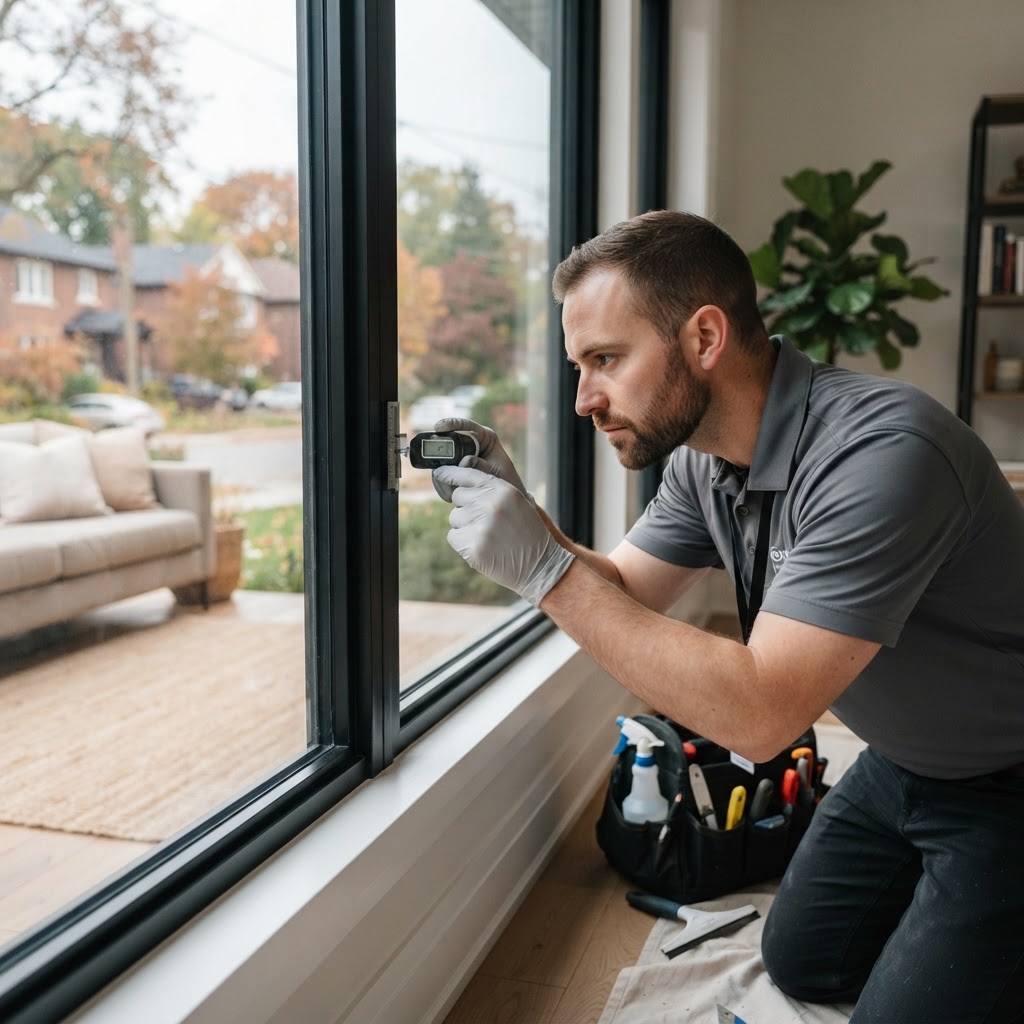
Every reputable film manufacturer publishes compatibility guidelines stating which films are approved for use on IGUs and which are not. A professional installer does not guess; they check the film line, the glass type, the pane thickness and the frame condition before quoting. That check is the difference between a safe install and a gamble.
Which films are considered safe for insulated glass
In general, the films that play nicely with double-pane windows are:
- Ceramic and spectrally selective films: high heat rejection with low absorption, which keeps pane temperature even. These are our default recommendation for insulated glass.
- Light and medium solar control films: tested and rated for IGU use by their manufacturers.
- Near-invisible UV films: so light they barely change the glass temperature at all. Ideal when fade protection is the only goal; see our UV protection window film page.
Films that get flagged are the extreme ones: very dark limo-style films designed for cars, or heavy reflective films better suited to single-pane commercial storefronts. On a home's sealed units, those are where problems historically came from, which is how the whole "film cracks double-pane windows" myth got started. The film was never the issue; the mismatch was.
Does film harm the seal or the low-E coating?
The seal question comes up almost as often as cracking. A properly matched film does not cook the seal. Manufacturers rate their IGU-approved films precisely so the edge seal stays within its normal temperature range, and quality films are warrantied for exactly this use.
As for low-E glass: film is applied to surface four, the innermost pane, the one you touch from inside your living room. The low-E coating lives on the inner surfaces of the sealed unit, so the film never touches it and does not degrade it. In fact, film and low-E glass stack well together, since the coating handles winter insulation and the film handles summer heat, glare and UV. Our heat and sun control window film page covers how the two work as a team.
How we make sure your glass qualifies
When we quote residential film, we look at three things before anything is ordered:
- Glass type and unit construction: single pane, double pane or triple pane, pane thickness, tinted or clear glass.
- Condition: stress cracks, damaged seals, chips or anything that would fail with or without film.
- Film-to-glass match: selecting a film line the manufacturer approves for your exact unit.
If a window is already failing, we tell you before installing, because film on a dying seal is wasted money. That check costs you nothing and it is why our residential installs carry clean warranties. You can see the full residential service on our residential window film page, and pricing context in our window film pricing guide.
Get a straight answer for your windows
Every home in Toronto is a little different: condo towers with floor to ceiling IGUs, older North York bungalows with a mix of original and upgraded windows, new builds in Vaughan with triple pane throughout. Rather than guessing from a label, send us a photo of the corner of your window (the spacer bar between the panes tells us the unit type) and we will confirm what is safe on your glass. Call or text 437-331-5379 or reach us through our contact page. We install residential film across Toronto, North York, Etobicoke, Mississauga, Vaughan and the GTA, and we would rather tell you a film is unnecessary than sell you the wrong one.