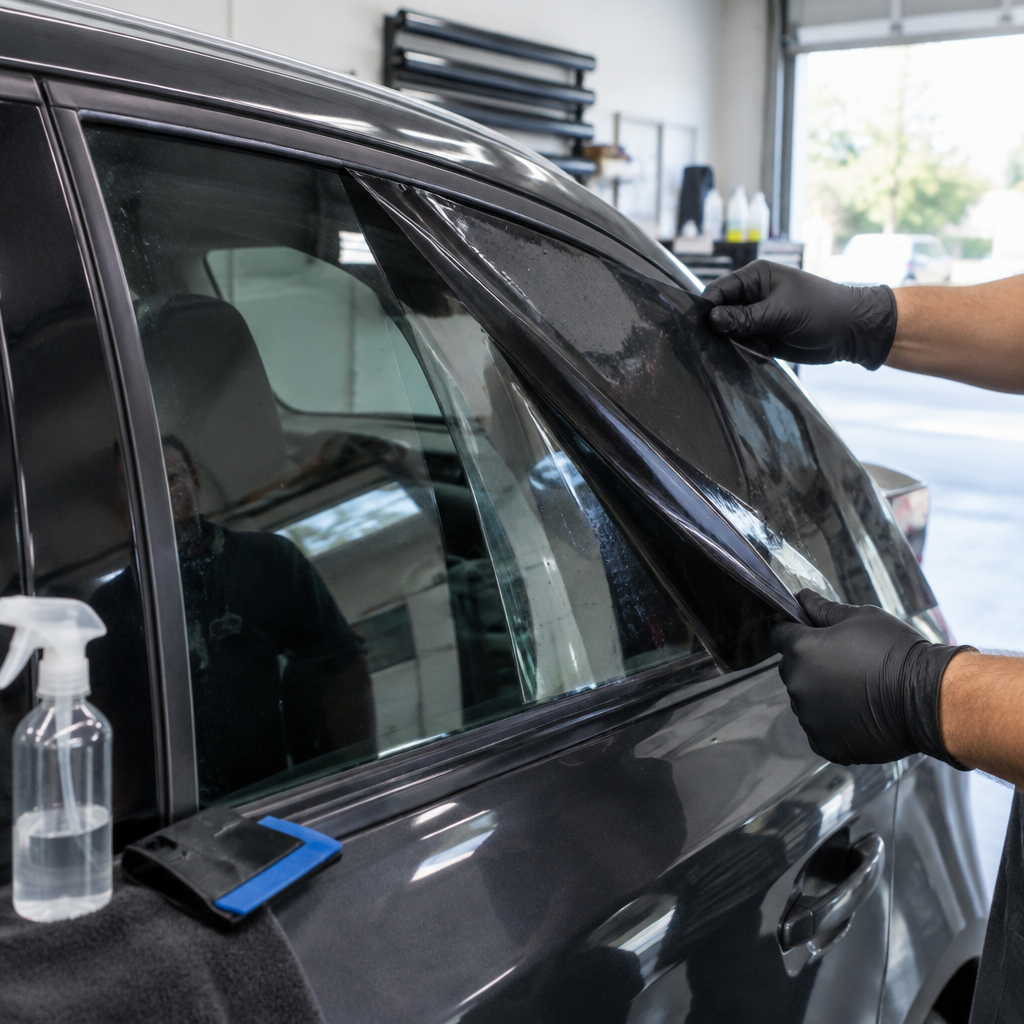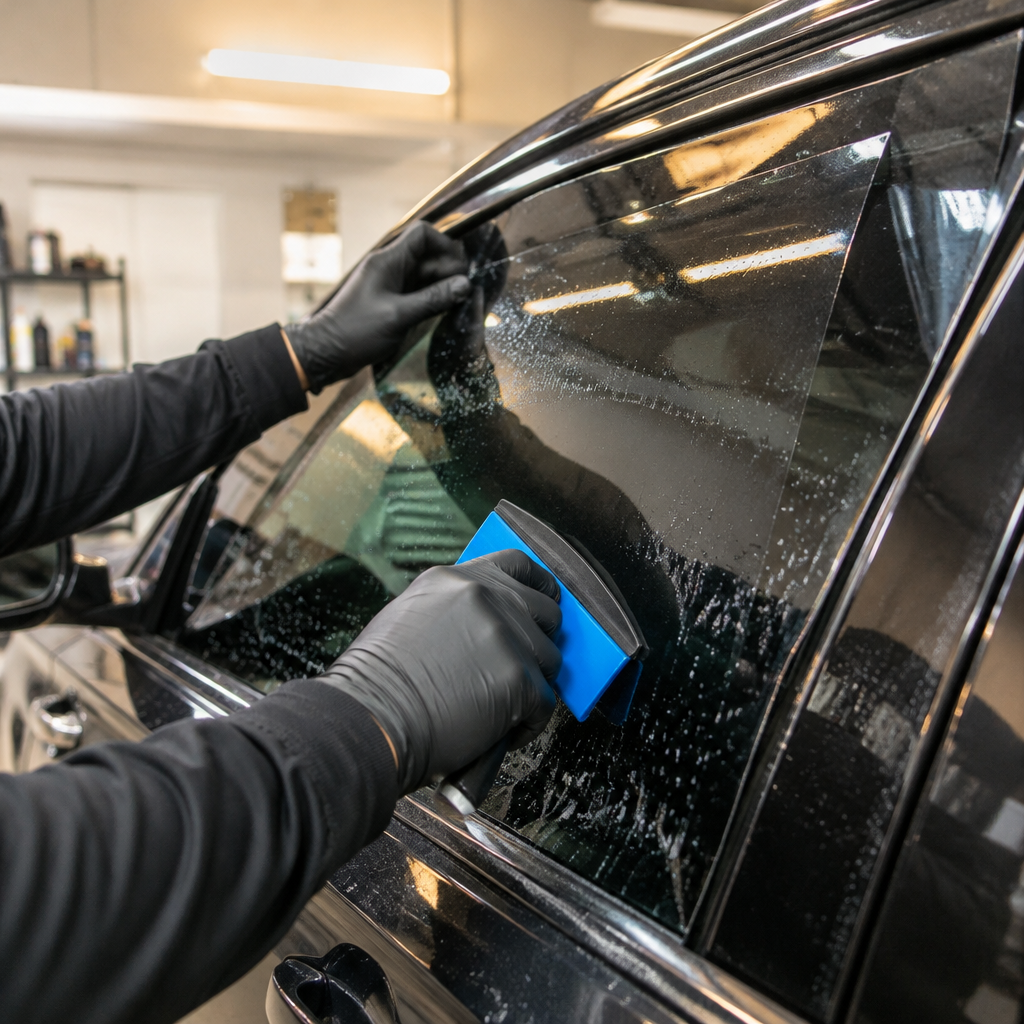
Film protects a car in four ways: UV, heat, glare and glass strength. None of them depends on how dark the film is.
UV
Ceramic film blocks over 99% of UV in every shade, so your arm and your dash are covered even at 35%.
Heat
Ceramic rejects infrared heat at light shades, which is why a 35% ceramic outperforms a 20% dyed film on a hot afternoon.
Glare
Low sun, wet roads, oncoming lights. Film takes the edge off all three without turning the cabin into a cave.
Glass strength
Film holds broken glass in the frame. That matters in a hit and it matters for theft.
What to actually buy
- Two front windows: $99
- Sedan or coupe, full car: $179
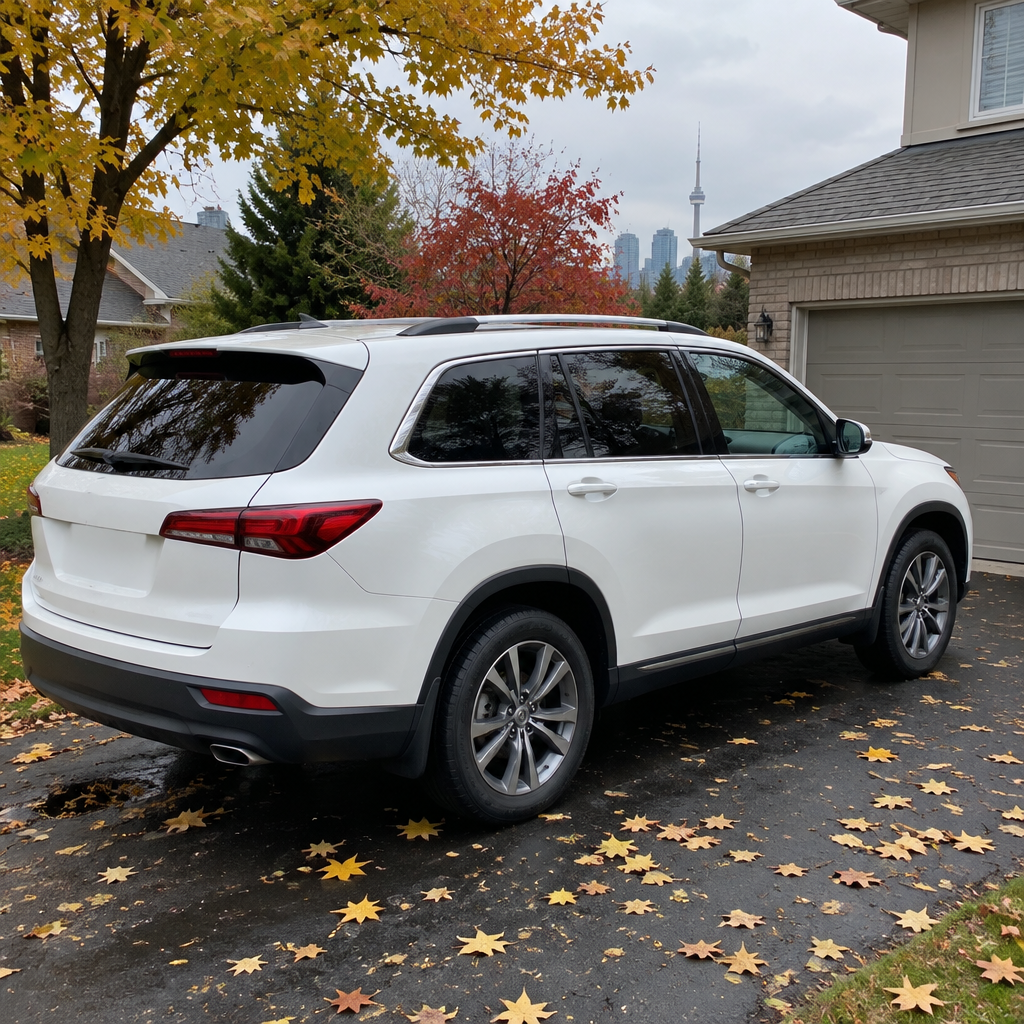
- SUV, full car: $199
- Van, full car: $239
The legal bit, accurately
Ontario publishes no tint percentage. The requirement is that an officer can see the driver and passenger, which is why 35% on the front doors with a clear windshield is what we install most. The two rear doors and the rear glass can be as dark as 5% if you want, with both side mirrors kept.
Choosing a shade
Start with the rear glass, match the rear doors, then keep the fronts one step lighter. That looks factory and stays out of trouble.
Send us the make, model and year and we will confirm the package before you come in. Request a quote or read the 2026 price guide.
Protect the interior
Ceramic film blocks the UV that cracks dashboards and fades leather.
Ceramic car tinting | What all around tint costs | Book a time