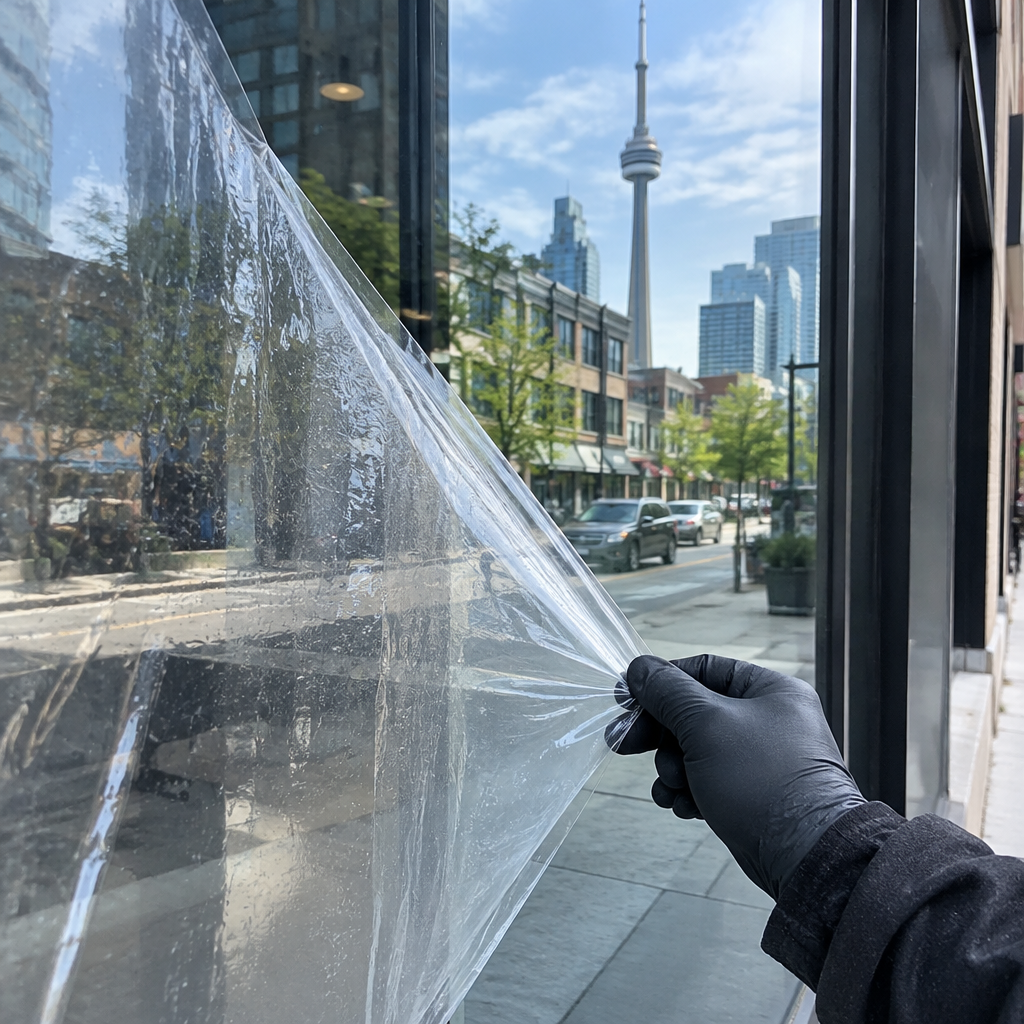
Commercial window film used to be a line item nobody approved. In the last two years it has become one of the first things a Toronto property manager prices, and the reason is not fashion.
Here is what changed, what businesses are actually buying, and how the numbers look against the alternative.
Hybrid work made the glass the office
When half a floor is empty on any given day, the space that has to earn its keep is the part people fight over: the perimeter, the meeting rooms, the daylight.
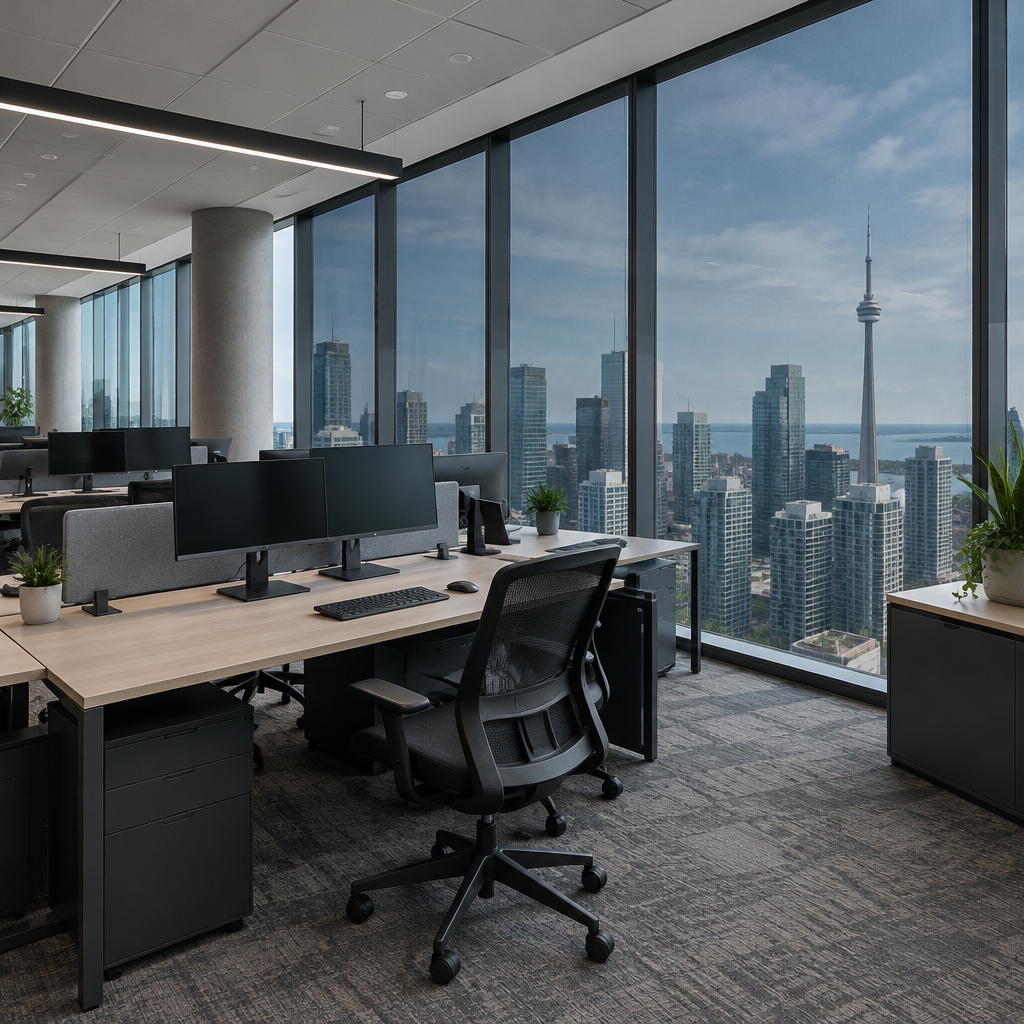
Companies consolidated into fewer, better floors, and the new floors are almost always glass heavy. That means more solar gain, more glare, and more meetings visible through a partition.
Film fixes both problems on glass that already exists, without a construction schedule or a permit.
Energy costs stopped being theoretical
A west facing office runs its cooling equipment against the sun for six months of the year. When electricity and gas were cheap, that was a rounding error. Now it shows up in the operating budget.
Film rejects solar energy before it becomes heat inside the room, which lowers the cooling load on the perimeter zone instead of asking the HVAC to work harder.
It is not a replacement for a mechanical upgrade. It is the cheaper half of the answer, and it can be done on a weekend.
Glare is a productivity line item
Screens wash out in the afternoon, people close the blinds, and the floor loses the daylight the lease was priced on.
Anyone who has run a team beside glass knows the pattern: the best desks sit empty after 2pm and everyone migrates to the dark side of the floor. Cutting glare at the glass gets the good desks back in use.
What businesses are actually buying
- Ceramic solar film on the west and south elevations. Heat and glare down, daylight kept, no change to the building's look.
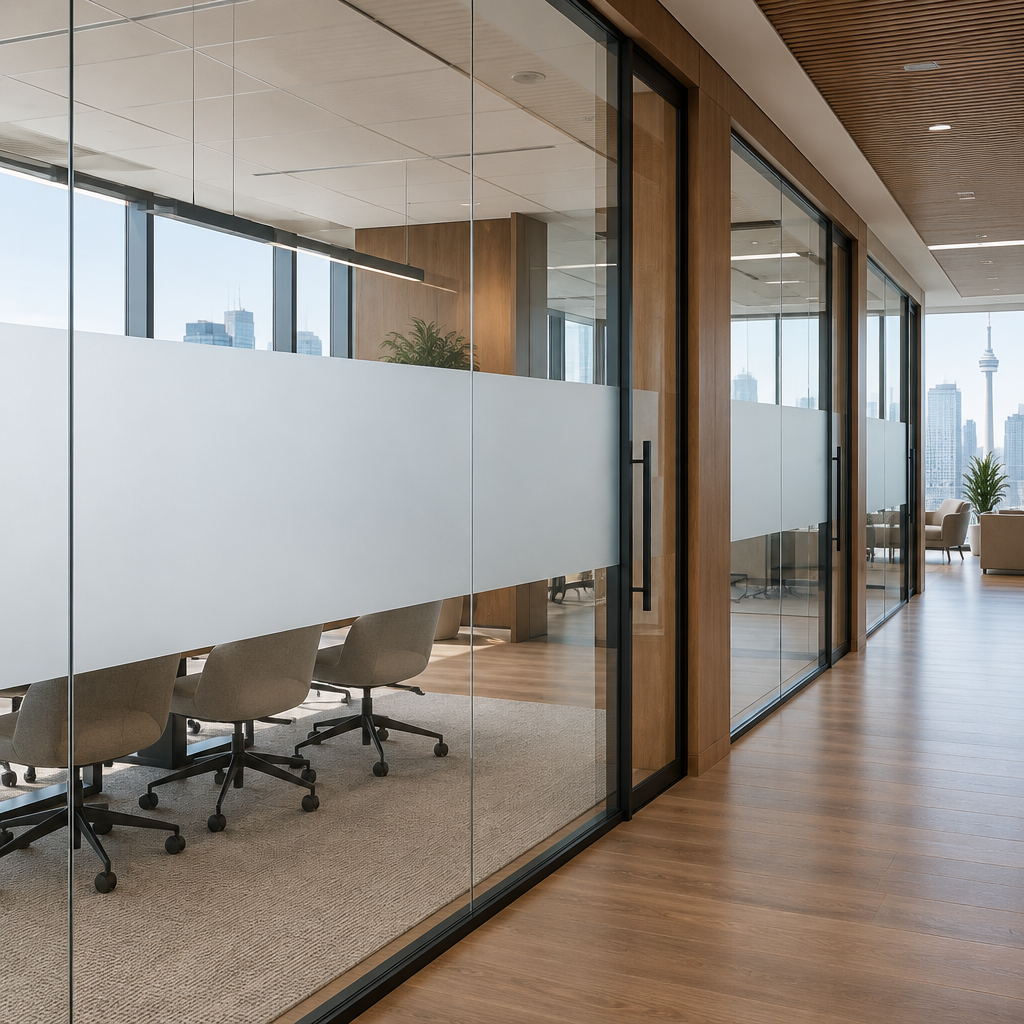
- Frosted film on interior glass: boardrooms, HR, finance, treatment rooms.
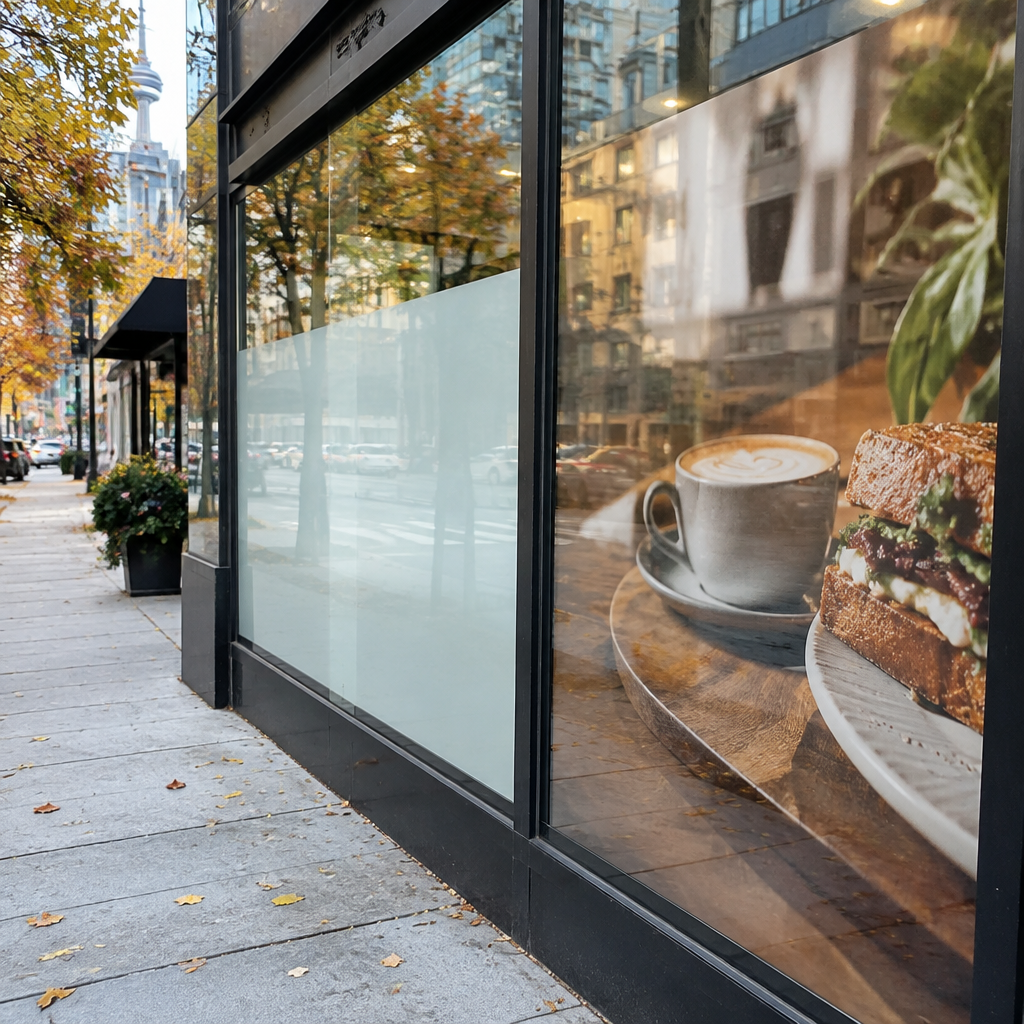
- Security film on street level glass for retail and ground floor tenants.
- Low-e film on older buildings where winter heat loss is the bigger number.
Most projects combine two. A typical fit out is frost on the interior partitions plus solar film on the perimeter.
What it costs against the alternatives
Frosted and privacy film runs $7 to $10 per square foot. Solar and security film are quoted per project, because glass type, anchoring and access move the labour more than area does.
Compare that to the alternatives. New glazing with a better solar rating means a glazier, a schedule and a facade that looks different to the landlord. New blinds are cheaper but they cost you the daylight and they need replacing.
Film is the only option that changes performance without changing the building.
The lease question
In a leased space, film is one of the few improvements that survives a move. It comes off, and the glass goes back to what the landlord handed over.
Two things to check before ordering. Whether the lease requires consent for alterations to the glass, and whether the building has rules about how the exterior reads. Both are easy questions with a property manager, and both are worth asking in writing.
Timing and disruption
Commercial installs happen after hours, before opening or on a weekend. A boardroom is an evening. A full floor of perimeter glass runs two to four nights.
There is no demolition, no dust and no trade coordination. We mask frames, work panel by panel, and leave each area usable as we go.
What the rules require
Film on commercial glass is not licensed in Ontario, but two rules always apply. Exit signs and egress paths stay visible, and film never covers a required vision panel. Building rules can add more: many Toronto towers have a say in how glass reads from the street.
If you also run a fleet, car glass is different and specific: rear doors and rear glass can go to 5%, the front doors have to keep the driver clearly visible with 35% installed up front, and the windshield stays clear.
What makes a project go badly
Quoting from a floor plan. Glass gets measured, not estimated. A curtain wall and three punched windows are not the same job.
Ignoring the glass type. The wrong film on the wrong sealed unit can crack it, and that is a glazing bill instead of a film bill.
Choosing the cheapest film for a premium floor. A lifted edge on a storefront is visible from the street and nobody signs off on it twice.
Frequently asked questions
How fast can a project start?
Surveys usually happen within a week. Material lead time is the variable, and specialty specs can run two to three weeks.
Do we need to move out?
No. We work around occupancy, one area at a time, and evenings are normal for us.
Will it change how the building looks?
Solar film specified for daylight reads as slightly cooler glass. Frost changes interior sight lines only. Nothing structural changes.
What is the warranty?
Quality commercial film carries a ten year or longer warranty on adhesion, bubbling and delamination, and we hand over the documentation for the building file.
If film is on the capital list this year, call 437-331-5379 or send photos through our contact page. We install commercial window tinting across Toronto and the GTA, and property managers can start with our trade partner program. For budget numbers, read commercial window tinting costs in Toronto, or how film cuts energy costs.
Why now
Fewer, better floors with more glass. Film is the cheapest way to make that glass behave.