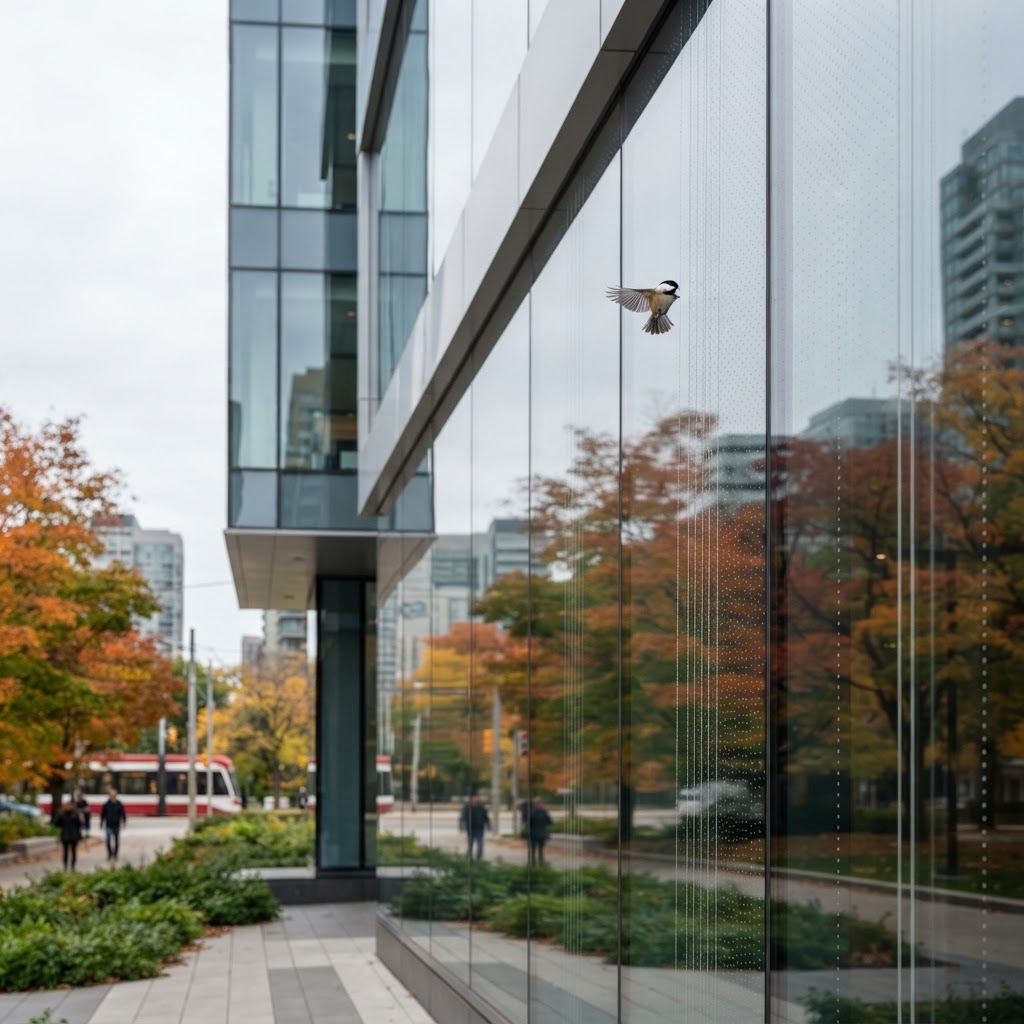
If a bird has ever hit your window at full speed, you do not forget the sound. It is worse when it happens more than once, because then you know it is not bad luck, it is something about your glass. Usually it is exactly that: the bird is not seeing your window at all. It is seeing a perfect reflection of sky, trees, or the feeder you hung thirty feet away.
Window strikes are one of the top human related causes of bird deaths in Canada, and homes are a big part of it, especially in leafy Toronto neighborhoods like North York, Etobicoke and Scarborough where big windows face mature trees. Here is what actually works, what does not, and how the films we install fit in.
Why birds hit some windows and not others
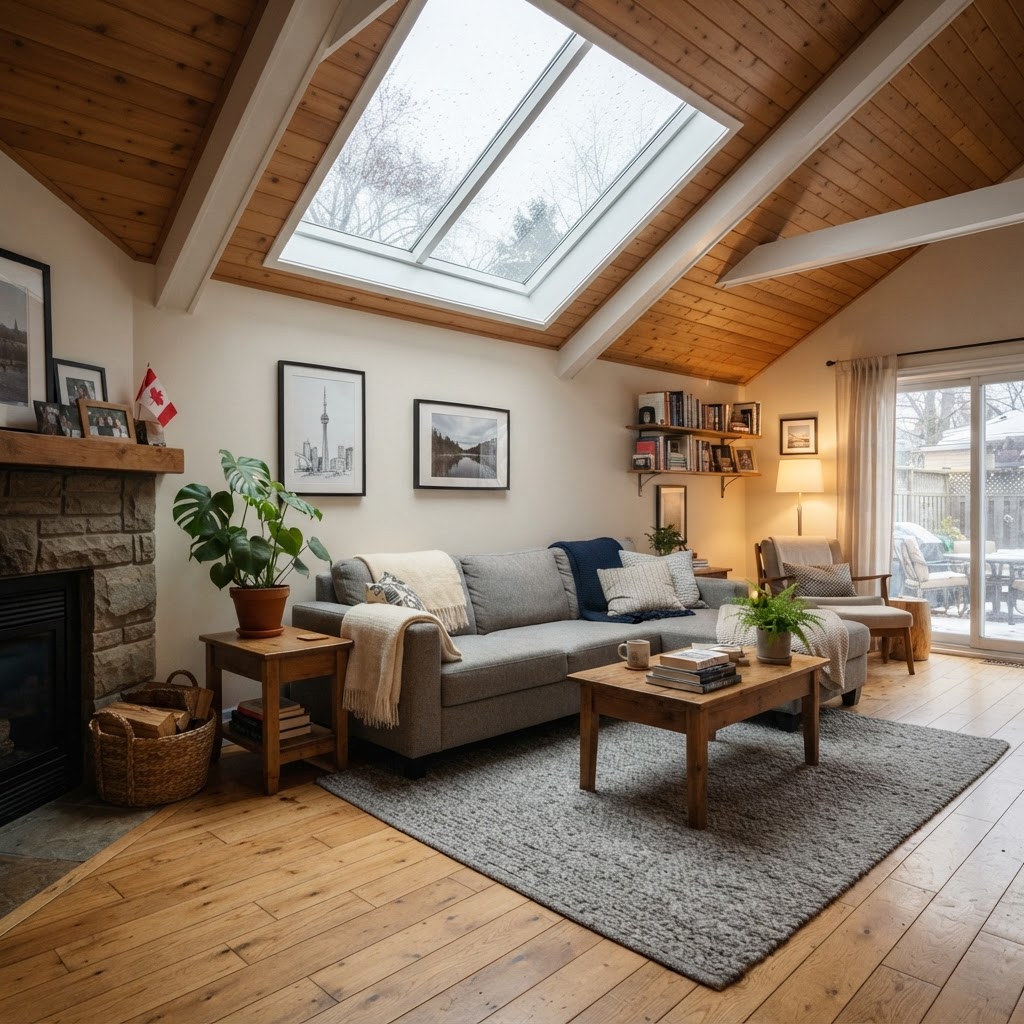
A bird does not understand glass. It understands what glass reflects. A window that mirrors a tree line looks like a tree line. A window that reflects open sky looks like a gap it can fly through. The most dangerous panes are the ones with the best view: large picture windows, glass walls near feeders, walkout doors facing gardens, and skylights, which birds can strike from above when the glass reads as continuous landscape. If a window has struck more than one bird, it will keep doing it until something changes, because the reflection is still there.
What does not work
Before the part where you call us, the honest list:
- Decals a few feet apart. A single hawk silhouette in the middle of a big pane does almost nothing, because birds try to fly around small obstacles. Coverage has to be dense to read as a wall.
- Anything on the inside of clear glass. If the window is clear, interior decorations barely register. The bird is looking at the reflection on the outside surface.
- Darker reflective film. This surprises people: a mirror-like one-way film that makes a window MORE reflective makes the problem WORSE, because now the reflection of the trees is even sharper. Reflective film is the wrong tool for a strike-prone window.
What actually works: make the glass visible
The fix in every serious guideline is the same idea: give the bird a visual signal across the whole pane. That means either dense exterior marker patterns, or a film that removes the reflection entirely, and this is where residential film earns its spot.
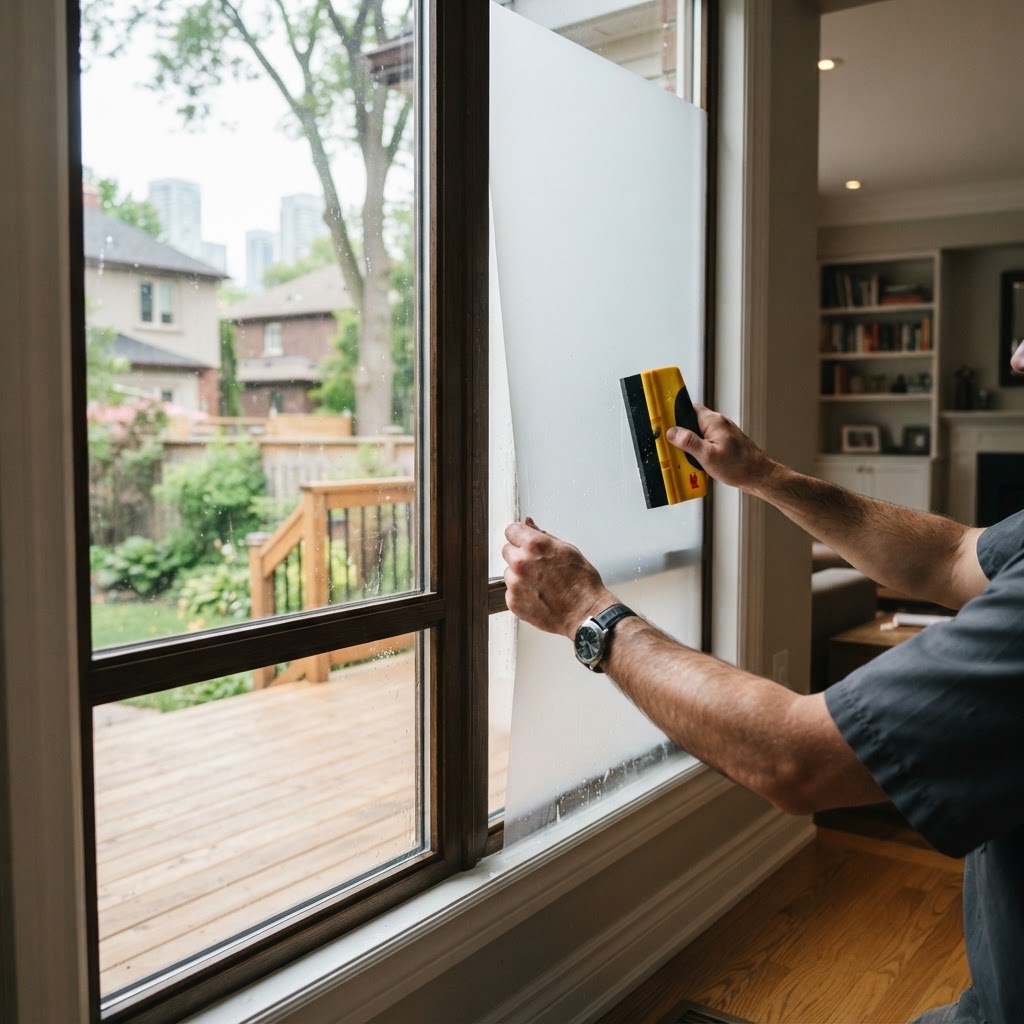
- Frosted film on the problem pane. A frosted or satin film turns the mirror into a visible surface. No reflection, no illusion, no strikes. It also gives you privacy, which is why it is our most common recommendation for picture windows facing streets or neighbors. See our residential window film options.
- Patterned and decorative film. A visible pattern across the glass does the same job while keeping more light: horizontal bands, rice paper textures, or gradient films that cover the lower half where most strikes happen.
- Partial coverage done deliberately. Striking birds come in low most of the time. Frosting the lower half or a band at bird height often solves it without frosting the whole pane, and costs less.
For skylights and angled glass, which are their own strike magnets, we walk through the options in our skylight film guide.
The feeder rule while you are at it
Film solves the window, but feeder placement decides whether birds are flying at it in the first place. Feeders should sit either within one meter of the glass, so birds cannot build enough speed to hurt themselves, or well beyond ten meters, so the glass is off the flight path. The middle distance, right in front of a big window, is the worst possible spot.
What it costs
Frosted and patterned privacy films run $7 to $10 per square foot installed, quoted from real measurements of your panes. A single problem picture window is often a small, one-visit job. Full pricing across homes, cars and businesses is in our Toronto pricing guide.
Why talk to a film specialist about it
Window film is all we do, cars, homes and businesses, and that includes telling you when film is the wrong answer. If your strike window faces a busy street, we will not put a reflective film on it and wish you luck. If one band of frost solves it, we will not sell you a whole pane. Choosing a shop that will say no is half the decision, and the checklist is in how to choose a window film installer.
Fix the window before the next season
Fall and spring migration are the worst strike seasons, so a window that has already hit birds this year will hit them again in weeks, not months. Send photos of the problem window and roughly where it faces, and we will tell you which film, how much coverage it needs, and what it costs. Call or text 437-331-5379 or use our contact page. We are in North York and serve Toronto, Vaughan, Thornhill, Richmond Hill, Markham, Mississauga, Brampton, Scarborough and Etobicoke.