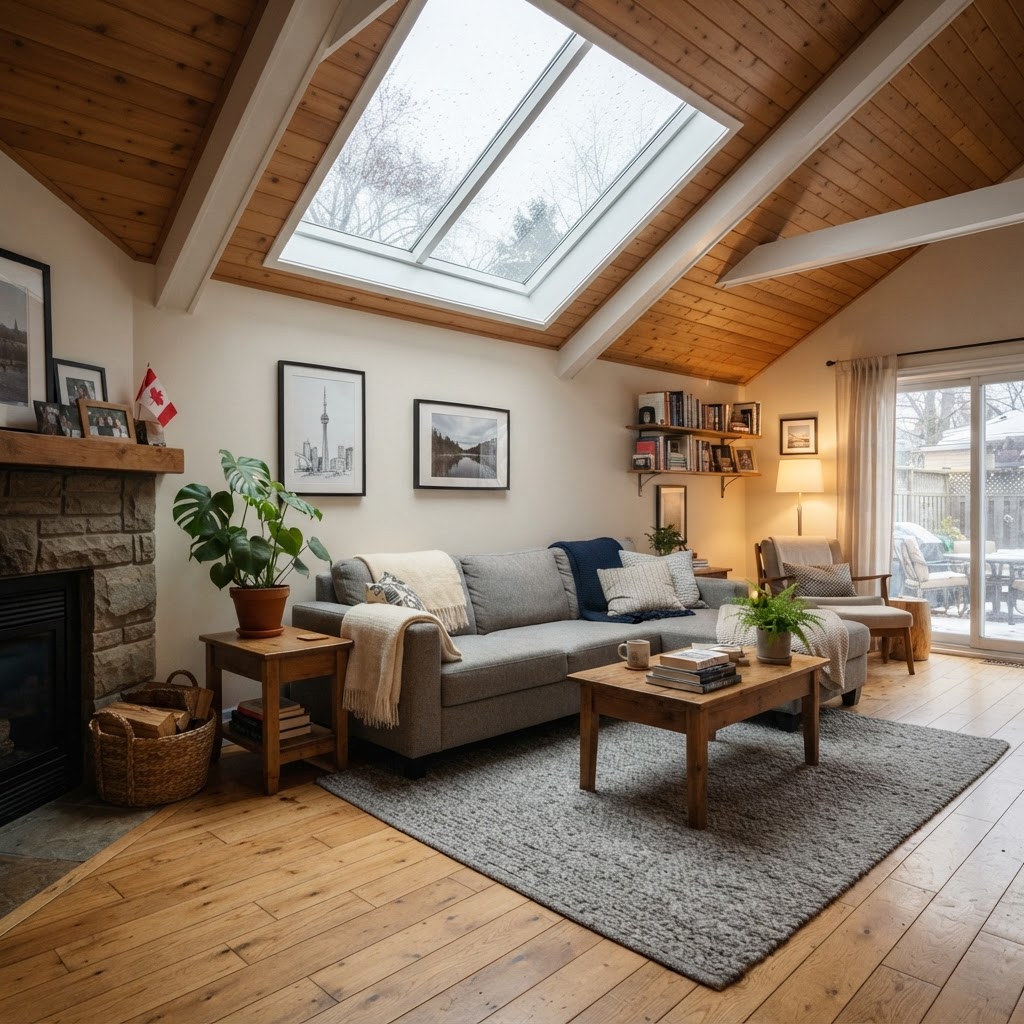
Skylights are the best and worst window in your house. On a grey Toronto November day they pull light into rooms that a wall window could never reach. In January they lose heat at the highest point of your ceiling, dump cold air on whatever sits below, and throw glare off the snow. By July they are a furnace aimed at your living room.
Film fixes the parts of a skylight that glass causes: heat, glare, UV and fading. Here is where it works, where it honestly does not, and the one type of skylight we will never film.
What film does for a skylight
Skylight glass takes a beating. It faces straight up, so it collects sun all day in summer and loses interior heat straight off the ceiling in winter. Because it is angled and elevated, the same solar gain that makes a wall window warm makes a skylight an oven. Quality film changes the math at the glass:
- Summer heat. Solar and reflective films reject heat before it enters, which matters more on a skylight than any other pane in the house. If your living room bakes in the afternoon, the roof glass is usually why.
- Winter heat loss. Low-e style film reflects interior heat back down into the room instead of letting it rise out through the glass. We cover this effect in detail in our guide to low-e film and winter heat loss, and skylights benefit from the same physics as any pane, just at a steeper angle.
- Snow glare. A low winter sun bouncing off fresh snow turns a skylight into a spotlight. Glare control film softens it without darkening the room the way blinds would.
- UV fading. Light from above fades floors, art and furniture in the exact pattern of the skylight. Film blocks nearly all UV, so the patch of bleached hardwood stops spreading.
The skylight we will never film
Here is the honest part. Not every skylight is glass. A lot of older Toronto homes have acrylic or polycarbonate dome skylights, the bubbly plastic kind, and window film does not belong on plastic. Adhesive on acrylic can craze and permanently damage the surface, and the thermal expansion of plastic tears film seams open. Any shop that offers to film your plastic dome is guessing, so we check the material first, every time. If you have a plastic dome and want the heat and glare control, the answer is usually a replacement glass unit or a shade, not film. We will tell you that even when it costs us the sale.
Glass skylights still need a check
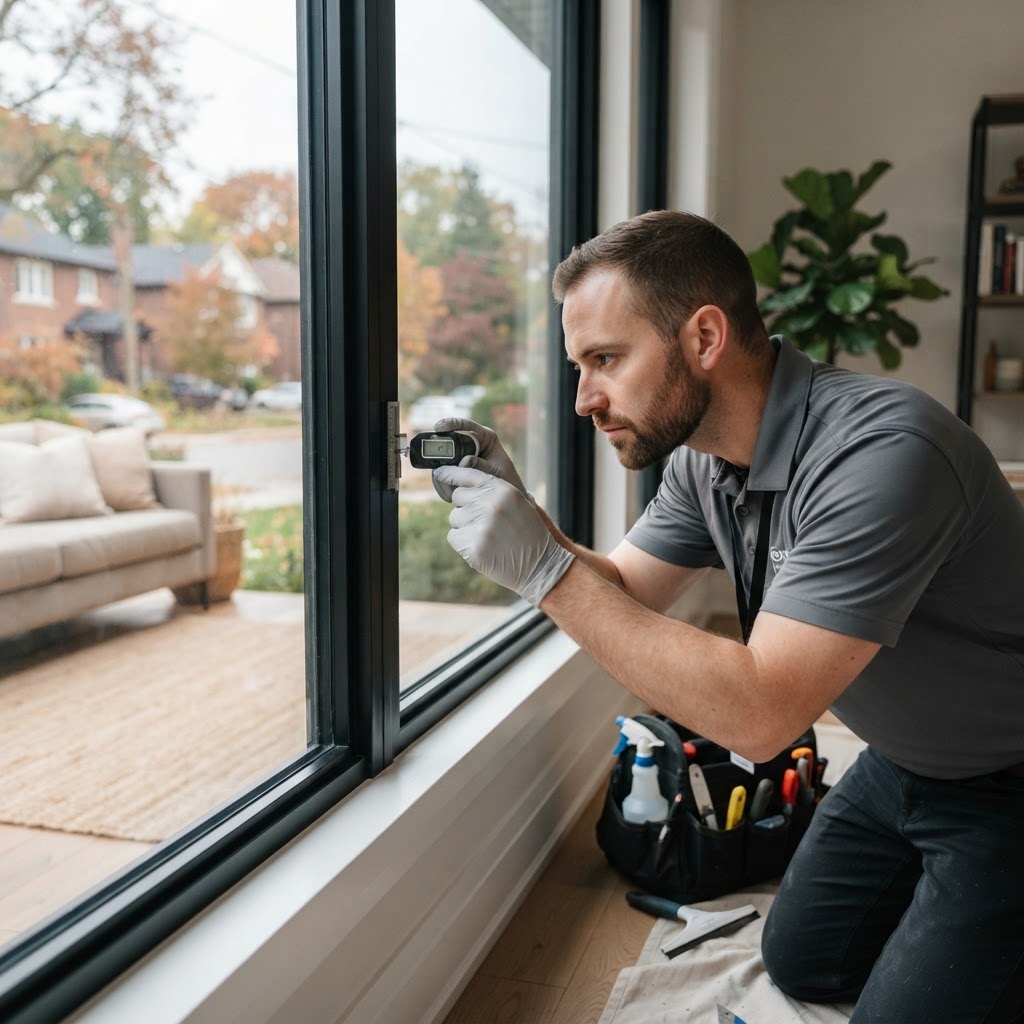
Even on true glass, skylights are sealed units, and sealed glass has limits on how much heat a dark film can make it absorb. A heavy reflective film on the wrong pane can stress the seal or in rare cases crack the glass, which is why the film is matched to the unit, not picked off a shelf. The process is the same discipline we use for windows, described in our guide to film on double pane glass: confirm the unit, pick a film inside its tolerance, and keep the manufacturer warranty intact. On skylights we lean toward lighter films for this reason, which conveniently also keeps the daylight you installed the skylight for.
What film will not fix
Two skylight complaints come up every fall, and film is the wrong answer for both.
If your skylight leaks or drafts, that is a flashing and seal issue, and a film install would just trap moisture against a failing unit. Fix the leak first; we will film it after if heat and glare are still a problem.
If your skylight fogs up on the inside, that is usually indoor humidity hitting the coldest glass in the house, not a glass problem. It is the same physics as wall windows, which we explain in our condensation guide: film can marginally help, but the real fix is managing humidity and ventilation. The difference with skylights is that they run colder, so the fog shows up there first.
What skylight film costs
Skylights are quoted by pane size and glass type along with the rest of your residential glass: standard privacy and solar films run $7 to $10 per square foot installed, with skylight work assessed per project because of the install difficulty. Sloped ceiling glass is one of the harder residential installs there is, the same way panoramic car roofs are the hardest glass on a car, and it is not a DIY surface: one crease or contamination line and you are looking at it forever. Full pricing context is in our Toronto pricing guide, and the film options for every room are on our residential window film page.
Book it before the deep cold
The right window for skylight film is now, before January, because the comfort gain starts with the first cold snap and the summer heat protection is already installed by the time the roof turns into an oven again. Send photos of the skylight from inside and out, or describe the unit, and we will tell you honestly whether it is a glass unit film can help or a plastic dome to leave alone. Call or text 437-331-5379 or use our contact page. We are in North York, serving Toronto, Vaughan, Thornhill, Richmond Hill, Markham, Mississauga, Brampton, Scarborough and Etobicoke. Window film is all we do: cars, homes and businesses, nothing else.