You finally have the condo you wanted, the balcony door view is great, and the neighbors across the way can see straight into your living room. So you start looking at window film, and then the question hits: is my condo board even going to allow this?
We install film in Toronto high-rise buildings constantly, from Liberty Village to North York along Yonge, and the honest answer is that most interior film is fine. The problems come from the wrong film, or from skipping the conversation with your property manager. Here is what boards actually care about, what to check in your own rules, and how to get a yes.
What condo boards actually care about
Boards are not against comfort. They are protecting two things: the uniform look of the building and the glass itself. Condo documents usually speak to exterior appearance, window coverings and alterations, and anything that could damage common elements. A film that changes how the tower looks from the street or from the next balcony is the kind that starts arguments. A film that quietly frosts your bathroom glass is usually not on anyone's radar.
The distinction that matters: interior surface, exterior look
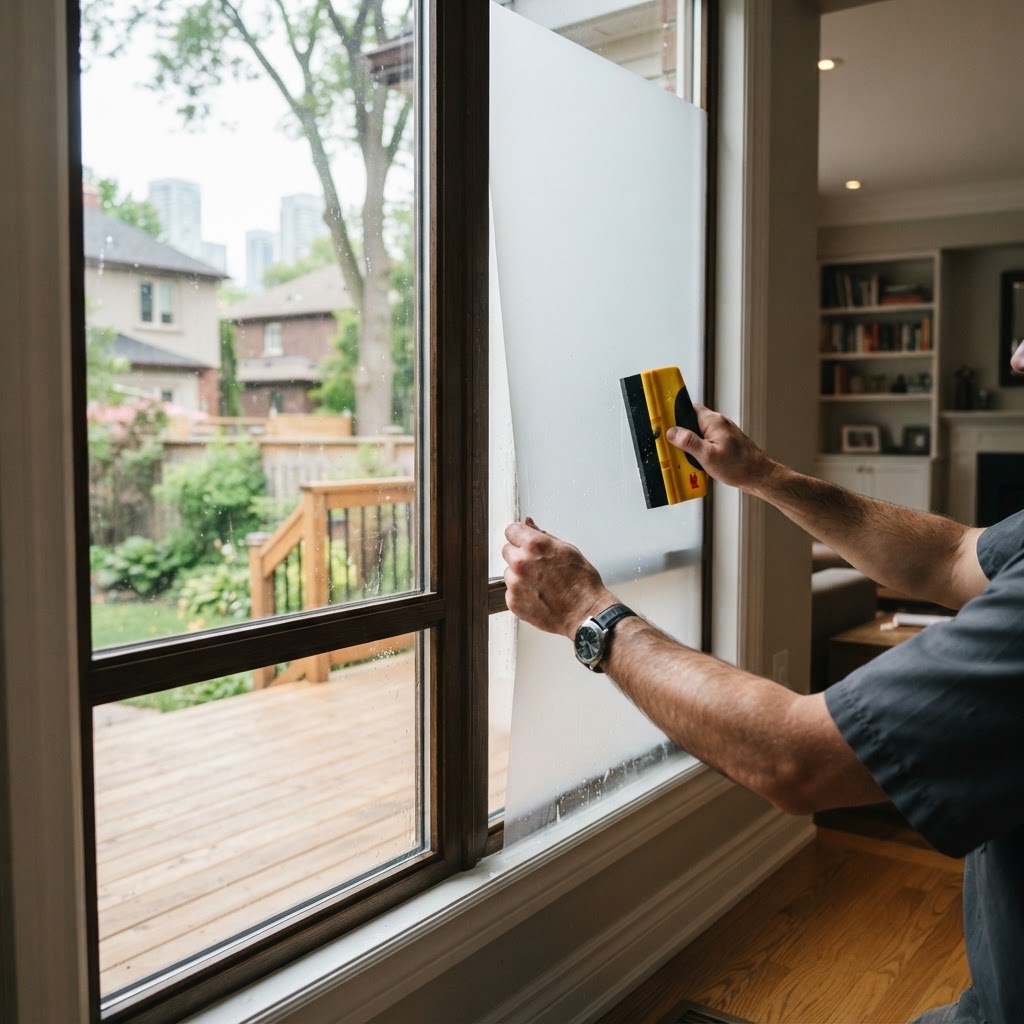
Window film is installed on the inside of your glass. You are not drilling, replacing, or altering the window itself. But some films still change the outside view:
- Clear UV and low-reflectivity films: essentially invisible from outside. These rarely raise an issue because nothing about the building changes.
- Frosted and patterned film on interior partitions, bathrooms, dens and closet doors: inside your unit, does not face the street, normally fine.
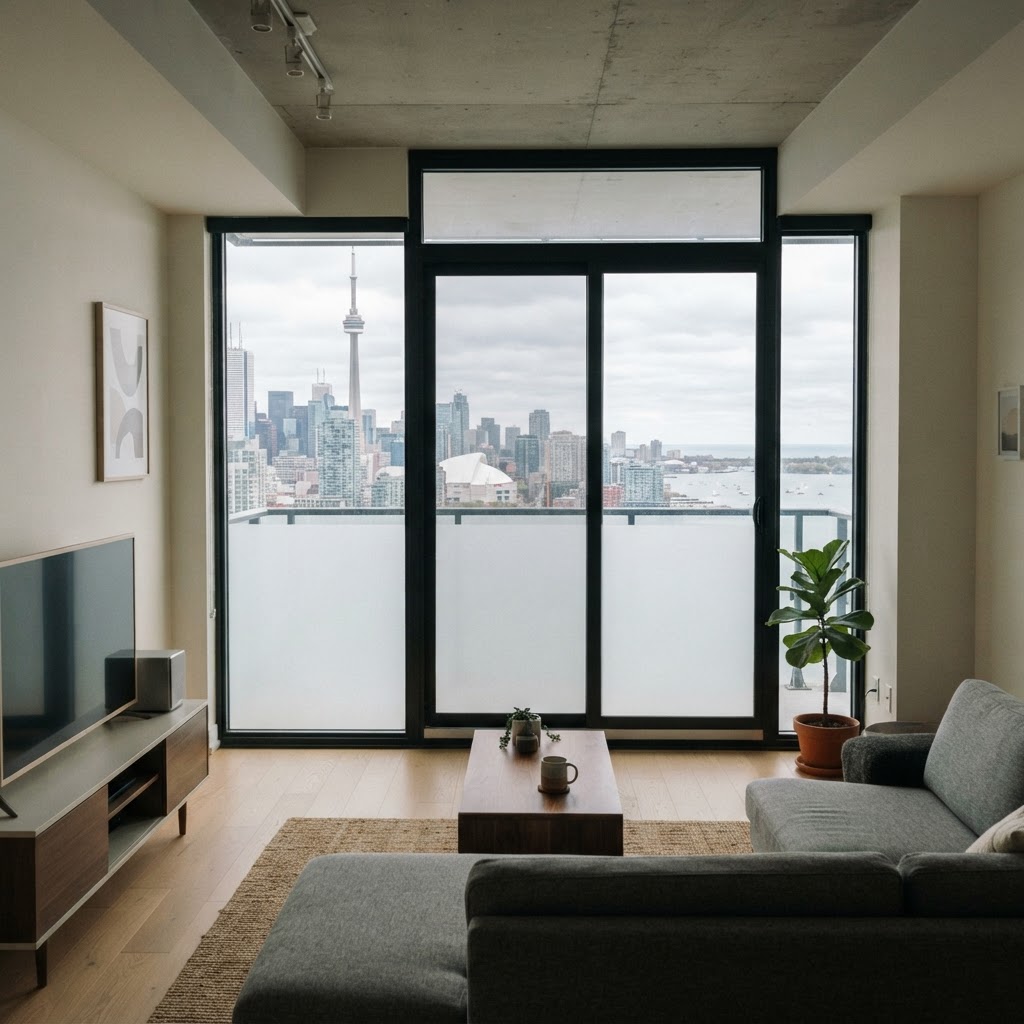
- Frosted film on balcony doors and windows facing outside: visible from the street and from other units, so this is the one to ask about first. Some buildings have no issue, others want uniformity.
- Reflective or mirror films: the highest risk of being refused, since they change the look of the building and may also conflict with rules about glare onto neighbors.
Where to look in your condo documents
Three sections decide most of these questions:
- The declaration, bylaws and rules, specifically anything about window coverings, exterior appearance, alterations and common elements.
- Your status certificate, if you are buying or recently bought, for the same clauses plus any rule about window treatments.
- Your property manager's practice, which matters as much as the paperwork. Many buildings have a simple internal approval process for window film, and managers often approve invisible interior film without a formal request.
A practical tip from installs we have done across the GTA: ask the manager in writing, describe the film, say it is applied to the interior surface and fully removable, and attach a photo of the product. A one paragraph email gets a yes far more often than a vague question at the front desk.
Why the glass check protects you, not just the board
Condos use large sealed units and tempered glass, and both have limits on heat absorption. The wrong dark film on a sealed balcony door can stress the seal or, in rare cases, the pane, and cracked common element glass becomes a chargeback to the owner. That is why we confirm glass type before quoting, the same check we describe in our guide to film on double pane windows. A professional install that stays inside the manufacturer's tolerance is what keeps both your warranty and your board relationship intact.
What most Toronto condo owners end up choosing
In practice, the winning combination is usually:
- Frosted film on the lower half of the balcony door, or full frost on a bedroom or den slider, for privacy without losing the view. We cover the options in our piece on frosting condo sliding doors.
- A clear UV or solar film on the big exposure windows, invisible from outside, cutting heat and fading.
- Frost on bathroom and closet glass inside the unit, no approval needed.
That mix gets privacy and comfort with the smallest possible footprint on the building's look.
Cost and how a condo install works
Frosted and privacy films run $7 to $10 per square foot installed, with solar and specialty films quoted per project by glass size and type. Condo jobs are simple: we measure from photos and dimensions, book a window with your building's elevator or move in rules in mind, and most units are done in a few hours without any mess. Full pricing context is in our Toronto pricing guide, and the product range is on our residential window film page.
Film is all we do, including the paperwork part
We are Tint by Designs, window film only, cars, homes and businesses, nothing else. That means we have had this conversation with condo managers in Toronto many times, and we are happy to send the board a plain language description of the product, the warranty and why it does not affect the glazing. Choosing an installer who has done this before is half the decision, and our checklist is in how to choose a window film installer.
Send photos of the balcony door or windows, tell us the building and floor, and we will tell you which film suits your glass and what it costs. Call or text 437-331-5379 or use our contact page. We install across Toronto, North York, Etobicoke, Scarborough, Vaughan, Markham and Mississauga.