Around 3 PM every fall afternoon, the same thing happens in glass offices across Toronto. The sun drops low, slides under the blinds, and lands directly on someone's monitor. They tilt the screen. They close the blinds. The room goes gloomy, the lights come on, and the whole point of paying for a window office quietly disappears.
Glare is the most common complaint we hear from office managers in the GTA, and it gets worse from October to February when the sun sits low. The good news is that it is one of the easiest problems in a commercial space to fix, and blinds are not the answer. Here is what actually works, what it costs, and what to know before you call anyone.
Why glare is a productivity problem, not just an annoyance
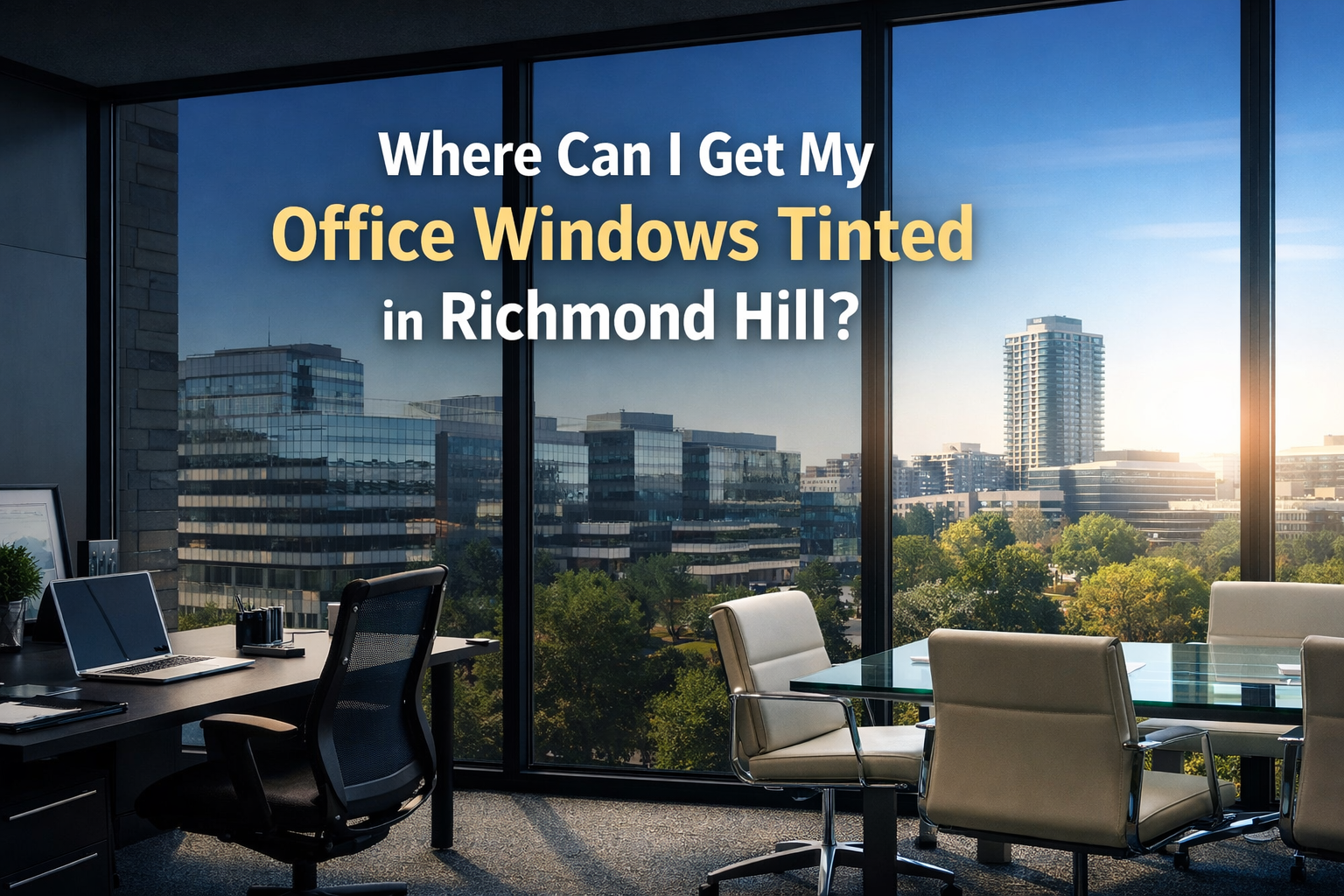
Glare forces people to squint, shift their seat and fight their screen. The result is eye strain, headaches and a workspace where half the staff avoid the best desks. In a boardroom it is worse: presentations wash out, and the person facing the window cannot see the room.
Most offices respond by closing blinds, which solves glare by deleting the daylight. Then the lights go on, the energy bill climbs, and everyone is working in a room that feels like a basement with a view they cannot use. Film solves the real problem, which is too much brightness, not too much window.
How window film fixes glare without killing the view
Glare control film is built to cut visible light by a chosen percentage while keeping the outside visible and the room bright. A typical office film cuts 30 to 60 percent of the brightness, so screens are readable and the sky is still there, just comfortable instead of blinding.
The same film does a second job. It rejects solar heat, which matters on south and west facing glass where afternoon sun turns a desk into a hot spot. Less heat in means the AC works less, and we cover those savings in our guide to commercial window film and energy bills. It also blocks nearly all UV, which protects carpets, furniture and the printed signage that fades first in any sunny office.
Choosing the right film for each exposure
One film does not fit every window. The right choice depends on which way the glass faces and what happens in the room behind it:
- West and south glass. This is where glare and heat both peak. A neutral or lightly reflective solar film with 30 to 50 percent light transmission usually fixes it without a dark look.
- Boardrooms and meeting rooms. Go for a lighter film that keeps the room bright for video calls while removing the washout on screens and presentations.
- Reception and open areas. A subtle film that keeps the space bright and welcoming, with the glare taken off the sharpest hours.
- Rooms that also need privacy. Combine glare control with frosted bands or full frost on partitions and sidelights, which we cover in our guide to office privacy window film.
This is the part a specialist handles quickly. We look at the exposure, the glass type and the room use, and pick a film that stays inside the glass manufacturer's heat tolerance, the same discipline we explain in our guide to film on double pane windows.
Why film beats blinds in an office
Blinds and shades have their place, but for glare in a working office, film has real advantages:
- It works all day with no one touching it. Blinds depend on someone remembering to adjust them, and they never get adjusted at 3 PM when it matters.
- You keep the daylight. Closing blinds kills the natural light that justified the glass in the first place.
- Zero maintenance. No cords, no slats, no replacing broken mechanisms across forty windows.
- It looks cleaner. A consistent film across the glass reads as a deliberate, finished design instead of a mismatch of half closed blinds.
What office window film costs in Toronto
Commercial glare and solar film is quoted per project from your pane count, glass size, height and exposure, and when privacy or frosted film is part of the job, frosted and privacy films run $7 to $10 per square foot installed. Large jobs on multiple floors are scheduled to avoid disrupting your team, with most office installs done in a day or a weekend. Full pricing context for homes, cars and offices is in our Toronto pricing guide, and you can see everything we offer for businesses on our commercial window tinting page.
Why use a window film specialist
We are Tint by Designs, and window film is all we do. Cars, homes and businesses. No blinds, no glass replacement, no side services. Every day our hands are on film, and on a large office job that shows in the straight plotter cut edges, the matched film across every pane, and the honest advice when a window does not need film at all. Choosing the right shop is half the job, and we lay out the questions to ask in how to choose a window film installer in Toronto.
Fix it before the low sun gets worse
Glare peaks from now until February, so the offices that fix it this month get a better winter at work. Send us photos of the worst windows and tell us which way they face, and we will recommend a film and give you a straight quote. Call or text 437-331-5379 or use our contact page. We are in North York and serve Toronto, Vaughan, Thornhill, Richmond Hill, Markham, Mississauga, Brampton, Scarborough and Etobicoke.