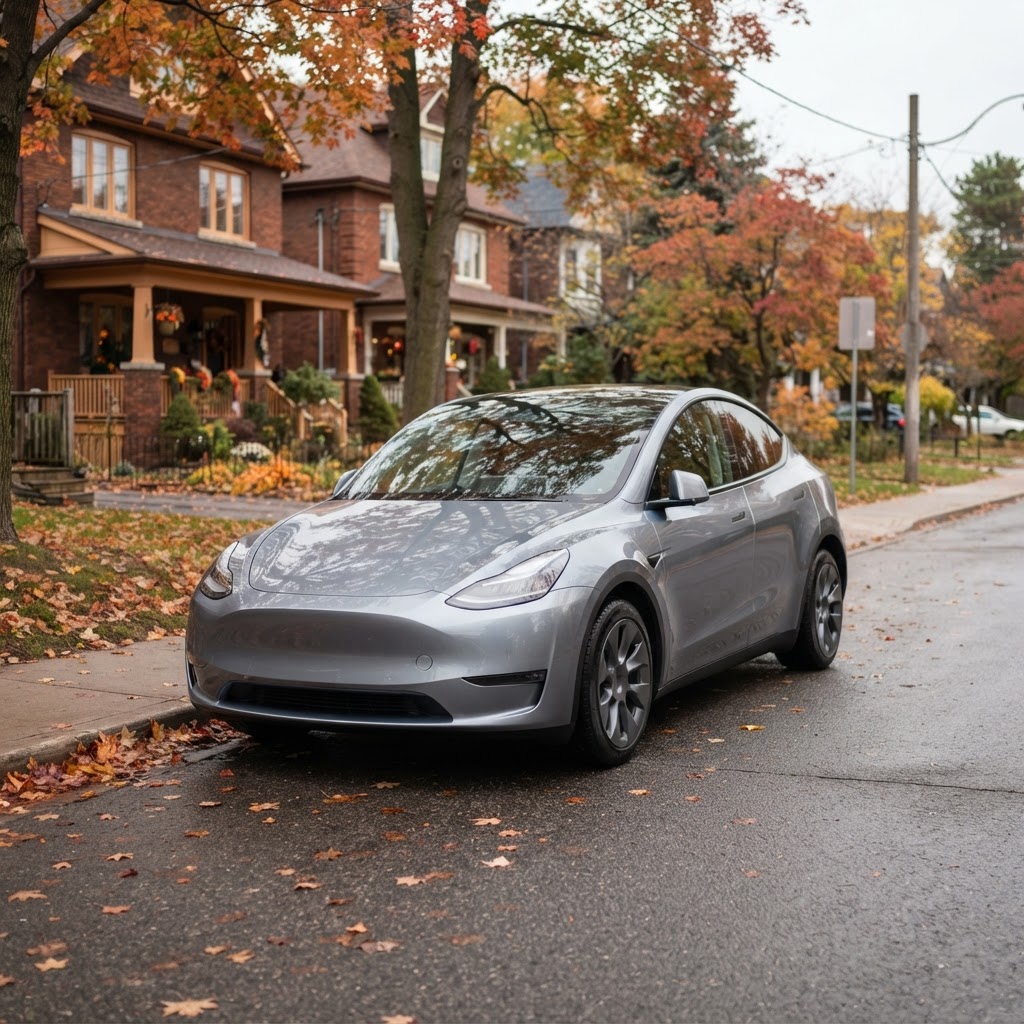
Modern cars keep getting more glass. The panoramic sunroof that felt like a luxury option ten years ago is now standard on half the SUVs and EVs rolling around Toronto, and it turns the roof of your car into a big solar panel aimed at your head.
In July that means the cabin bakes even with the AC blasting. In October and November it means low sun glare straight through the top of the windshield. And every month of the year it means UV hammering the seats, headliner and anyone riding in the back. That is why panoramic sunroof tinting is one of the fastest growing jobs at our North York bay. Here is what ceramic film on a sunroof does, and the safety details most shops skip.
What ceramic film does for a glass roof
Ceramic film rejects infrared heat at the glass instead of letting it pass into the cabin. On a panoramic roof the effect is dramatic because roof glass takes the sun from late morning to sundown, straight overhead in summer and at a low angle through fall and winter. Drivers describe the difference as the roof no longer radiating heat on their head, and rear passengers, who usually sit right under the glass, feel it most of all.
There are three practical wins:
- Heat. The single biggest complaint about big glass roofs is summer cook. Ceramic film cuts the heat load that the AC is fighting against, which helps range on EVs and fuel on everything else, a logic we detail in our piece on window tint and EV range.
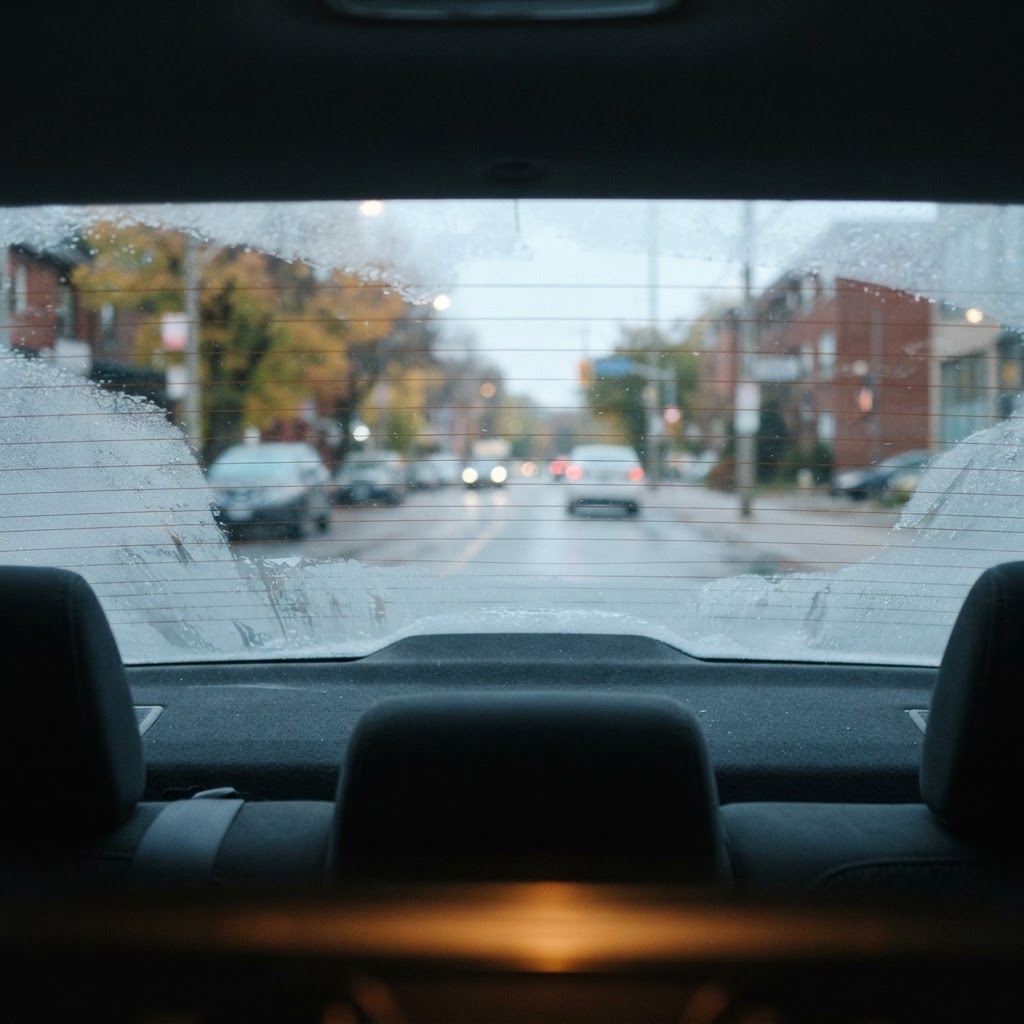
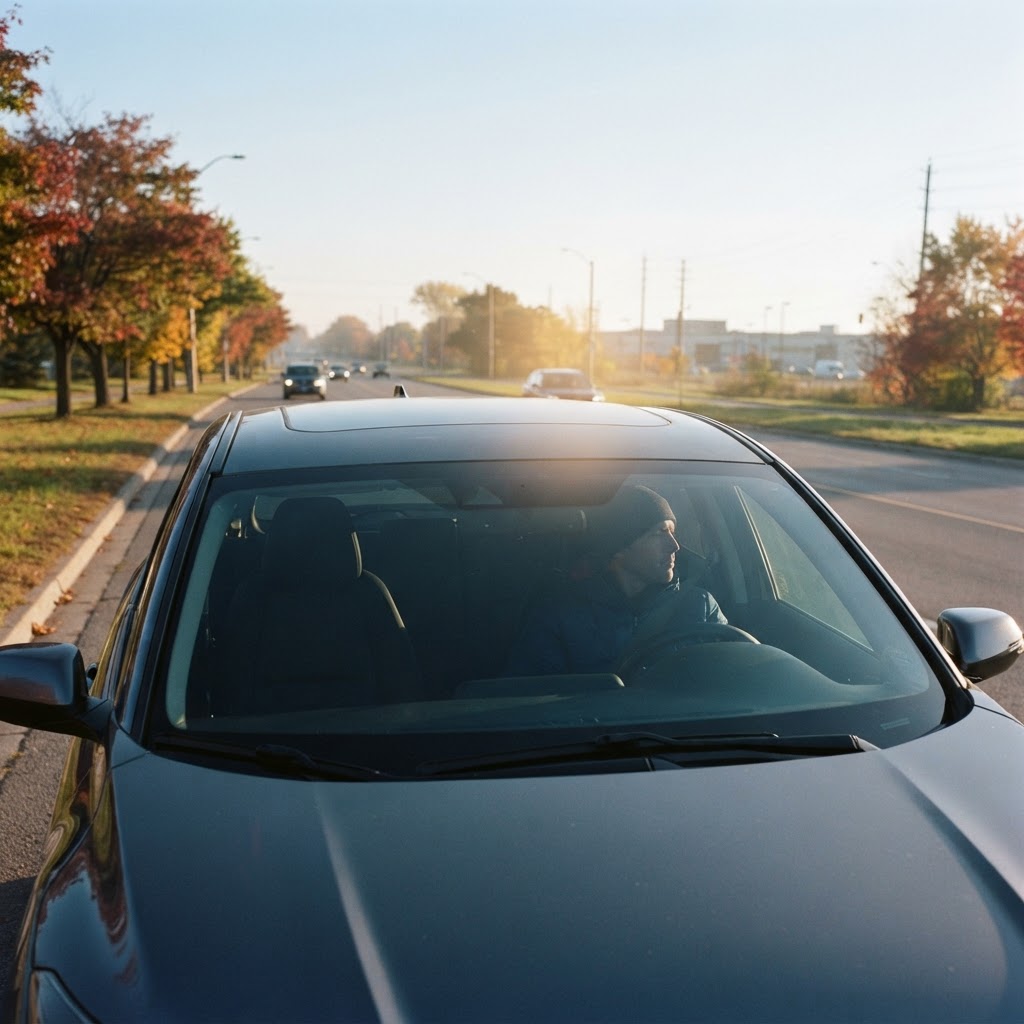
- Glare. Fall and winter in the GTA means low sun that cuts straight through the top of the glass during afternoon commutes. We cover that seasonal angle in our guide to fall sun glare, and a filmed sunroof removes most of it.
- UV and fading. Roof glass fades headliners, seats and child seats faster than side windows. Ceramic film blocks nearly all UV, so the interior keeps its colour instead of bleaching from the top down.
Will it make the car too dark inside?
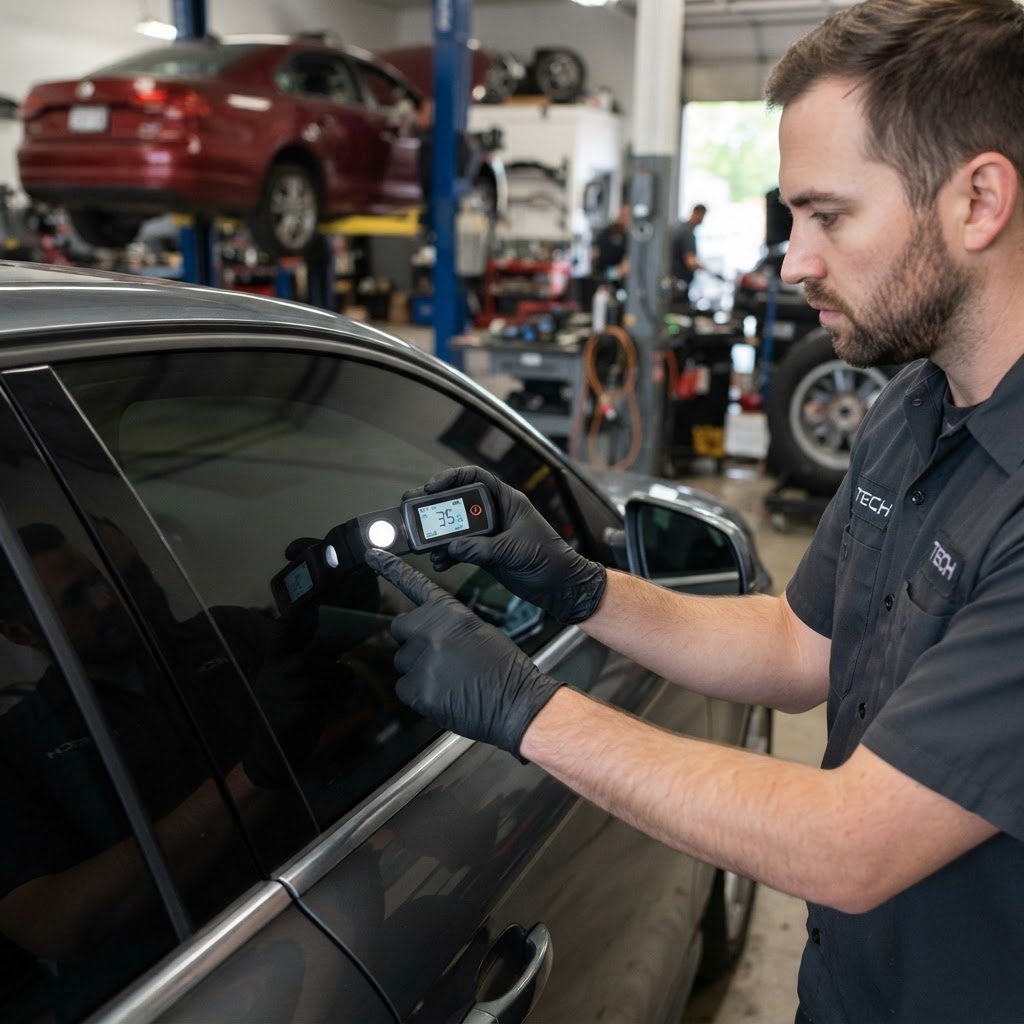
This is the most common worry, and the answer is no, not when the film is chosen properly. On sunroofs we usually install a lighter film than on the side windows, often in the 35 to 50 percent range, which keeps the cabin bright and the sky visible while still rejecting heat. The point of roof film is heat and UV control, not privacy, since nobody is looking through your roof. Darker film is available for glass that faces the sun all day in summer, but we always show you the light transmission before it goes on so there are no surprises.
The safety check most shops skip
Not all glass roofs are the same. Some panoramic roofs are laminated, many are tempered, and tempered glass has limits on how much heat a dark film can make it absorb without stressing the pane. This is exactly why a film specialist should pick the product: the wrong shade on the wrong glass can create thermal stress, and a sunroof is not a piece you want to gamble on.
Our process checks the glass first, then matches a film that stays safely inside the manufacturer's tolerance. It is the same discipline we apply on homes with sealed units, and it is the difference between a film that lasts the life of the car and a job that has to be redone. On sloped roof glass the install also takes real technique: the film wants to slide before it sets, and the curve has to be worked without creases. Shops that film daily make it look easy. The roof is actually one of the hardest pieces of glass on the car.
What about the moonroof mechanism?
Film goes on the fixed glass and the interior surface only; it does not touch seals, tracks or the sliding mechanism, so opening and tilting the roof works exactly as before. The only habit worth knowing applies to any fresh film: give it the cure period before scrubbing or picking at it, and expect the timeline to stretch in cold weather. Everything you need is in our guide to how long window tint takes to cure.
What sunroof tint costs
Roof glass varies a lot in size and curve between models, so we quote it with the vehicle in mind rather than a flat price. Many customers film the sunroof as part of a full package, where sedans and coupes run $179, SUVs $199, vans $239 and the two front windows are $99 on their own; full context is in our Toronto pricing guide. If you just want the roof done on its own, tell us the model and we will give you a straight number over the phone before you come in.
Get it done before the summer rush
Winter is the smartest time to handle glass work like this: the install happens in a heated indoor bay, the shop calendar is wide open, and your car is ready with full heat protection the first warm week of spring. That timing logic is laid out in why winter is the smartest time to tint your car.
Window film is all we do: cars, homes and businesses, nothing else. Send us your vehicle details, call or text 437-331-5379, or use our contact page. We are in North York, serving Toronto, Vaughan, Thornhill, Richmond Hill, Markham, Mississauga, Brampton, Scarborough and Etobicoke, and we will tell you exactly which film suits your roof glass and what it costs before anything touches the car.