A brick through a storefront takes four seconds. The clean-up takes a day, the insurance call takes a week, and the glass that landed on the floor took the inventory with it. Safety film is the layer that changes that outcome.
We install safety and security window film on homes and businesses across the GTA. Here is what it actually does, where it stops, and what it costs.
What safety film really is
Safety film is a thick, multi-layer polyester sheet, usually 8 to 14 mil, bonded to the inside face of the glass. Ordinary car tint is 1 to 2 mil, so think of this as five to ten times the material on the same pane.
The film is only half the system. It has to be anchored, either with a structural silicone bead at the frame edge or by tucking the edge into the glazing channel. Unanchored safety film holds the glass together in one sheet but lets the whole sheet leave the frame. That is the difference between a repair and a hole in your building.
What it stops, and what it does not
It stops smash and grab. The glass cracks but stays in the opening, which turns a four second robbery into a two minute fight with a sheet of shattered laminate. Most thieves leave.
It stops spontaneous breakage from becoming a hazard. Tempered glass can shatter on its own from a nickel sulphide inclusion, and Toronto balcony panels have done exactly that. Film keeps the pieces in the frame instead of on the sidewalk three floors below.
It does not stop a determined attacker with tools and time, and no film will. Security film buys delay, and delay is what makes a monitored alarm useful.
Businesses: where it earns its money
Retail storefronts, cannabis shops, pharmacies, jewelry and electronics are the obvious candidates, and so are restaurants with patio glass at hip height.
For commercial glass there is a second reason. Glass that stays in the frame keeps the building closed after hours. An open hole in a mall entrance is an invitation until morning. Most insurers treat a delayed entry as a smaller loss than an open one.
Offices with a lot of interior glass use the same material on partitions and boardrooms, mostly for the day a chair or a delivery cart hits a panel.
Homes: the quiet case
In a house, safety film matters most on patio doors, large ground floor windows, and any glass near stairs or a pool. That is where a fall, a lawnmower strike or a slammed door turns into an emergency room visit.
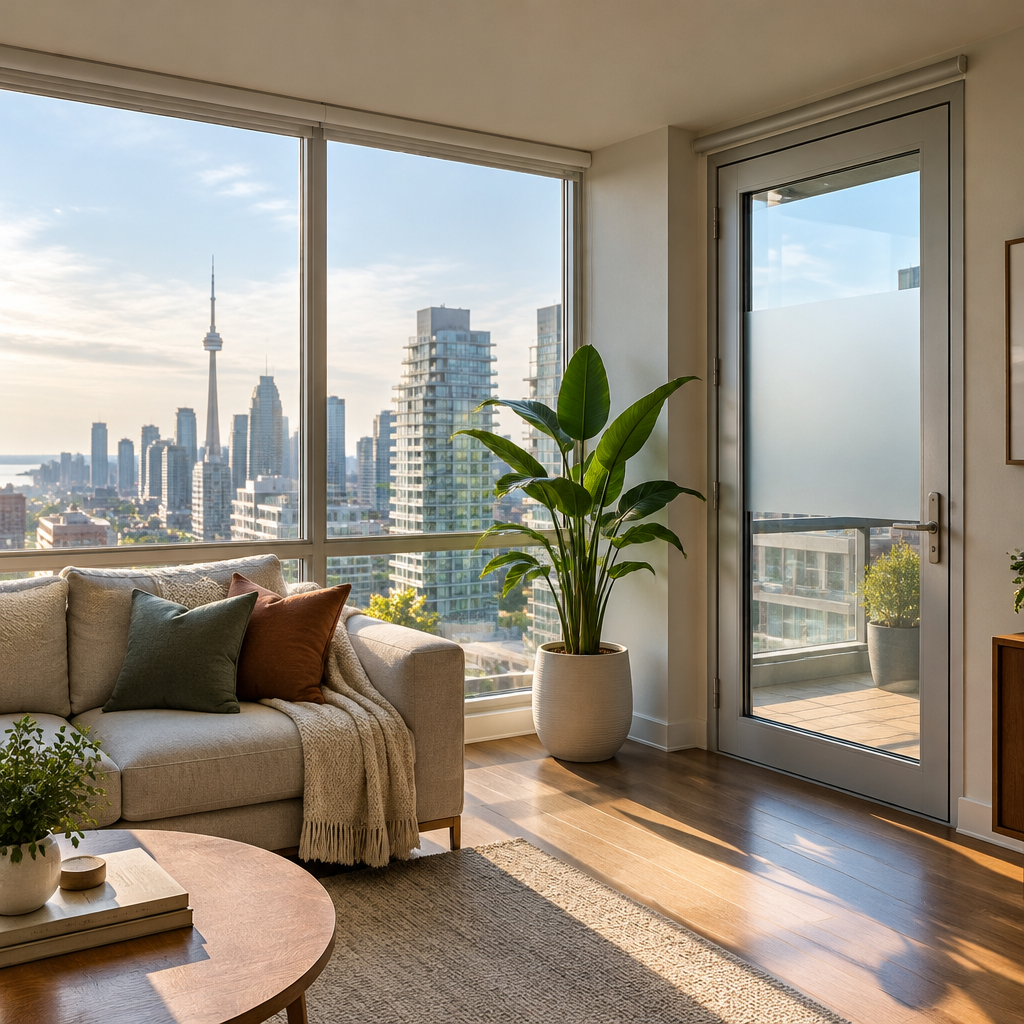
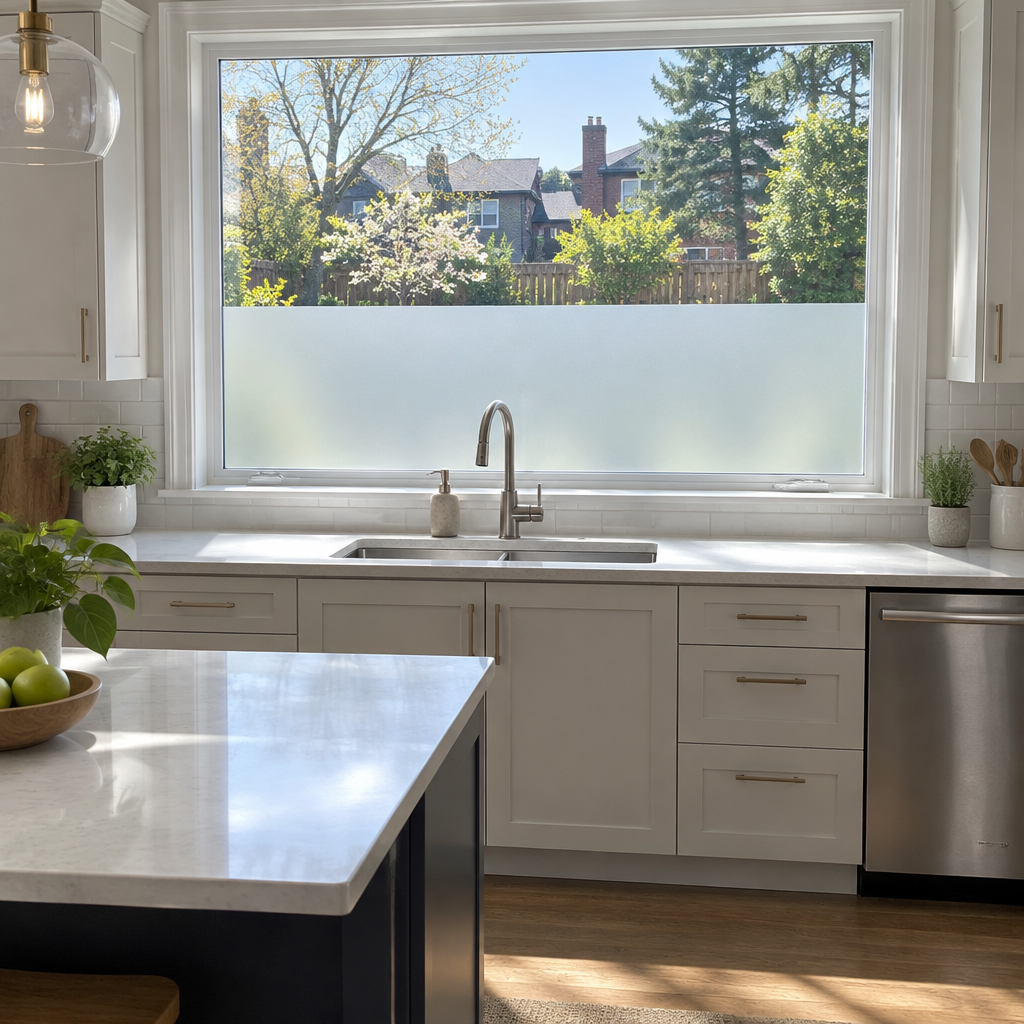
Homeowners often pair it with privacy frost on the same panel: frost across the middle for the view, safety film full height for the glass. One visit, two problems gone.
What it costs
Security film is quoted per project, because anchoring, glass type and access drive the labour. A single storefront panel is a different job from a second floor bedroom window, and pricing it by the square foot would be a guess dressed up as a number.
Privacy and frosted film runs $7 to $10 per square foot and standard solar film sits in a similar range, which gives you a rough sense of scale before we visit.
On the car side, for reference, ceramic tint is $99 for two front windows, $179 for a sedan or coupe, $199 for an SUV and $239 for a van.
What the rules require
Ontario does not regulate film on building glass the way it regulates car glass. Two things still matter. Exit signs and egress paths have to stay visible, so film never goes over a fire exit sign or a required vision panel. And in a condo, the corporation can restrict film that changes the look of the building from outside, which is why we ask before ordering material for a balcony.
Car glass is different and specific: the rear doors and rear glass can go to 5%, the front doors have to keep the driver clearly visible with 35% installed up front, and the windshield stays clear.
How the appointment runs
We measure, we look at the frame and the glass, and we tell you whether the panel needs a wet glaze or a mechanical anchor. Clear safety film goes on in one pass and cures for about two weeks while it goes from slightly hazy to invisible.
Commercial work happens after hours or before opening, because a storefront covered in scaffolding at noon costs you sales.
Frequently asked questions
Does safety film make a window burglar proof?
No. It makes the window slow. A thief who has to spend two loud minutes on your glass usually picks an easier door, and that is the whole point.
Can you put safety film over existing tint?
Usually not worth it. Two layers cure badly and look worse. We remove the old film first and install one proper layer.
Will it change how the building looks?
Clear safety film is nearly invisible from three feet away. It adds a slight sheen at a sharp angle, nothing more.
Does it help with heat as well?
Clear safety film does little for heat. If heat is the problem, a solar or ceramic film does both jobs in one layer, and we would rather sell you that than two films.
If you have glass worth protecting, call 437-331-5379 or send photos through our contact page. We handle safety and security window film across Toronto and the GTA, and commercial window tinting for offices and storefronts. If privacy is the goal rather than impact, start with privacy window film, or read how blast retention film works on commercial buildings.
Smash and grab
The glass breaks. The film keeps it in the opening. That is the two minutes an alarm needs.
Request an assessment | Security film | Blast retention explained