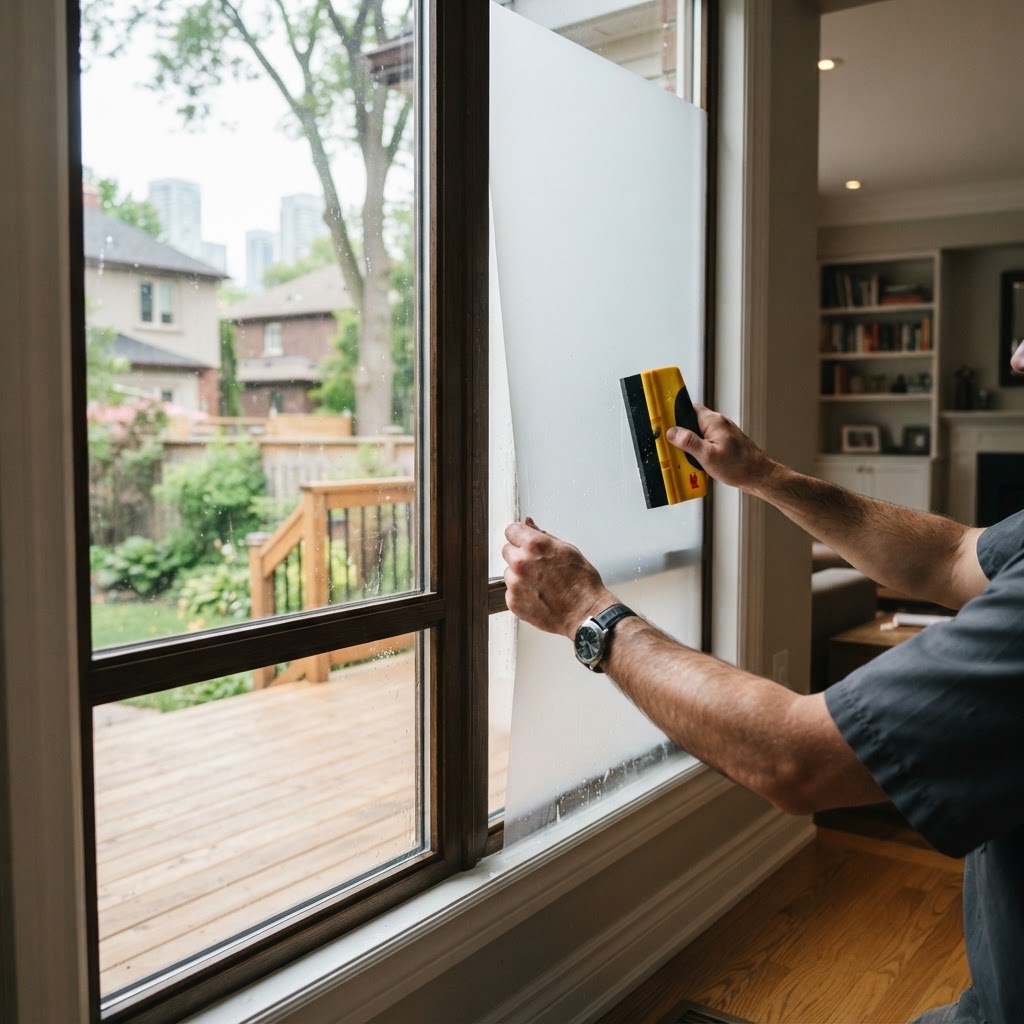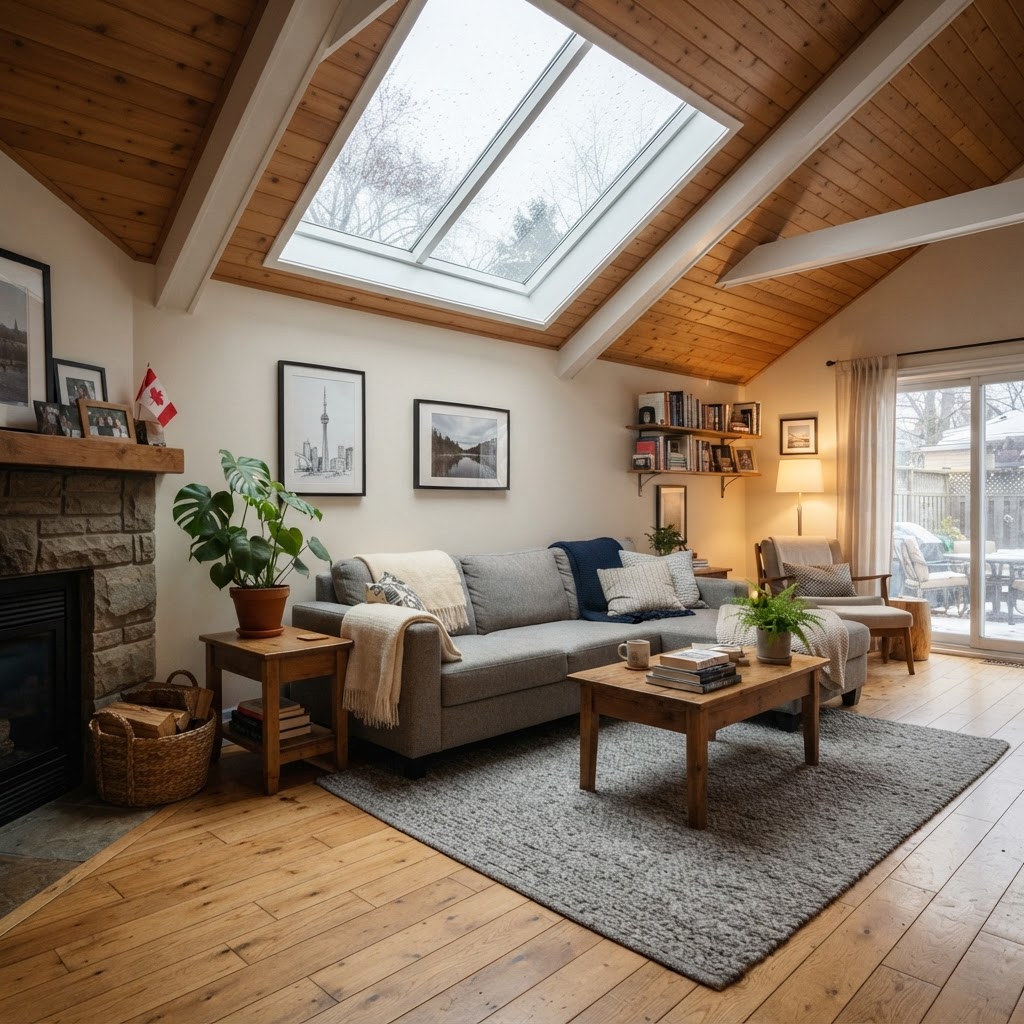
Every Toronto winter produces the same phone call. Someone has a beautiful living room with big windows, and from November to March nobody wants to sit near them. The couch by the window is always empty. There is a spot in the kitchen where you can feel cold coming off the glass while you do dishes. People call it a draft, they seal the weatherstripping, and nothing changes.
Here is what is usually going on, and what window film can honestly do about it.
That cold is probably radiant, not a leak
Old windows lose heat two ways. Some is air leakage, which weatherstripping and caulking fix. But a lot of what you feel near cold glass is radiant loss: warm air and warm bodies throw their heat at the cold pane, the pane drinks it, and you feel cold without any air moving at all. That is why you can seal every gap and still feel chilled standing by the window.
You can test this yourself. Hold a hand an inch from the glass on a January night. If you feel cold radiating off the pane, weatherstripping will not help. The glass itself is the problem.
What window film actually does for winter comfort
Insulating films, including low-e coated films, add a microthin metallic layer that reflects interior heat back into the room instead of letting it escape through the pane. The glass stays closer to room temperature, which does three things:
- The cold zone shrinks. The chill you feel near the window moves back toward the glass, so the couch beside the window becomes a usable seat again.
- The furnace runs less. Rooms with treated glass hold heat longer, which is why we wrote a full piece on low-e film and winter heat loss worth reading alongside this one.
- Fewer cold-weather glass problems. Less temperature swing at the pane, which connects to the condensation question we answer separately in our condensation guide.
The honest part: film does not fix real air leaks
Because we film windows every day, we also tell people when film will not solve their problem. If you can literally feel air moving, see daylight under the sash, or your windows whistle on windy days, that is leakage. Seal those first with weatherstripping or a proper caulking pass, then film the glass. Film slows heat leaving through the pane; it does not plug gaps in the frame.
The best results come from doing both. Seal the frame, treat the glass, and the window stops being the coldest surface in the room.
Which film for which window
Not every window in a home needs the same thing, and a specialist will tell you that up front:
- Windows you sit near. Living room, kitchen, dining room. An insulating low-e film for comfort and savings. See our full residential window film options.
- Sealed double pane units. The coating has to stay inside the manufacturer's heat tolerance, which is why we check glass type first, as explained in our guide to film on double pane windows.
- Bathrooms and sidelights. If the cold room also needs privacy, a frosted film does both jobs in one install.
- South facing rooms. Pick a film that keeps winter sun benefits while cutting summer heat, so you do not trade one season's comfort for another's.
What it costs, and when to do it
Frosted and privacy films run $7 to $10 per square foot installed. Insulating and low-e films are quoted per project from the pane count, size and glass type, and whole-home jobs are priced from actual measurements, not guesses. The full breakdown across homes, cars and businesses is in our Toronto pricing guide.
Timing-wise, winter is a fine season to film. Homes are heated, glass is dry, and the film cures well indoors. Doing it now means you get the benefit for the coldest months instead of booking it in April when the complaint has faded.
Why a specialist matters here
Glass type, pane coating and heat tolerance decide which films are safe, and a generalist selling film as a side product tends to skip that check. Window film is all we do. Cars, homes, businesses, nothing else, and that daily repetition is why we can look at a window and tell you in a minute whether film fixes your cold room or whether you just need a tube of caulking. The full checklist for choosing a shop is in how to choose a window film installer.
Stop sitting in the other chair
If one room in your home gets abandoned every winter, that is fixable, usually in a single visit. Send photos of the windows and tell us which room stays cold, and we will tell you which film, what it costs, and whether you need anything else at all. Call or text 437-331-5379 or use our contact page. We are in North York and serve Toronto, Vaughan, Thornhill, Richmond Hill, Markham, Mississauga, Brampton, Scarborough and Etobicoke.