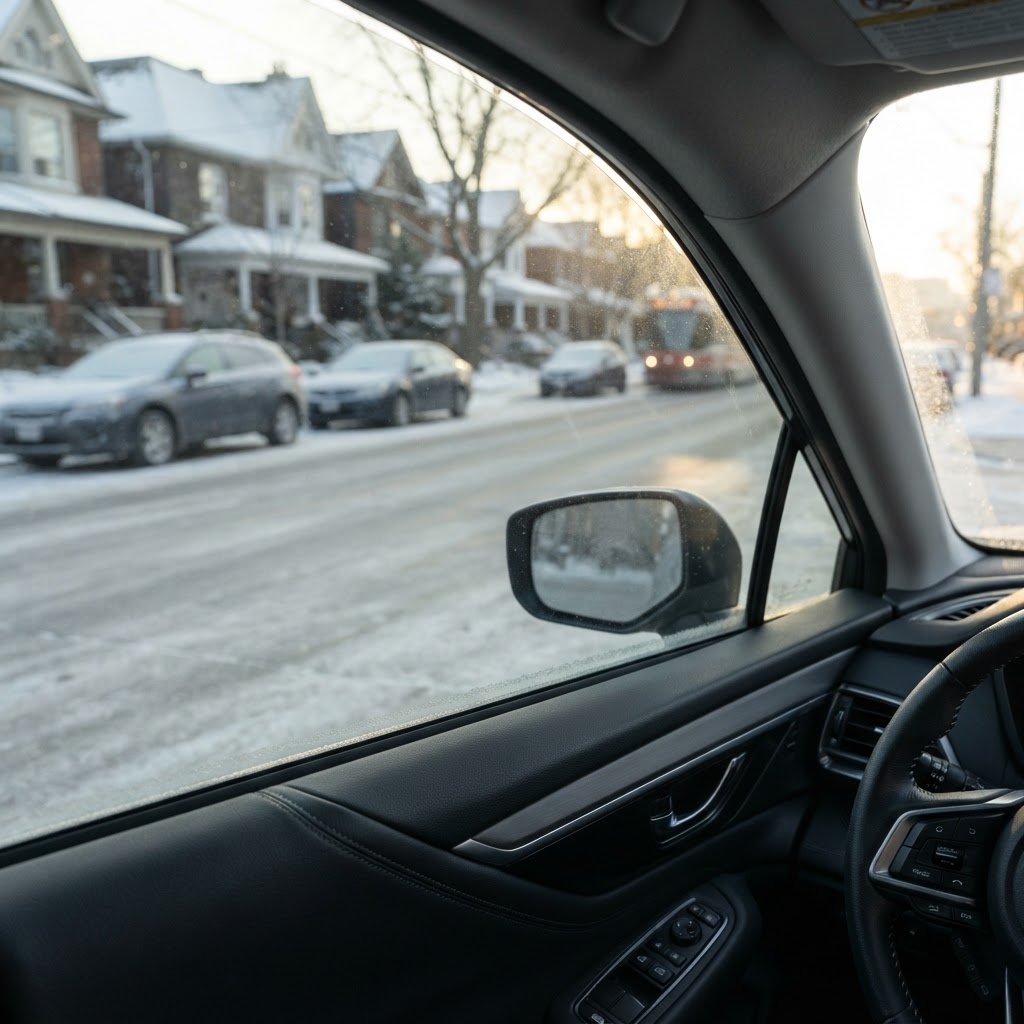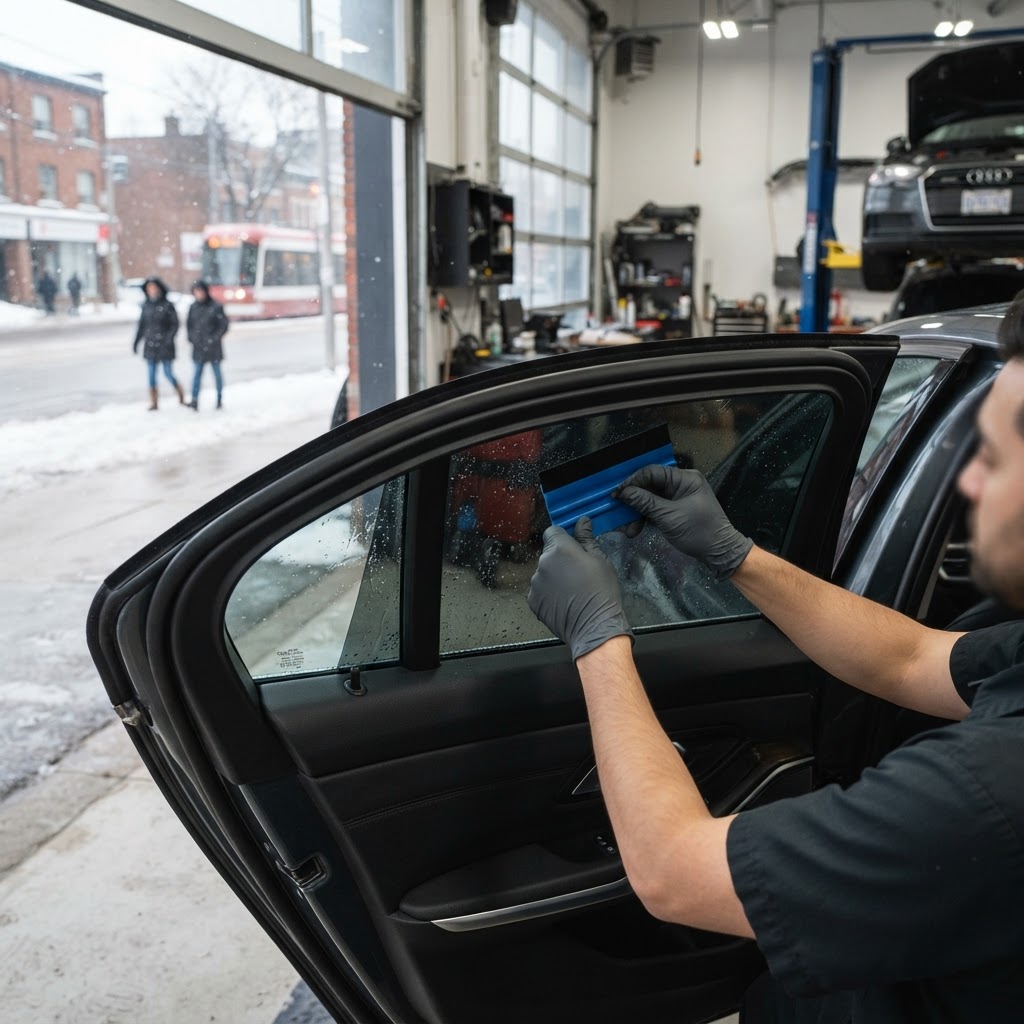
First hard frost of the season, and there is always that moment of hesitation: standing there with an ice scraper, looking at your freshly tinted windows, wondering if you are about to ruin four hundred dollars of film. It is one of the most common questions we get from October through March, and the answer is genuinely good news. Here is exactly what is safe, what to avoid, and how to keep tinted glass clean all winter.
The reassuring part: your tint is on the inside
Car window film is installed on the interior surface of the glass. Your scraper, the snow brush, the de-icer spray, the guy at the gas station with a metal spatula, none of them ever touch the film. So scrape the ice off your windshield and side windows exactly the way you always have. The film has no idea it is winter outside.
The only place to be a little careful is the rear window, and not because of the tint. If you scrape aggressively over the defroster lines, you can nick a line with a plastic blade corner and lose a strip of defroster. Light scraping or letting the defroster do the work protects both the lines and the film that sits over them, which we cover in our defroster guide.
What actually damages winter tint: the inside of the glass
Film damage in winter almost never comes from outside. It comes from what happens inside the cabin:
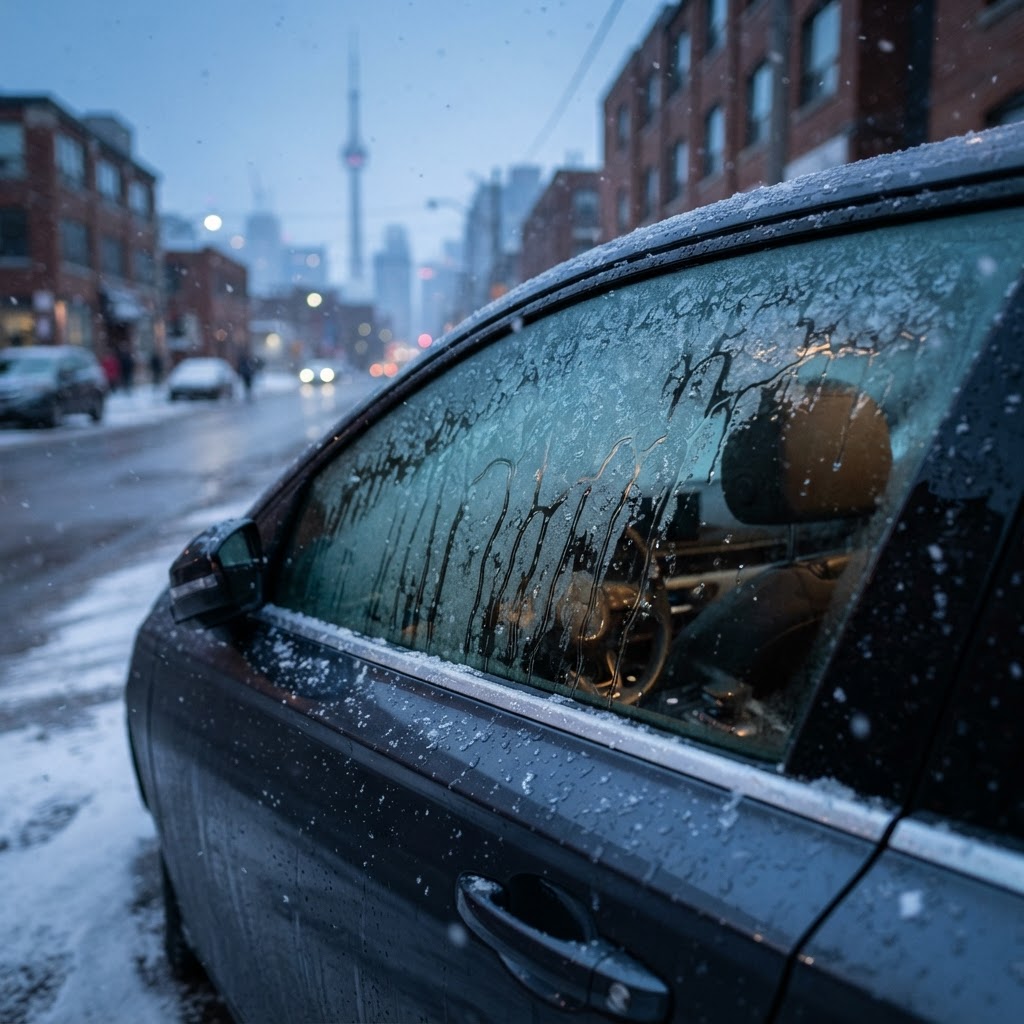
- Scraping frost off the inside. In deep cold, a thin frost layer can form on the interior glass too. Never scrape it with anything hard, because that surface is your film. Start the car, aim the defroster at it, and let it melt.
- Wiping brand new film. If your tint is under four weeks old, it is still curing, and curing runs slower in cold weather, up to three or four weeks in a Toronto November. Rubbing the film hard during this window can crease it before it has fully bonded. The full timeline is in how long window tint takes to cure.
- Ammonia cleaners. The blue household spray glass cleaner is the enemy of film edges all year, but winter cabin air already dries things out and a strong cleaner speeds up edge drying. Use a drop of plain dish soap in water and a soft microfiber cloth instead.
- Peeling at lifting edges. If you ever see an edge starting to lift, do not pick at it, because winter cold makes film stiffer and less forgiving. Text us a photo instead and we will tell you honestly whether it needs a look.
A winter care routine that takes two minutes
None of this needs a ritual. Three habits keep tinted glass perfect through to spring:
- Morning frost: scrape outside freely, defrost the inside, never wipe fog off new film with a dry sleeve. A sleeve drags grit across the film like sandpaper.
- Interior cleaning: once a month, soft microfiber, soapy water, light pressure, done. That is the whole routine.
- Washes and touchless tunnels: both fine. High pressure water from outside hits glass, not film.
If you want the other half of the winter picture, how film handles snow glare and why tint is quietly a winter product, that is in our winter tint and visibility guide.
What about bubbling and winter curing?
Cold weather curing means small hazey moisture patches hang around longer than they would in July. That is normal and it clears on its own, but a bubble with dirt in it or a big soft air pocket is not curing moisture, that is an install issue, and it looks the same in any season. If you are unsure which one you are looking at, do not take a pin to it; we explain the difference in our tint bubbles guide.
If you are tinting this season
Winter is a fine time to do it. The install happens indoors in a heated bay, the car never sits outside with windows dropped, and you skip the spring lineup. Our ceramic packages run $99 for the two front windows, $179 for a sedan or coupe, $199 for an SUV and $239 for a van, with the full breakdown in our Toronto pricing guide.
Two minute rule, one phone number
Window film is all we do, cars, homes and businesses, nothing else, installed daily in our North York bay and serving Toronto, Vaughan, Thornhill, Richmond Hill, Markham, Mississauga, Brampton, Scarborough and Etobicoke. If anything about your film looks wrong this winter, snap a photo and text it to 437-331-5379 or use our contact page, and you will get an honest answer about whether it needs anything at all.